
Precision BioSciences just showed the first clinical evidence that a gene editor can destroy cccDNA, the hidden viral reservoir that makes hepatitis B nearly impossible to cure. If it holds up, 250 million patients worldwide could finally have a path off lifelong medication.
Imagine a houseguest who moves into your spare room, hides a copy of their house key in your safe, and keeps coming back no matter how many times you change the locks. That's hepatitis B.
About 254 million people worldwide live with chronic HBV. We have antiviral drugs that keep the virus quiet, but they work more like a mute button than a delete button. Stop taking them, and the virus roars back. The reason? A sneaky little DNA molecule called cccDNA (covalently closed circular DNA) that parks itself inside liver cell nuclei and serves as the virus's master blueprint. Current drugs can't touch it.
For decades, researchers have dreamed of destroying that blueprint directly. Last week, a small biotech called Precision BioSciences showed the first clinical evidence that a gene-editing therapy can actually do it.
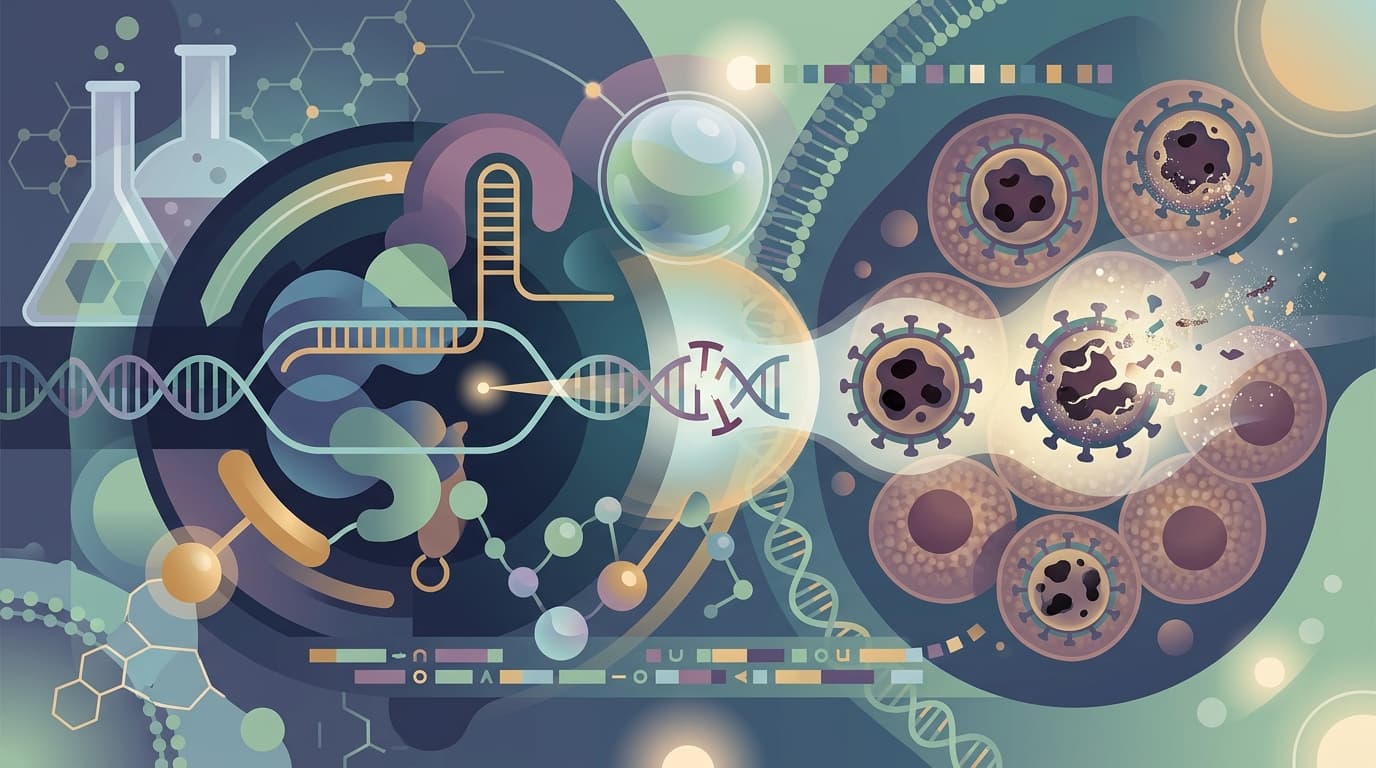
Precision's therapy, PBGENE-HBV, works like molecular scissors designed for one very specific job. It uses the company's proprietary ARCUS nuclease (a programmable protein that cuts DNA at a precise location) to snip a conserved sequence in the HBV genome. The nuclease is packaged inside lipid nanoparticles, the same fatty delivery bubbles that made mRNA COVID vaccines possible, and sent straight to the liver.
The goal is two-pronged. First, physically destroy the cccDNA reservoir so no new virus can be made. Second, scramble any leftover viral DNA that's woven into the patient's own chromosomes, rendering it useless. Think of it as shredding the blueprint and corrupting the backup drive.
In preclinical studies, ARCUS chopped out roughly 86% of cccDNA in infected human liver cells and achieved 96% sustained reduction in a key viral protein (HBsAg) in mouse models. Promising numbers, but petri dishes and mice aren't people. The big question was always whether this would translate to actual human livers.
At the in late May, Precision presented liver biopsy data from its Phase 1 trial. The presenter was , and the findings were striking.

BioMarin's $270 million bet on a rare-disease drug just went bust after its Phase 3 trial moved a biomarker but failed to help patients. The write-off highlights a brutal pattern of costly late-stage failures across rare-disease biotech.


Join thousands of biotech professionals who start their day with our free, daily briefing.
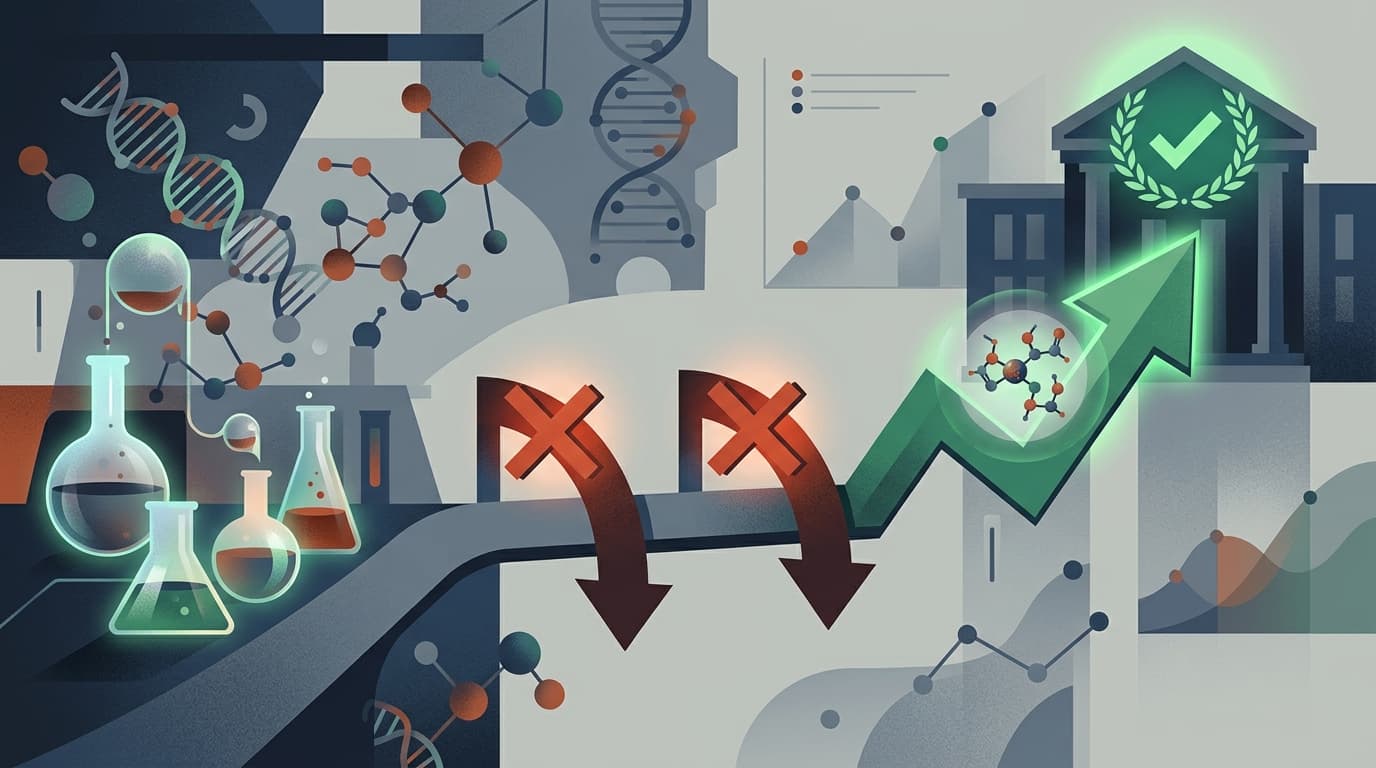
One patient who received just two doses at 0.4 mg/kg showed a 10-fold reduction in cccDNA-derived transcripts (the molecular readouts that indicate how much cccDNA is actively producing virus). In the key biopsy dataset, less than 1% of cccDNA remained. A second patient, treated with three doses at the same level, showed signs of a cumulative anti-cccDNA effect, suggesting each dose chips away more of the reservoir.
Beyond the biopsies, 100% of evaluable patients with detectable pregenomic RNA (pgRNA, another marker of active cccDNA) before treatment lost it durably, with suppression lasting up to six months at the data cutoff. The first patient treated in the study has maintained substantial reductions for more than a year after dosing.
Precision called this the first-ever clinical evidence that a gene editor can directly eliminate cccDNA in human liver tissue. That's not marketing fluff; no other program has published biopsy-confirmed cccDNA destruction in patients before.
The hepatitis B field draws a clear line between two goals. A functional cure means the patient can stop therapy and the virus stays gone: no detectable surface antigen, no relapse, no lifelong pills. A sterilizing cure would mean every last trace of viral DNA is eradicated. The first is hard. The second is science fiction, at least for now.
Current standard-of-care antivirals like tenofovir and entecavir are effective suppressors, but only about 4.3% of people living with chronic HBV worldwide are even on treatment, according to WHO data. Many patients remain undiagnosed. Those who do get treated face the reality that stopping medication usually means the virus rebounds, because cccDNA is still sitting there, waiting.
If you could destroy or silence that reservoir, you wouldn't need lifelong pills. That's the prize Precision is chasing.
Precision isn't the only group trying to crack this problem. The competitive landscape includes RNA interference therapies (which degrade viral RNA but don't touch cccDNA), capsid modulators (which block new cccDNA formation but leave existing copies alone), epigenetic silencers (which try to muzzle cccDNA without deleting it), and various CRISPR-based approaches still stuck in preclinical labs.
The critical distinction: most of these strategies work around cccDNA. They suppress its output or prevent new copies from forming. Precision's approach goes after the source itself. Among gene-editing programs, PBGENE-HBV is the only one that has reached clinical-stage testing with biopsy-confirmed evidence of direct cccDNA elimination.
That said, the data is still very early. We're talking about a handful of patients in a Phase 1 trial, and the big questions (durability over years, safety at scale, whether this translates to actual functional cure) remain unanswered.
Precision trades under the ticker DTIL at around $7.49 per share, giving it a market cap of roughly $205 million. The company is still burning cash (trailing EPS is deeply negative), which is par for the course in clinical-stage biotech. It has traded as low as $3.53 over the past year.
Wall Street, for its part, seems cautiously excited. Analysts see significant upside if the data holds up in larger studies, which tells you the Street believes the science has legs.
The "if" matters enormously. Gene editing in the liver is still new territory. Delivery efficiency, off-target cutting, and long-term safety are all open questions that won't be fully answered by a Phase 1 trial. But the fact that we now have biopsy-confirmed evidence of cccDNA elimination in a human being? That's a genuine first.
For 250 million people living with a virus that modern medicine can quiet but not kill, this is the most exciting proof-of-concept in years. Precision BioSciences has shown that you can send a gene editor into a patient's liver and watch it destroy the very molecule that makes hepatitis B so stubbornly incurable.
It's early. It's small. It needs to be replicated in far more patients. But for the first time, someone has actually found the houseguest's hidden key and snapped it in half. The question now is whether the lock stays changed for good.
Merck's tulisokibart just delivered a perfect split: a Phase 2 win in hidradenitis suppurativa and a flop in lung disease. The results reveal exactly why anti-inflammatory drugs keep hitting a wall in fibrotic conditions, and what it means for Merck's $10.8 billion bet.