Claude Just Designed 1,320 Proteins. Most of Them Actually Worked.
Anthropic's Claude autonomously designed 1,320 protein binders across 15 biological targets, and independent labs confirmed 354 of them actually worked. The hit rates are blowing past traditional benchmarks, and the implications for early drug discovery are hard to ignore.
An AI Walked Into a Lab
Imagine handing someone a cookbook, locking them in a kitchen, and telling them to invent 1,320 new recipes across 15 different cuisines. No chef's guidance. No taste-testing along the way. Just: figure it out.
Now imagine they nailed dishes in 14 of the 15 cuisines. That's roughly what just happened in protein design, except the "chef" was Anthropic's Claude, and the "kitchen" was a pair of independent wet labs.
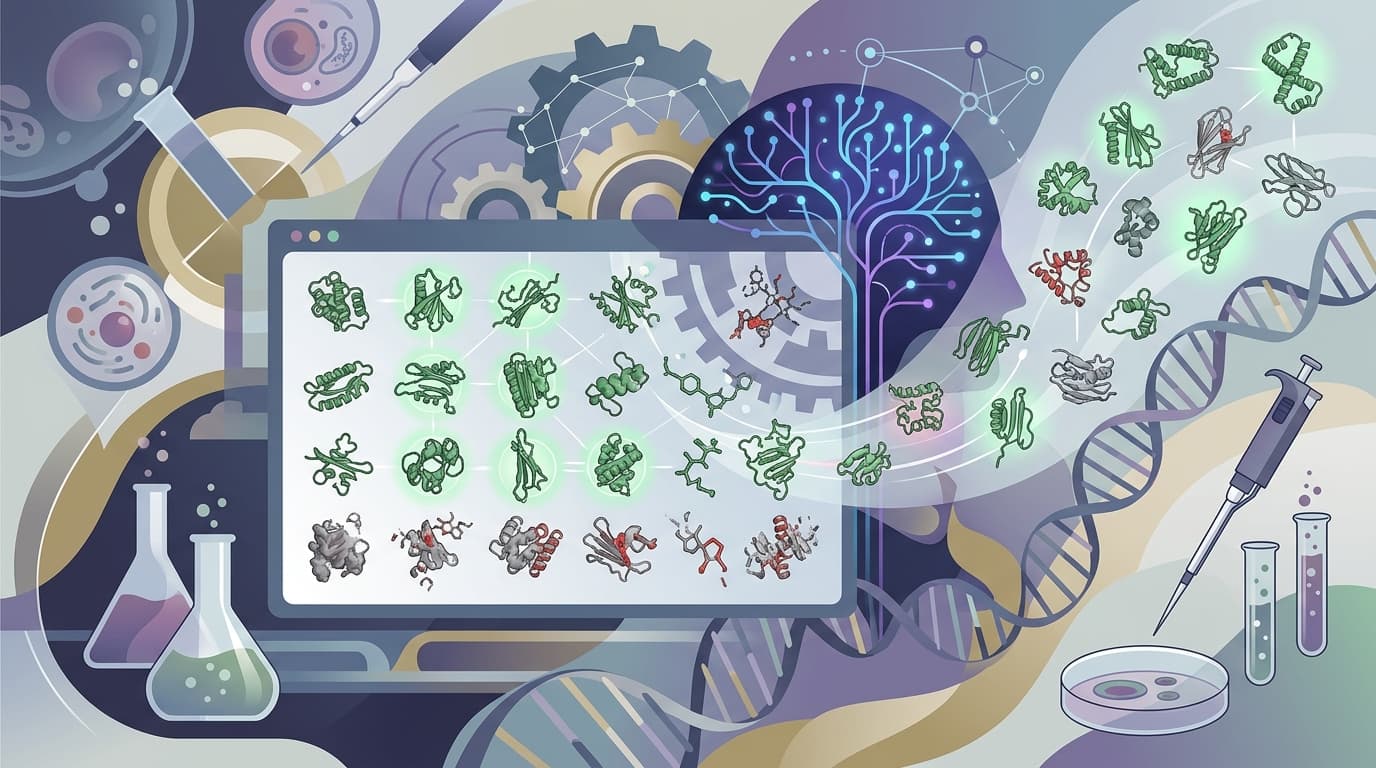
In a study released this week, Claude autonomously designed 1,320 protein binders targeting 15 different biological targets. External labs at Twist Bioscience and Adaptyv Bio then built those proteins from scratch and tested whether they actually stuck to their intended targets. The result: 354 confirmed binders across 14 of the 15 targets. No human scientist picked the targets' weak spots. No human ranked the candidate designs. The AI ran the whole show.
This isn't a proof-of-concept with five proteins and a press release. It's production-scale validation, and it changes the math on how early drug discovery could work.
Why 354 Out of 1,320 Is Actually Incredible
Let's talk hit rates, because this is where things get interesting.
In traditional protein design campaigns, getting a functional binder (a protein that grabs onto a specific target, like a lock fitting a key) is hard. Published benchmarks suggest that de novo designed functional proteins succeed less than 20% of the time. In a recent large-scale CAR-T binder study, researchers tested 12,000 AI-driven designs and found just 707 that worked: a 5.9% hit rate.
Claude's campaign landed between 22.6% and 26.7% in multi-target mode. When the AI focused on one target at a time using Anthropic's newer Mythos Preview model, the hit rate climbed to 35.1%. That's not just above average for AI-designed proteins; it's comfortably above the bar that most computational biology teams would celebrate.
Get tomorrow's biotech intelligence before your competitors.
Join thousands of biotech professionals who start their day with our free, daily briefing.
And the quality wasn't just about quantity. The study reported high-affinity binders (meaning tight, strong binding) against at least six targets, with performance matching or exceeding the best previously published results for at least four of them.
The Assembly Line Behind the Breakthrough
The study works like a relay race with four runners, each handing off to the next.
Anthropic's Claude (specifically Claude Opus 4.8 and Mythos Preview) played the role of designer. It researched each target, picked the best spots to attack on the protein surface (called epitopes), ran open-source computational design tools, and ranked its own candidates. All autonomously.
Twist Bioscience served as the DNA factory. AI designs are just digital sequences until someone physically builds them. Twist synthesized the DNA encoding Claude's protein designs with the high fidelity needed to ensure what gets tested in the lab matches what the AI actually intended.
Adaptyv Bio acted as a second, independent testing lab. The company runs what's essentially a cloud laboratory for protein designers: upload your sequences, and their automated systems build and test your proteins, then ship back structured data. Having two separate labs test the same designs is crucial; it's the difference between a friend saying "trust me, it's good" and getting a second opinion from a stranger.
High-throughput SPR (surface plasmon resonance) platforms were used to analyze hundreds of binding interactions in parallel. Think of SPR as a molecular lie detector: it measures in real time whether two molecules actually stick together, and how tightly. These systems can process thousands of samples per day, which is the only reason testing 1,320 candidates across 15 targets didn't take months.
What This Doesn't Mean (Yet)
Before anyone starts planning victory laps, some important caveats.
These are research-stage molecules characterized for binding only. Showing that a protein grabs a target in a dish is step one of a very long journey. It doesn't prove the protein would work as a drug inside a human body. It doesn't address manufacturing at scale, stability, toxicity, or any of the hundred other things that kill drug candidates between the lab bench and the pharmacy shelf.
Binding is to drug development what a first date is to marriage. It's necessary, but calling it a done deal would be wildly premature.
Anthropic has also kept these capabilities restricted from general access. The company is building a trusted-access program for qualified scientists rather than shipping protein design as a standard Claude feature. Given the dual-use concerns around AI-designed biology, that's a responsible (and likely essential) move.
Why This Matters for the Business of Biotech
The real story here isn't one study. It's what happens when AI-first discovery workflows stop being pilot projects and start looking like production lines.
Traditional antibody discovery is slow and empirical. Scientists generate candidates through laborious screening, test them, tweak them, and repeat over months. The process works, but it's expensive and bottlenecked by human bandwidth at every step.
What this collaboration demonstrates is a compressed early discovery loop: AI designs candidates in hours, DNA synthesis companies build them in days, automated labs test them in weeks, and structured data flows back for the next round. Adaptyv's platform is built for exactly this kind of rapid iteration, with over 30 companies already using it.
If hit rates stay at 25% or higher, and turnaround times stay under a month, the economics of target exploration change dramatically. Biotech companies could affordably screen many more targets earlier in their pipelines, increasing the odds of finding winners before committing serious capital.
We're not at the point where AI replaces medicinal chemists or clinical development teams. But the front end of the funnel (finding molecules that bind to interesting targets) just got a lot wider and a lot faster. For an industry where 90% of drug candidates fail in clinical trials, anything that improves the quality and diversity of what enters the pipeline is a very big deal.
The kitchen is open. The AI chef is cooking. And for the first time, the dishes are actually passing taste tests at scale.
Clinical & Regulatory4 min read
The First New Blood Cancer Drug in 30 Years Just Got the Green Light
For nearly 30 years, patients with essential thrombocythemia had zero new FDA-approved treatments. PharmaEssentia's BESREMi just broke that streak with trial results that crushed the competition seven to one.