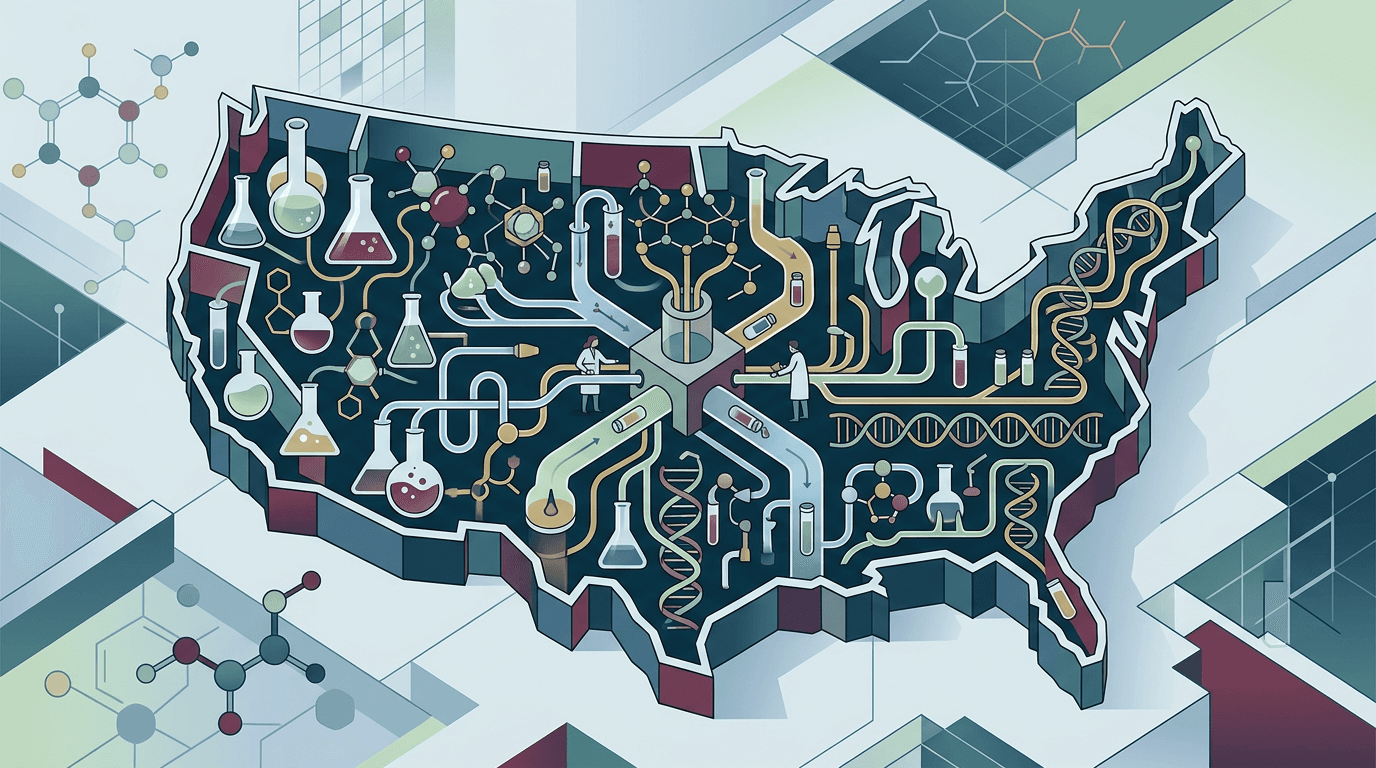

China's new supply chain regulations took effect with zero warning, making it potentially illegal for Western pharma companies to diversify away from Chinese manufacturing. With China controlling 40-45% of global API production, the industry faces an impossible compliance puzzle between Washington and Beijing.
Imagine you're renting an apartment. The landlord suddenly changes the lease: you can never move out, and if you try, you lose your security deposit, your furniture, and maybe your job. That's roughly what China just did to Western pharmaceutical companies.
On April 7, 2026, China's State Council enacted Decree No. 834, a sweeping set of supply chain security regulations that took effect immediately. No grace period. No transition window. Just: these are the rules now, and if you break them, we're coming for you.
The regulations give Beijing broad authority to investigate and punish any foreign company whose business decisions are deemed harmful to China's "industrial chain security." That includes decisions like switching suppliers, exiting Chinese partnerships, or reducing your sourcing from Chinese manufacturers. In other words, the very thing Western pharma companies have been trying to do for the past three years (diversify away from China) is now potentially illegal under Chinese law.
The regulation identifies several triggers that could land a company in hot water: terminating supply relationships with Chinese counterparties, "suspending normal transactions," adopting "discriminatory measures," or adjusting sourcing strategies due to foreign regulatory pressure.
Notice anything? Those terms are breathtakingly vague. What counts as a "discriminatory measure"? The regulation doesn't say. What constitutes "interrupting normal transactions"? Also undefined. This ambiguity isn't a bug; it's a feature. It gives Chinese regulators maximum flexibility to enforce the rules however they see fit.
The penalties are real, too: trade and investment restrictions, personnel entry bans, and cancellation of work permits. For companies with thousands of employees in China, that's not an abstract threat.
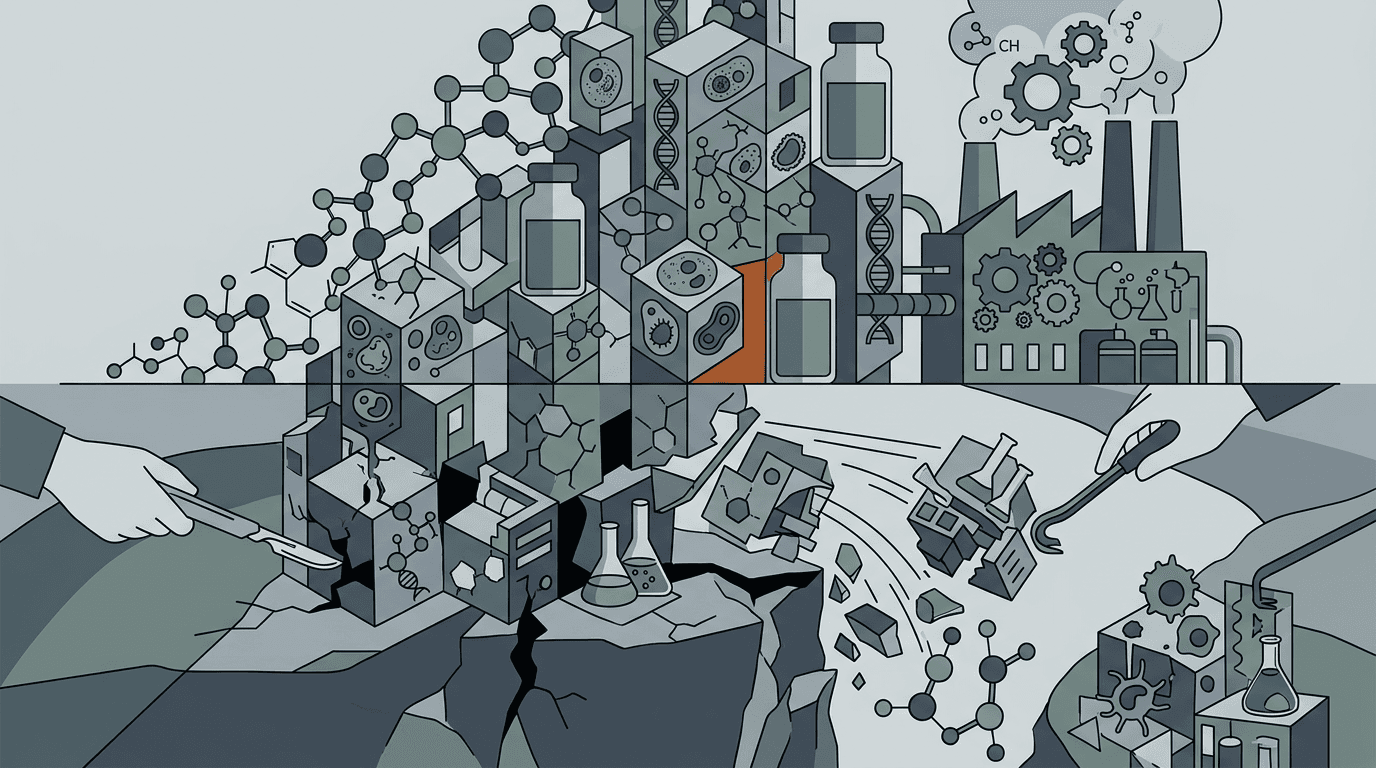
To understand why this matters so much, you need to grasp how deeply Western pharma depends on China. Think of it like a house of cards where China manufactured most of the cards.

The FDA is letting Amgen and AstraZeneca share live clinical trial data with regulators as patients enroll, not after trials end. It could cut drug development timelines by 20-40%, and it's the biggest change to how trials work in six decades.


Join thousands of biotech professionals who start their day with our free, daily briefing.
China supplies roughly 20 percent of global API production (active pharmaceutical ingredients, the actual therapeutic compounds in your pills). For specific drug classes like antibiotics, China accounts for about 71 percent of global production.
And it's not just finished ingredients. A 2025 USP study found that 41 percent of key starting materials for U.S.-approved APIs are sole-sourced from China, and that China is the only supplier of at least one critical starting material for 37 percent of APIs used in American drugs.
This isn't a supply chain. It's a supply monopoly.
Western pharma companies now face a genuinely paradoxical situation. U.S. law (including the Uyghur Forced Labor Prevention Act and various sanctions regimes) requires companies to conduct supply chain audits, restrict certain sourcing, and sometimes cut ties with specific Chinese entities. China's new regulations say that doing exactly those things could violate Chinese law.
Companies are stuck between two governments, each demanding opposite behavior. Comply with Washington, risk Beijing's wrath. Comply with Beijing, risk Washington's penalties. It's regulatory whack-a-mole with billion-dollar consequences.
Six days after Decree 834, China dropped Decree No. 835 (April 13, 2026), which established counter-sanctions authority against foreign "extraterritorial jurisdiction." Translation: if a Western government forces you to act against Chinese interests, China reserves the right to punish you for that too.
The timing is brutal. Over the past two years, major pharma companies have been actively trying to reduce China exposure. AstraZeneca segregated its U.S. and China supply chains from its European operations. Roche committed $50 billion to U.S. investment.
But these regulations essentially classify "de-risking" itself as a potential violation. The corporate strategy that every consultant has been recommending since 2023? China just made it a legal liability.
Full relocation away from Chinese suppliers remains unrealistic in the near term. China's cost advantages run 20 to 30 percent below Western competitors. The country's API market alone is worth $15.9 billion in 2025 and growing at nearly 8 percent annually. You can't replace that infrastructure overnight, or even over several years.
The pharmaceutical industry is essentially playing a high-stakes game of chicken with two superpowers. Companies with significant China operations (which is most of them) need to figure out how to satisfy contradictory legal obligations across jurisdictions while maintaining production of drugs that people actually need.
Industry analysts have noted one saving grace: China's existing countermeasures (its Anti-Foreign Sanctions Law, its Unreliable Entities List) have been used sparingly so far. Beijing may be building a legal arsenal it intends to keep holstered, deploying it as leverage rather than punishment. But "probably won't enforce it" isn't exactly a compliance strategy you'd want to bet your company on.
The real risk isn't that China shuts off exports tomorrow. It's that China now has the legal framework to do so selectively, at any time, against any company it chooses. And in a world where 90 percent of U.S. prescriptions are filled with generics (many dependent on Chinese supply), that leverage extends far beyond corporate boardrooms. It reaches into medicine cabinets.
For Western pharma, the message from Beijing is clear: you built your supply chains here, and now you'll need our permission to leave.
Madrigal Pharmaceuticals just paid up to $1 billion for a gene-silencing drug to pair with its blockbuster MASH therapy Rezdiffra. It's the third major deal in a year as the company races to build an unbeatable liver disease franchise before Novo Nordisk and others crash the party.