
The inventor of blockbuster CAR-T therapy Carvykti just launched a new company that ditches gene editing entirely. Wondercel Therapeutics debuted early clinical data at ASCO 2026, and the results are equal parts promising and sobering.
Frank Fan invented one of the best-selling cancer drugs on the planet. Then he walked away from it.
Fan is the scientific founder of Legend Biotech. He built the R&D team, designed the core technology behind Carvykti, the blockbuster CAR-T therapy for multiple myeloma, and watched it become a global commercial product through a partnership with Johnson & Johnson. In 2022, he resigned.
Now he's back. At ASCO 2026, Fan unveiled Wondercel Therapeutics, a new company built around a radical idea: you can make off-the-shelf CAR-T cells without gene editing. No CRISPR. No TALENs. No slicing up DNA at all.
If that sounds like heresy in a field obsessed with genome engineering, that's sort of the point.
Today's approved CAR-T therapies are custom-built for each patient. Doctors harvest a patient's own immune cells, ship them to a manufacturing facility, engineer them to attack cancer, and ship them back. Think of it like ordering a bespoke suit: beautiful when it fits, but painfully slow and absurdly expensive.
The process takes weeks. Some patients die waiting. Manufacturing is manual, labor-intensive, and limited by trained staff and centralized facilities. Cold-chain logistics add more delay. And because every batch starts from a different patient's cells, quality varies wildly.
The dream of "allogeneic" (off-the-shelf) CAR-T is simple: make one big batch from a healthy donor's cells and treat hundreds or thousands of patients from that single run. It's the difference between a tailor and a factory.
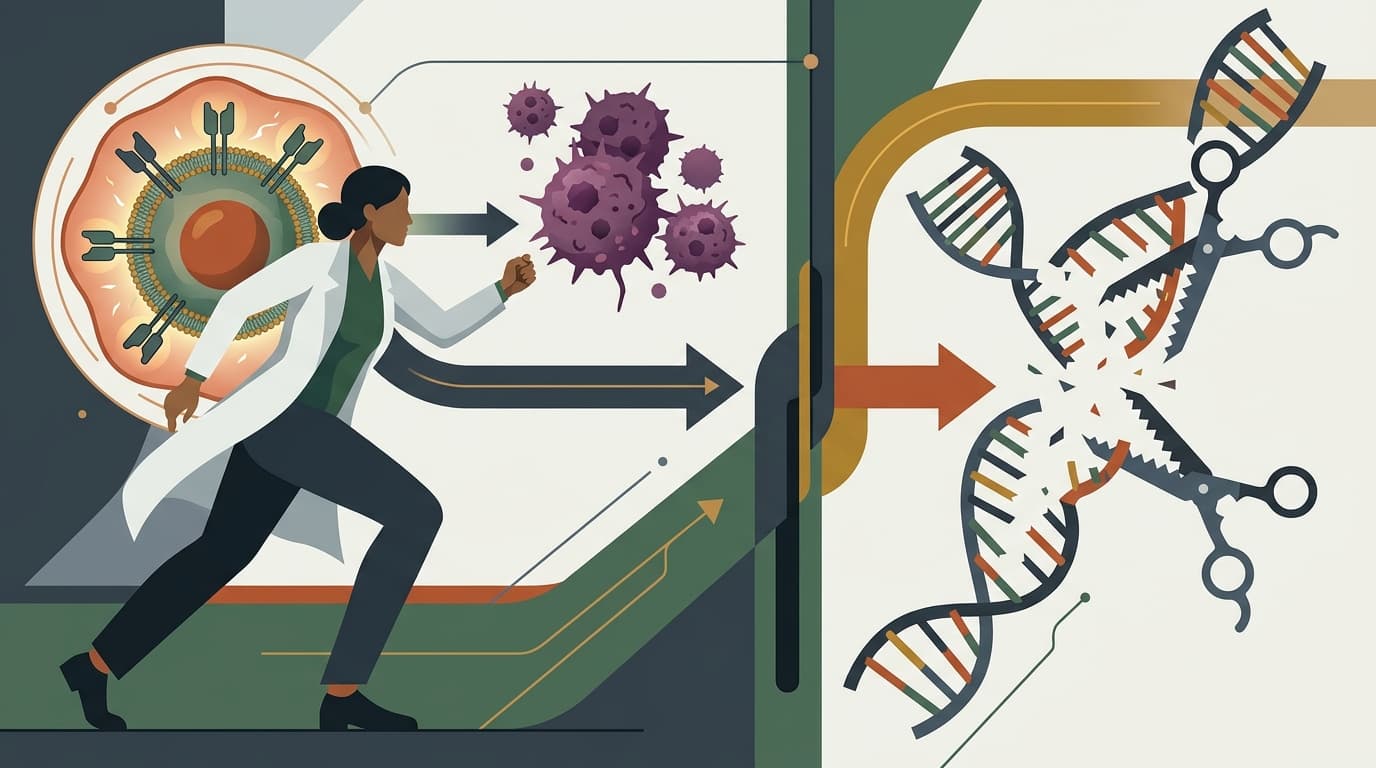
But there's a catch. Donor T cells come with a working immune system of their own. Without modification, they'll attack the patient's healthy tissue, a dangerous condition called graft-versus-host disease (GvHD). The standard fix? Use CRISPR or similar tools to knock out the T-cell receptor (TCR) genes so the cells can't go rogue.
Fan thinks gene editing creates as many problems as it solves. His argument is straightforward. Cutting DNA at multiple sites risks , where broken chromosomes reattach incorrectly. That can trigger uncontrolled cell growth, which is exactly what you don't want in a cancer therapy. The editing process also requires electroporation (blasting cells with electricity to get editing tools inside), which kills a significant portion of cells and stresses the survivors.

Agios' next-gen pyruvate kinase activator tebapivat just flunked its phase 2b trial in a blood cancer called lower-risk MDS, and the company is scrapping the entire program. The failure exposes a classic biotech trap: assuming a mechanism that works in genetic anemias will translate to cancer.


Join thousands of biotech professionals who start their day with our free, daily briefing.

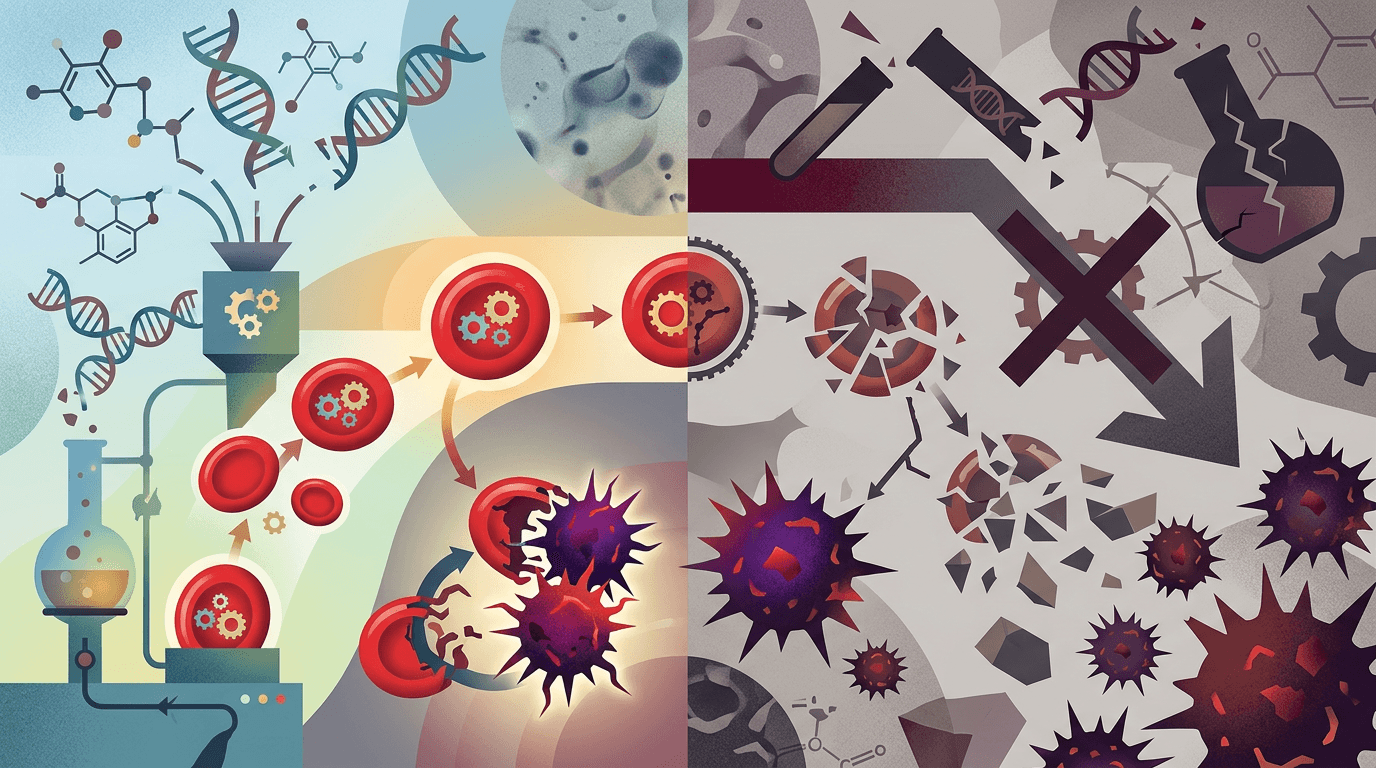
Wondercel's platform, called Revo-U, takes a completely different approach. Instead of deleting the TCR gene, it destroys the TCR protein. The company uses engineered molecules that tag the TCR-CD3 complex on the cell surface and route it to the cell's internal recycling machinery (lysosomes and proteasomes) for disposal. The gene stays intact; the protein just gets taken out with the trash.
Fan has said the approach "avoids the cellular stress of electroporation, meaning the cells remain healthy, highly functional, and biologically more natural." In theory, you get gene-editing-like results without ever touching the genome.
The manufacturing claims are bold. Wondercel says a single healthy donor batch can produce up to 3,000 patient doses. For context, current autologous CAR-T makes exactly one dose per manufacturing run, per patient. If Revo-U scales as promised, Fan argues CAR-T production could approach the linear scalability of traditional biologics like antibodies.
No electroporation means no expensive GMP-grade editing reagents, no complex quality control for nuclease activity, and fewer dead cells in the final product. All of that translates to potentially lower costs per dose.
The clinical data, however, tell a much more sobering story. At ASCO 2026, Wondercel presented results from just four patients in an investigator-initiated trial in China, all with relapsed or refractory diffuse large B-cell lymphoma (DLBCL).
Patient 1, treated with 100 million CAR-T cells, had disease control lasting 13 months with no significant side effects beyond what the preparatory chemotherapy caused. Patient 2 achieved a complete response at one month but relapsed by month three. Patient 4, treated at a lower dose of 50 million cells, hadn't responded yet at the time of reporting.
Then there's Patient 3, a 73-year-old man who received 200 million cells with high-intensity lymphodepletion. His CAR-T cells expanded to over 19 million copies per milliliter of blood by day 15, levels you'd normally see with autologous CAR-T (and a promising sign that donor cells can actually persist). But he developed severe cytokine release syndrome, a hyperinflammatory condition called HLH, and ultimately died from sepsis on day 52 after prolonged immune suppression.
Fan acknowledged the company still needs to optimize dosing, lymphodepletion, and immunosuppression strategies. FierceBiotech described the dataset as "very immature" and said Revo-U faces a "steep uphill climb."
Wondercel isn't entering a vacuum. The allogeneic CAR-T space already has well-funded players wrestling with the same fundamental problem: how to make donor cells survive long enough in a patient's body to kill cancer.
Allogene Therapeutics has the most advanced off-the-shelf CD19 program, with its Phase 2 candidate cemacabtagene (cema-cel) using TALEN editing. CRISPR Therapeutics is running trials with zugocaptagene (CTX110), a CRISPR-edited CD19 product. Caribou Biosciences brings its own twist with proprietary guide RNA chemistry. All three have shown encouraging initial responses, but none has cracked the durability code. No allogeneic CAR-T has been approved anywhere.
The shared nemesis across the field is host rejection: the patient's immune system recognizing donor cells as foreign and destroying them before they finish the job. Whether you edit genes or degrade proteins, that problem remains.
Wondercel's real pitch isn't about replacing CRISPR. It's about simplifying manufacturing to a degree that could make CAR-T accessible to far more patients worldwide. If you can skip electroporation, skip nuclease reagents, and produce thousands of doses from one donor run, you fundamentally change the economics of cell therapy.
But economics don't matter if the cells don't work in patients. Four treated patients (with one fatal outcome) is not evidence; it's a hypothesis with early vital signs. Fan founded Legend Biotech, which lends credibility to his vision. Still, credibility and clinical proof are very different currencies.
Wondercel raised nearly 100 million Chinese yuan in angel funding back in 2023 and has hinted at seeking partnerships for commercial development. The company is also exploring solid tumors with a GCC-targeted CAR-T for metastatic colorectal cancer, suggesting the Revo-U platform isn't a one-trick pony.
The next 12 to 18 months will determine whether Wondercel's gene-editing-free approach is a genuine breakthrough or an elegant theory that can't survive contact with human biology. The CAR-T world will be watching closely, because if Fan is right, the entire manufacturing playbook for cell therapy might need a rewrite.
AstraZeneca is pushing two drugs toward approval despite Phase 3 failures, betting that subgroup data and supplemental analyses can overcome the biggest hurdle in drug development. The outcome could redefine what "enough evidence" means for the entire industry.