BMS Just Bet $15.2 Billion on 13 Drugs That Don't Exist Yet
Bristol Myers Squibb is betting up to $15.2 billion on 13 preclinical drugs from China's Hengrui Medicine, none of which have been tested in humans. It's one of the largest China-originated pharma deals ever, and it's landing right in the middle of a geopolitical minefield.
The Most Expensive Shopping Spree in Chinese Biotech
Imagine walking into a restaurant, ordering 13 dishes you've never tasted, and leaving a $600 million tip before the first appetizer arrives. That's essentially what Bristol Myers Squibb just did.
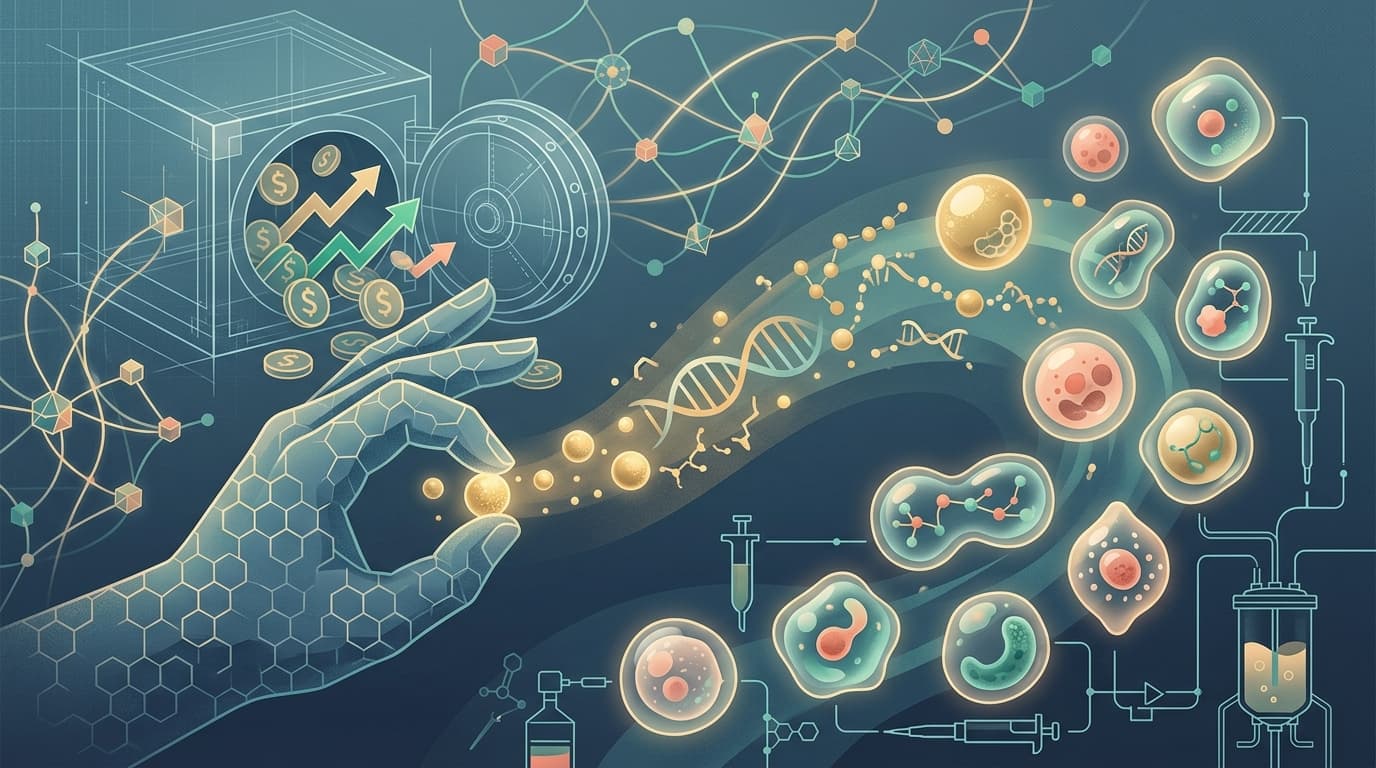
On May 12, BMS and China's Hengrui Medicine announced a strategic alliance worth up to $15.2 billion covering 13 drug candidates. All are early-stage, meaning none are yet proven in late-stage human trials. The deal spans oncology, hematology, and autoimmune disease, and it instantly became one of the largest pharma partnerships ever to originate from China.
BMS is paying $600 million upfront just to get in the door. Another $175 million arrives on the first anniversary of closing, with a second $175 million potentially following in 2028. That's up to $950 million in near-term cash before a single patient swallows a single pill.
The rest of that $15.2 billion? Development milestones, regulatory milestones, commercial milestones, option fees, and tiered royalties. In other words: a very long trail of "if this works, here's more money" payments stretching years into the future.
Not Your Typical Licensing Deal
Most pharma partnerships follow a simple playbook. Big Western company writes a check; smaller biotech hands over the keys. This one is different.
The 13 programs break down into three buckets. Four oncology and hematology assets come from Hengrui. Four immunology assets come from BMS. And five will be jointly discovered using Hengrui's research platforms. Both sides are contributing molecules, which makes this feel less like a purchase and more like a biotech potluck.
The geographic split is equally unusual. BMS gets exclusive worldwide rights to Hengrui's cancer drugs outside mainland China, Hong Kong, and Macau. Hengrui gets exclusive rights to BMS's immunology assets inside those territories. For the five co-discovered programs, the companies share development responsibilities with economics tied to options and royalties.
Get tomorrow's biotech intelligence before your competitors.
Join thousands of biotech professionals who start their day with our free, daily briefing.
One more twist: Hengrui will run all early clinical development for every single program. That means first-in-human studies, early proof-of-concept trials, all of it. BMS is essentially outsourcing the riskiest phase of drug development to a partner that can reportedly move faster and cheaper in China's clinical trial system.
Why BMS Needs This (Badly)
BMS has a patent cliff problem, and it's not subtle. Revlimid, Pomalyst, and Sprycel are already facing generic pressure. Eliquis, the blood thinner that prints money, loses U.S. exclusivity around 2028. Opdivo, BMS's blockbuster cancer immunotherapy, faces the same timeline.
The company has been on a shopping spree to fill those gaps. It acquired Karuna Therapeutics, RayzeBio, and Mirati Therapeutics in quick succession. It struck a co-development deal with BioNTech for a bispecific antibody. It bought Orbital Therapeutics to bolster its cell therapy portfolio. BMS says more than 60% of its development pipeline is externally sourced, and 20 of its 23 "leading transformational medicines" came from outside collaborations.
But oncology and immunology remain the two areas where BMS needs the most reinforcement. In cancer, it needs life after Opdivo. In autoimmune disease, it has Sotyktu (a psoriasis drug) but nothing close to the sprawling franchises that AbbVie and Johnson & Johnson have built. This Hengrui deal plants seeds in both gardens simultaneously.
The Elephant in the Room: Geopolitics
Writing a $15.2 billion check to a Chinese company isn't exactly a low-profile move in 2026.
The COINS Act, which targets outbound U.S. investment into Chinese technology sectors, could put deals like this under a microscope. House China Committee Chair John Moolenaar has already cited this specific BMS-Hengrui partnership as an example of American capital and know-how flowing into China's biotech sector. Under the Act's current text, Treasury has the authority to expand coverage to pharmaceutical IP transfers, drug discovery platforms, and biologics know-how.
That doesn't mean the deal is dead on arrival. The COINS Act would more likely impose reporting requirements and screening rather than an outright ban on pharma licensing. But it adds friction: more lawyers, more filings, more political risk. The companies expect the deal to close in Q3 2026, subject to regulatory approvals.
The BIOSECURE Act adds another layer of complexity, though it targets a different problem (U.S. government contracts with designated Chinese biotech companies). Together, these laws signal a tightening regulatory environment for exactly the kind of cross-border partnership BMS just signed.
China's Pharma Export Machine Is Accelerating
Despite the political headwinds, the money keeps flowing. The BMS-Hengrui deal isn't even the biggest China-originated partnership this year.
That title belongs to CSPC Pharmaceutical's $18.5 billion alliance with AstraZeneca, focused on obesity and diabetes drugs. Behind BMS-Hengrui at number two, there's GSK's $12 billion deal with Hengrui from 2025 (yes, the same Hengrui), covering respiratory and oncology assets. Innovent Biologics signed an $8.5 billion deal with Eli Lilly. RemeGen partnered with AbbVie for $5.6 billion.
The trajectory is staggering. By 2024, total Chinese out-licensing deal value reached $51.9 billion. In 2025, it exploded to roughly $135.7 billion. In Q1 2026 alone, about $60 billion in deals were signed.
China now accounts for approximately half of all global license-out deal value. The U.S. has dropped to around 28%. Whatever Congress thinks about the geopolitics, pharma executives keep reaching for their checkbooks.
The $15.2 Billion Question
So is this deal brilliant or reckless?
The bull case writes itself. BMS gets access to 13 shots on goal across its two most important therapeutic areas. Hengrui handles the expensive, failure-prone early work. If even two or three programs reach late-stage trials, the economics could look very favorable against that $950 million in near-term cash.
The bear case is equally obvious. These are all early-stage assets. No human data. No target names have even been publicly disclosed. Neither company has revealed what these drugs actually do, what they're aimed at, or what modalities they use. BMS is essentially betting $600 million upfront that Hengrui's scientists have picked the right targets, and that Washington won't pull the rug out from under the partnership before it bears fruit.
Historically, the vast majority of early-stage drug candidates never make it to market. Across 13 programs, the math suggests maybe one or two could eventually become approved drugs. At $15.2 billion in total potential payments, BMS is paying a premium for breadth and speed, hoping that volume can overcome the brutal odds of early-stage drug development.
The deal closes (assuming it closes) in a few months. After that, Hengrui's scientists get to work pushing these unnamed molecules into human trials. We won't know for years whether BMS bought a pipeline or a pile of expensive lottery tickets. But one thing is clear: in the race to replenish aging drug portfolios, big pharma isn't letting a little geopolitical tension slow it down.
Clinical & Regulatory5 min read
AstraZeneca's Boldest Bet: Filing for Approval After Failing the Test
AstraZeneca is pushing two drugs toward approval despite Phase 3 failures, betting that subgroup data and supplemental analyses can overcome the biggest hurdle in drug development. The outcome could redefine what "enough evidence" means for the entire industry.