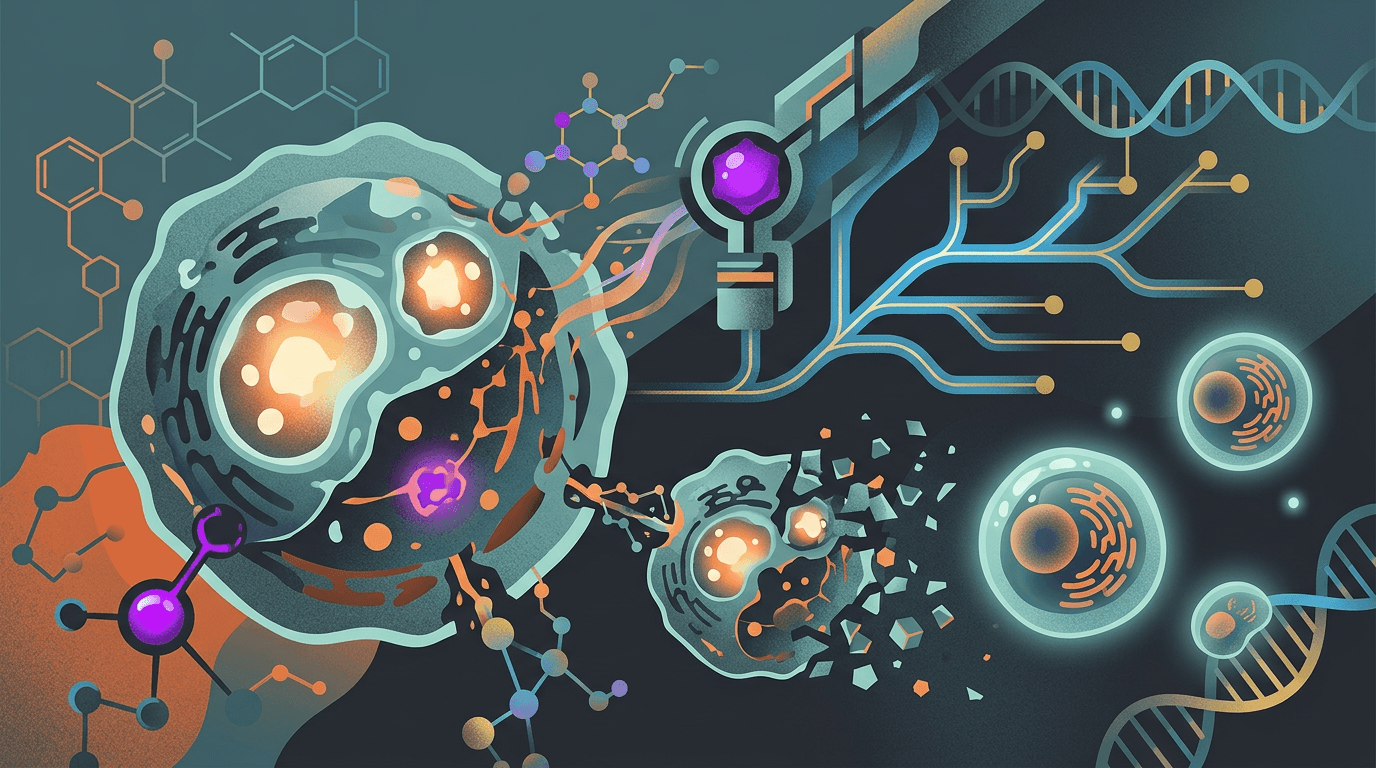

BMS's experimental drug mezigdomide just cleared its first phase 3 hurdle in multiple myeloma, validating an entirely new class of cancer drugs called CELMoDs. But the real showdown against the company's own blockbuster predecessor is still a year away.
Lenalidomide (brand name Revlimid) was one of the best-selling cancer drugs in history. It helped redefine how doctors treat multiple myeloma, a blood cancer that forms in bone marrow. Then generic competition began eroding its dominance, and Bristol Myers Squibb needed a next act.
On March 9, BMS delivered one. Its experimental drug mezigdomide hit the primary endpoint in the phase 3 SUCCESSOR-2 trial, showing a statistically significant improvement in progression-free survival (PFS) for patients with relapsed or refractory multiple myeloma. Translation: patients on the drug went longer before their cancer got worse.
This is a major phase 3 win for mezigdomide, and it validates an entire class of drugs that BMS has been betting its oncology future on. The question now is whether Wall Street, regulators, and oncologists agree it's worth the hype.
To understand why this matters, you need a quick biology lesson. Don't worry; it's painless.
Your cells have a built-in recycling system. When a protein is no longer needed, the cell tags it with a tiny molecule called ubiquitin, which is basically a "throw this away" sticker. A structure called the proteasome then chews it up. Think of it like putting old clothes in a donation bin: tag, toss, gone.
Drugs like lenalidomide and pomalidomide (known as IMiDs, or immunomodulatory drugs) hijack part of this system. They grab onto a protein called cereblon, which is part of the tagging machinery, and redirect it to destroy two transcription factors called Ikaros and Aiolos. Myeloma cells need those proteins to survive. Remove them, and the cancer cells die.
IMiDs were revolutionary. But cancer is resourceful. Tumors can develop mutations in cereblon or dial down its levels, making IMiDs less effective over time. Patients relapse. Doctors run out of options.
CELMoDs (cereblon E3 ligase modulators) are the upgraded version. Mezigdomide binds to cereblon with significantly higher affinity than older IMiDs, leading to stronger degradation of Ikaros and Aiolos. It also boosts immune cell activation more aggressively. Think of IMiDs as a standard wrench and CELMoDs as a torque wrench: same basic concept, but far more precise and powerful. Critically, CELMoDs can still work even when cereblon levels are low, which means they may overcome resistance that made prior drugs fail.

GSK sold its severe itch drug linerixibat to Alfasigma for $300 million, just two weeks before an FDA decision. The deal reveals how Big Pharma is shedding promising niche assets to chase bigger markets.

Join thousands of biotech professionals who start their day with our free, daily briefing.
SUCCESSOR-2 enrolled patients with relapsed or refractory myeloma who had received at least one prior line of therapy, including lenalidomide and an anti-CD38 antibody. These are patients whose cancer came back after standard treatment.
One group received mezigdomide plus Kyprolis (carfilzomib) and dexamethasone. The other got Kyprolis and dexamethasone alone. The primary endpoint was PFS, and the mezigdomide arm won with a clinically meaningful margin.
BMS hasn't released specific hazard ratios or median PFS numbers yet. The company said full data will come at an upcoming medical conference, with plans to share results with health authorities. Safety was consistent with what doctors already knew about these drugs; no new red flags emerged. The trial continues to collect overall survival data, which remains immature (not enough time has passed to draw conclusions).
BMS Chief Medical Officer Cristian Massacesi framed the results as reinforcing the CELMoD platform's value for oral treatments in blood cancers. That word "oral" matters. In a landscape increasingly dominated by infusions and injections, a pill you take at home has real appeal for patients and healthcare systems alike.
Mezigdomide isn't arriving in an empty market. Multiple myeloma is one of the most competitive spaces in oncology, with over 75 companies developing more than 80 therapies.
Johnson & Johnson is a heavyweight here. Its CAR-T therapy CARVYKTI showed 33% of patients remained progression-free at five-plus years in the CARTITUDE-1 trial. Its bispecific antibodies, teclistamab and talquetamab, are pushing into earlier lines of treatment. Pfizer has elranatamab, another bispecific. Sanofi is running isatuximab in triplet regimens for newly diagnosed patients.
Bispecific antibodies and CAR-T cells grab headlines because they produce eye-popping response rates, sometimes north of 80% in certain regimens. But they come with complexity: manufacturing timelines for CAR-T, infection risks, and the need for hospital-based administration. CELMoDs offer something different. They're oral, combinable with other therapies, and potentially usable across multiple lines of treatment.
BMS is positioning CELMoDs not as a replacement for these newer therapies, but as a backbone that doctors can pair with them. It's less "either/or" and more "yes, and."
William Blair analyst Matt Phipps called the CELMoD program a "potential key long-term growth driver" for BMS. But he also pointed to what really matters: the SUCCESSOR-1 trial.
That study pits mezigdomide head-to-head against pomalidomide (BMS's own older drug) in combination with Velcade and dexamethasone. Beating an add-on comparator like Kyprolis plus dex is one thing. Beating your predecessor directly is the definitive proof that the upgrade is real. SUCCESSOR-1 is currently recruiting, so investors will need patience.
Meanwhile, BMS has another CELMoD, iberdomide, with an FDA decision date of August 17, 2026. Iberdomide already showed positive MRD (minimal residual disease) negativity results in September 2025, with PFS data expected later this year. If both iberdomide gets approved and mezigdomide's full data impress at a medical conference, BMS could have two CELMoDs advancing through the regulatory pipeline simultaneously.
There's also golcadomide, a third CELMoD aimed at lymphoma.
BMS built one of pharma's great franchises on Revlimid. When the patent cliff arrived, skeptics questioned whether the company could find a worthy successor. SUCCESSOR-2 (the name isn't subtle) suggests it can.
The full picture won't emerge until detailed data drop at a medical conference and, more importantly, until SUCCESSOR-1 delivers its head-to-head verdict. But for now, BMS has proven that CELMoDs aren't just a science project. They work in a rigorous, large-scale trial setting.
For patients whose myeloma has stopped responding to older drugs, that's not just a data point. It's a lifeline.
Takeda's oral psoriasis drug zasocitinib just crushed its Phase 3 trials with biologic-level skin clearance rates. With peak sales estimates of up to $6 billion, the $4 billion acquisition that spawned it might be biotech's best bargain.