
BioNTech just unveiled the first-ever data combining a PD-L1×VEGF bispecific antibody with an antibody-drug conjugate in lung cancer. It's a combination nobody has tried before, and it earned a late-breaking oral slot at the world's biggest lung cancer conference.
Imagine you've been fighting a war with one weapon at a time. A checkpoint inhibitor here, a chemo regimen there. Now picture someone showing up with two experimental weapons strapped together, neither of which has ever been paired in this particular fight. That's essentially what BioNTech just did at the World Conference on Lung Cancer (WCLC) 2026.
The company presented first-ever global data for a combination of pumitamig and elfetabart drozuntecan in patients with advanced or metastatic lung cancer. It's a mouthful of a drug name, sure. But the concept behind it is genuinely novel: no one has ever combined a PD-L1×VEGF bispecific antibody with an antibody-drug conjugate (ADC) in lung cancer before. Not BioNTech, not anyone.
That alone makes this a "circle it on the calendar" moment for oncology watchers.
Let's translate the alphabet soup into something useful.
Pumitamig (also known as BNT327) is a bispecific antibody, meaning it grabs onto two targets at once. One arm blocks PD-L1, a protein that tumors use to hide from the immune system. The other arm neutralizes VEGF-A, a molecule that helps tumors build their own blood supply. Think of it as cutting the tumor's camouflage and its supply lines in one move.
BioNTech co-developed pumitamig with Bristol Myers Squibb, and the drug has already been tested in over 1,400 patients across various cancer types. It's not a newcomer.
Elfetabart drozuntecan (BNT324, co-developed with DualityBio) is an ADC. ADCs are sometimes called "smart bombs" because they deliver toxic payloads directly to cancer cells. This one targets a protein called B7-H3 on tumor surfaces, then releases a topoisomerase I inhibitor inside the cell. Translation: it finds the cancer, latches on, and poisons it from within.
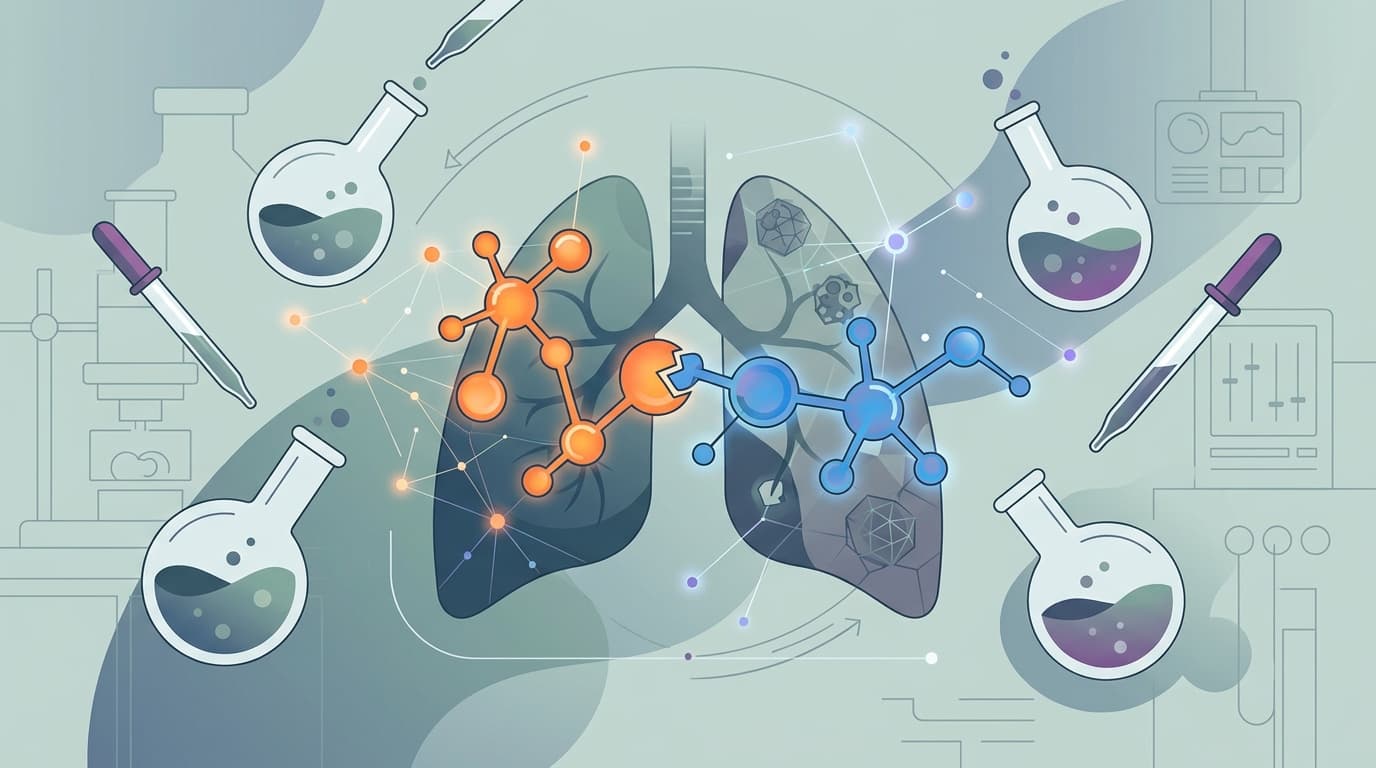
Put the two together and you get a regimen that attacks tumors from three angles simultaneously: restore immune visibility, starve the blood supply, and deliver a precision cytotoxic hit.

Amgen just killed a three-year, $500M+ collaboration with TScan Therapeutics aimed at using T-cell receptor therapy to treat Crohn's disease. The move spotlights the growing pains facing the entire TCR therapy space, and leaves TScan with about a year of cash to prove it doesn't need a big pharma partner.


Join thousands of biotech professionals who start their day with our free, daily briefing.

Lung cancer treatment has come a long way since the era of chemo-only regimens. Checkpoint inhibitors changed the game. Anti-angiogenic drugs added another layer. ADCs are now making waves across solid tumors. But until now, nobody had tried stacking a dual-target bispecific immunotherapy with an ADC in lung cancer patients.
The data come from a global Phase 1/2 trial (NCT06892548) enrolling patients with advanced or metastatic non-small cell lung cancer (NSCLC) and small cell lung cancer (SCLC). BioNTech presented the results as a late-breaking oral presentation, which is the scientific conference equivalent of getting the primetime slot on network television. The abstract number, OA14.01, signals that the conference organizers thought these data were important enough to spotlight.
What we don't have yet are the specific efficacy numbers: response rates, survival data, and detailed safety breakdowns. BioNTech's press materials set the stage without revealing the full hand. That said, the fact that this earned a late-breaking oral slot (rather than a poster tucked in a hallway) suggests the data tell an interesting story.
This isn't BioNTech throwing one dart at a board. It's a full-on dart-throwing competition.
The company has been building pumitamig into a platform drug, pairing it with different partners across tumor types like a serial dater looking for the right match. In previously untreated NSCLC, pumitamig combined with chemotherapy showed a confirmed response rate of 57.1% in non-squamous NSCLC and 68.4% in squamous NSCLC. The disease control rate hit 100% at the data cutoff. Those are strong early signals.
In extensive-stage small cell lung cancer, a separate Phase 2 trial of pumitamig plus chemo reported a 76.3% confirmed response rate and a median progression-free survival of 6.8 months.
Now add the elfetabart drozuntecan combination into the mix. BioNTech is clearly betting that pumitamig can serve as a backbone for multiple combination strategies, not just one.
BioNTech's ambitions in oncology go well beyond a single trial. The company has been on an acquisition spree to make this all possible. In February 2025, it completed the $800 million acquisition of Biotheus, which gave BioNTech full global rights to pumitamig along with antibody and bispecific ADC capabilities. An additional $150 million in milestone payments could follow.
The ADC side of the portfolio is equally busy. Beyond elfetabart drozuntecan, BioNTech is developing ADCs targeting HER2 (in partnership with DualityBio), HER3 (in collaboration with MediLink Therapeutics), and TROP2. The plan for 2026 is aggressive: six additional Phase 3 trials are expected to launch, bringing the total to 15 Phase 3 programs with seven late-stage readouts anticipated.
For a company best known for its COVID mRNA vaccine, this is a dramatic pivot into oncology's most competitive arena.
Lung cancer is not a gentle neighborhood for new drugs. The treatment landscape already includes checkpoint inhibitors, chemotherapy combos, anti-angiogenic therapies, and an emerging wave of ADCs. Every new entrant has to prove it can beat (or meaningfully add to) what's already working.
A 2026 meta-analysis of randomized trials found that combining PD-1/PD-L1 inhibitors with VEGF-targeting agents does improve progression-free and overall survival in advanced NSCLC compared to controls. So the class effect is real. But expert commentary has noted a catch: no bispecific in this space has delivered a clean, globally consistent overall survival advantage yet. Response rates look promising; the definitive survival proof remains elusive.
That's the gap BioNTech is trying to close. And by stacking a bispecific with an ADC instead of plain chemotherapy, the company is essentially betting it can deepen responses without piling on traditional chemo toxicity. It's a bold hypothesis.
The WCLC presentation is a proof-of-concept moment, not a finish line. Phase 1/2 data tell you whether a combination is safe enough to keep exploring and active enough to get excited about. They don't tell you whether it changes how doctors treat patients.
For that, BioNTech will need larger trials, longer follow-up, and head-to-head comparisons against standard regimens. The company's pipeline scale suggests it's prepared for exactly that kind of long game.
The real question for investors and clinicians alike: can BioNTech's "bispecific plus ADC" formula outperform the increasingly crowded field of combination approaches in lung cancer? The early returns from WCLC 2026 will give us the first real clue. And in a disease that kills nearly 1.8 million people worldwide each year, even an incremental advance matters.
Bristol Myers Squibb just partnered with a two-year-old AI startup to redesign how it discovers antibodies. Chai Discovery has already landed Eli Lilly, Novartis, and Pfizer as partners, and its AI models are posting hit rates that make traditional screening look ancient.