
BioMarin closed its $270 million Inozyme acquisition on July 1st. Five days later, the drug failed its key Phase 3 bone-healing endpoint despite hitting its biochemical target. The ultra-rare disease bet just got a lot riskier.
BioMarin completed its $270 million acquisition of Inozyme Pharma on July 1, 2025. On May 18, 2026, the drug it bought failed its most important clinical test.
The drug in question is BMN 401 (formerly INZ-701), an enzyme replacement therapy for ENPP1 deficiency. That's an ultra-rare genetic disorder where the body can't produce enough of a molecule called PPi, which normally prevents minerals from building up where they shouldn't. Without it, infants develop severe arterial calcification, and children develop a painful form of rickets. About 50% of affected infants die within six months of birth.
The Phase 3 trial, called ENERGY-3, tested BMN 401 in children between ages 1 and 12. It had a split-personality design. For the FDA, the primary endpoint was whether the drug raised plasma PPi levels. For European regulators, it also needed to show improvement in skeletal healing on X-ray (a measure called RGI-C).
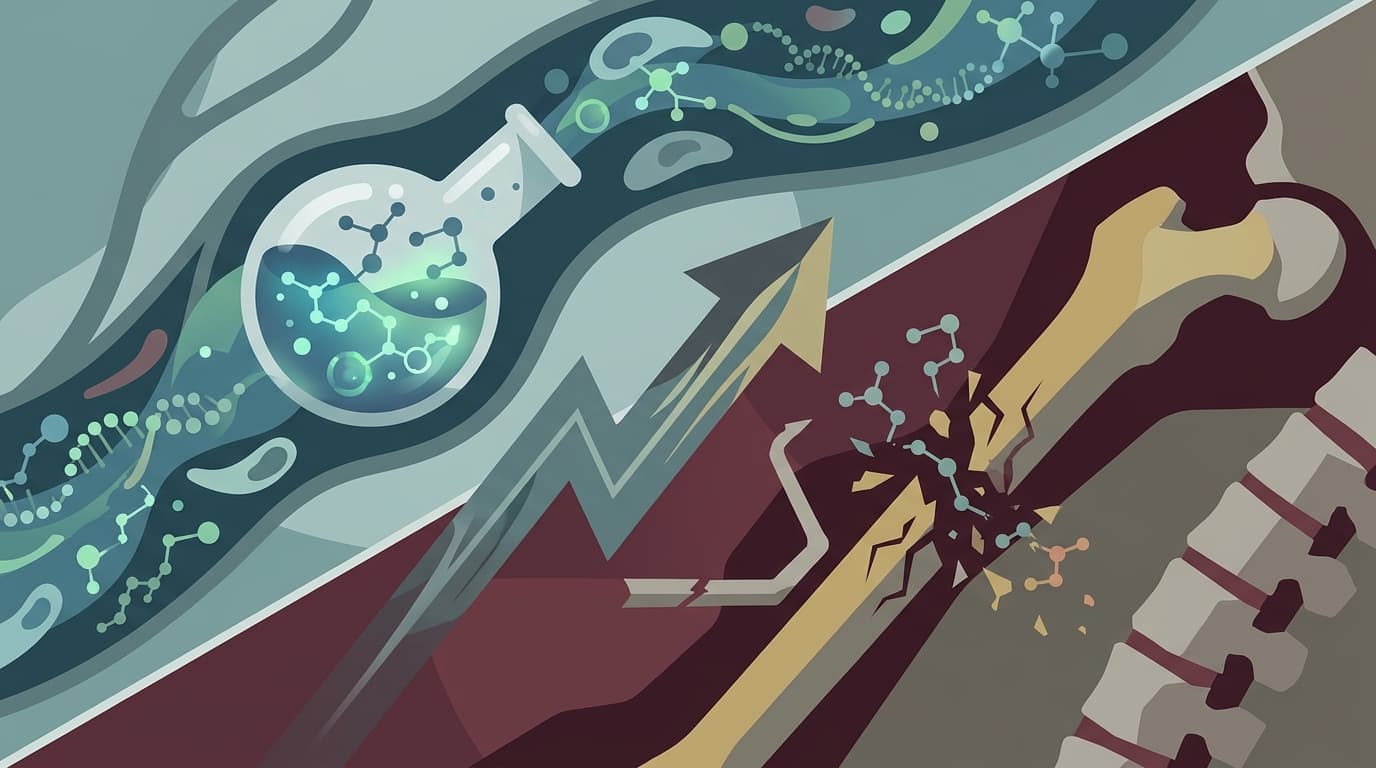
The drug nailed the biochemistry. PPi levels went up significantly at 52 weeks compared to conventional therapy. On paper, the enzyme replacement was doing exactly what it was designed to do: restoring the missing molecule.
But the skeleton didn't get the memo. The radiographic endpoint showed no meaningful improvement in bone healing. Worse, BioMarin reported that "no positive trends were observed" across secondary endpoints, including rickets severity, growth, and weight gain.
Think of it like filling a car's gas tank but the engine still won't start. The fuel (PPi) was there. The downstream machinery (bone repair) just wasn't responding.
Even though the drug technically met the FDA's primary endpoint (PPi elevation), that was always supposed to be a stepping stone, not a destination. The FDA had signaled it expected PPi improvement to be supported by trends in clinical endpoints like bone healing. Those trends simply don't exist in this dataset.

The Novo Nordisk Foundation just made its largest donation ever: $861 million over a decade to turn Denmark's BioInnovation Institute into a European biotech powerhouse. The catch? It's not just about drugs anymore.

Join thousands of biotech professionals who start their day with our free, daily briefing.
For European regulators, the situation is even clearer. RGI-C was a co-primary endpoint, meaning the trial needed to hit both targets. It only hit one. That's a miss.
Stifel analysts called it bluntly: the result "removes an upside driver" and creates "significant risk to approval." Leerink echoed caution on the regulatory path forward.
BioMarin paid $4.00 per share for Inozyme, a roughly 180% premium over the stock's $1.42 closing price before the deal was announced. The transaction was all cash, no milestones, no earn-outs, no contingent payments. BioMarin bet the full $270 million up front.
That bet made strategic sense at the time. BioMarin positions itself as the rare-disease company: genetically defined conditions, small patient populations, premium pricing, orphan drug exclusivity. ENPP1 deficiency (estimated prevalence: about 1 in 64,000 pregnancies worldwide) fit perfectly into that playbook.
But the ultra-rare strategy comes with ultra-rare risk. When your pivotal trial enrolls dozens of patients instead of thousands, statistical noise is amplified. A rare-disease development review found that 81% of screened rare-disease patients weren't even eligible for enrollment, compared to 57% in non-rare diseases. Everything is harder: finding patients, keeping them enrolled, measuring outcomes that regulators will accept.
There's one interesting wrinkle. Separate data from infants and very young children with ENPP1 deficiency told a different story. In that group, 80% survived beyond the first year (versus about 50% historically), arterial calcifications stabilized or improved, and none of the at-risk infants showed rickets after age 1.
The implication is uncomfortable but logical: maybe the drug works if you give it early enough, before skeletal damage is established. Reversing bone disease in older children might be a fundamentally harder problem than preventing it in infants. That's a scientific insight, but it doesn't save the Phase 3 program BioMarin just bought.
This isn't the only iron in BioMarin's fire. The company has Voxzogo (for achondroplasia) expanding into hypochondroplasia with Phase 3 data expected soon. Palynziq has an adolescent label expansion with a February 2026 PDUFA date. And its $4.8 billion Amicus acquisition adds two commercial rare-disease drugs.
But the Inozyme stumble stings for two reasons. First, it's a $270 million write-down risk with no milestone structure to soften the blow. Second, analysts have trimmed long-term revenue growth assumptions from 3.95% down to 2.46%.
BioMarin's M&A history doesn't inspire confidence here either. Its 2009 deal with La Jolla (lupus drug Riquent) failed. Its Prosensa acquisition for drisapersen in Duchenne muscular dystrophy also never reached the market. The Inozyme bet was supposed to represent a new, more disciplined era of deal-making.
Rare-disease acquisitions look elegant on a slide deck. Small populations, huge unmet need, premium pricing, regulatory fast-tracks. But when your entire investment thesis rests on one pivotal trial with a few dozen patients, you're playing a game where one data readout can erase hundreds of millions in value overnight.
BioMarin learned that lesson when the ENERGY-3 results came in. The question now is whether the infant data offers a path forward, or whether BMN 401 joins the long list of drugs that corrected the right biomarker but couldn't fix the actual disease.
Immunovant's FcRn inhibitor failed two Phase 3 trials in thyroid eye disease, costing $39 million to shut down. The failure isn't just one company's problem; it's exposing the limits of an entire drug class that Wall Street thought could conquer all of autoimmunity.