Biotech's Biggest Week Had Three Words on Everyone's Lips
BIO 2026 wasn't the usual deal-making party. This year's conference surfaced three strategic tensions reshaping biotech: the messy reality of decoupling from China, the Biosecure Act's slow-rolling disruption, and AI drug discovery's biggest deal yet.
The Vibe Was Off (In a Useful Way)
BIO 2026 wrapped up in San Diego last week, and if you were expecting the usual parade of splashy M&A headlines and champagne-fueled deal celebrations, you left disappointed. This year's conference had a different energy: cautious, strategic, and deeply political. The biggest conversations weren't about which blockbuster drug got licensed. They were about China, the Biosecure Act, and whether AI can actually deliver on its promises.
Think of BIO as the biotech industry's annual family reunion. Normally, the cousins are showing off new cars and closing deals on the patio. This year, everyone was arguing about the family business, who they're allowed to do business with, and whether the new robot in the kitchen can actually cook.
The China Question Is Splitting the Industry in Half
If there was a single topic that dominated hallway conversations, panel debates, and investor meetings, it was U.S.-China biotech relations. Not as an abstract geopolitical concept, but as a concrete operational headache that's reshaping how companies build drugs.
The split is real. One camp sees Chinese biotech partners as indispensable: they're fast, cost-effective, and increasingly innovative. Nearly 100 U.S.-China licensing deals have been struck since early 2025, according to industry data cited around the conference. The other camp sees those same partnerships as a national security liability.
BIO CEO John Crowley tried to thread the needle, calling U.S. biotech protection a "national security imperative" while warning about the "unintended consequences" of blanket bans. Peter Kolchinsky of RA Capital Management pushed back harder, arguing the Biosecure Act creates "concrete harms" to existing supply chains that could actually weaken American competitiveness.
Meanwhile, Andrew Lam of Ally Bridge Group offered what might be the most clear-eyed take: "Capital is fungible." His point? Restricting U.S. investment won't stop global money from chasing the best science, including science coming out of China. He predicted China would build a major global pharma presence within the next decade, partly by serving the Global South.
Get tomorrow's biotech intelligence before your competitors.
Join thousands of biotech professionals who start their day with our free, daily briefing.
The Biosecure Act: Already Law, Barely Enforced, Fully Disruptive
The Biosecure Act became law in December 2025, tucked into the annual defense spending bill. It bars U.S. federal agencies from contracting with companies that use "biotechnology companies of concern" (BCCs), a designation currently covering firms on the Pentagon's list of Chinese military-linked companies. BGI and MGI, China's sequencing giants, are already on that list.
Here's what makes it interesting: WuXi AppTec and WuXi Biologics are not. Earlier drafts of the bill named them explicitly, but the final version dropped the automatic designation. They could still be added later through a separate government review process.
The enforcement timeline stretches years into the future. The Office of Management and Budget has until roughly late 2026 to publish its full list of restricted companies. Federal contracting rules won't be updated until around 2028. Existing contracts with newly designated firms get a five-year grace period after that; contracts with companies already on the Pentagon's list get just 60 days.
But here's the thing about regulatory timelines: the market doesn't wait for the government. Companies are already shifting. If you're a biotech with a drug that might someday be purchased by the VA, the Department of Defense, or any agency that touches federal dollars, you're mapping your supply chain right now. Investors are asking pointed questions about China exposure in due diligence. The political signal alone (WuXi was named in draft legislation, after all) is enough to trigger preemptive moves.
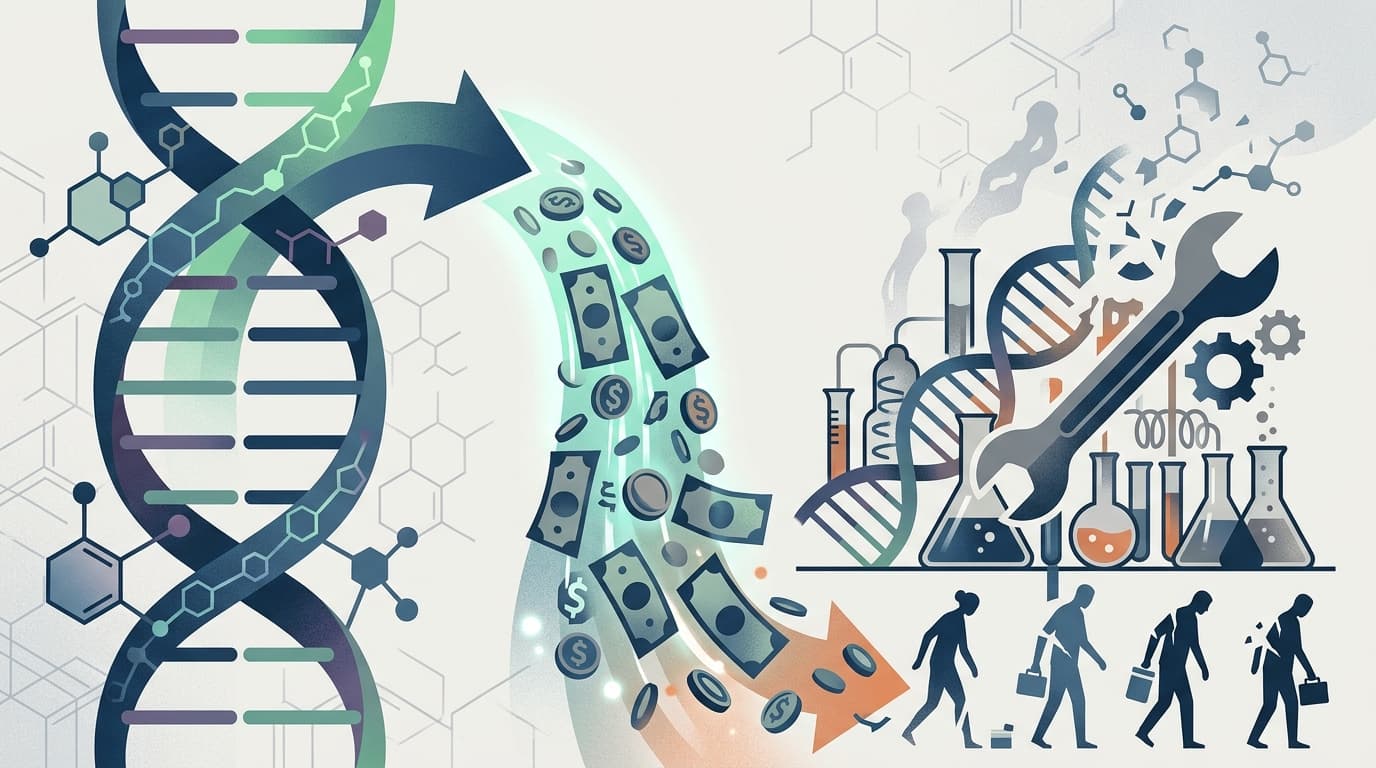
For smaller biotechs, the math is painful. Many chose Chinese CDMOs (contract manufacturers) specifically to stretch limited cash. Moving manufacturing to U.S. or European alternatives means higher costs, longer timelines, and potentially fewer drugs in the pipeline. One analysis noted that WuXi has been involved in developing roughly one-quarter of the drugs used in the United States. Unwinding that kind of dependency isn't like switching coffee suppliers.
A Panel Dropped a Bomb About NIH Cuts
One BIO 2026 panel drew particular attention: a group of pharma executives, investors, academics, and government officials argued that cuts to NIH and other federal research agencies are weakening U.S. competitiveness against China at exactly the wrong moment.
Panelists warned of a "generational loss of scientists" and contrasted shrinking U.S. research budgets with China's sustained, aggressive R&D investments. The irony wasn't lost on anyone: the U.S. is trying to decouple from China while simultaneously undermining the domestic infrastructure that's supposed to replace Chinese capabilities.
AI Finally Got Its Own Pavilion (and a $2.5 Billion Deal)
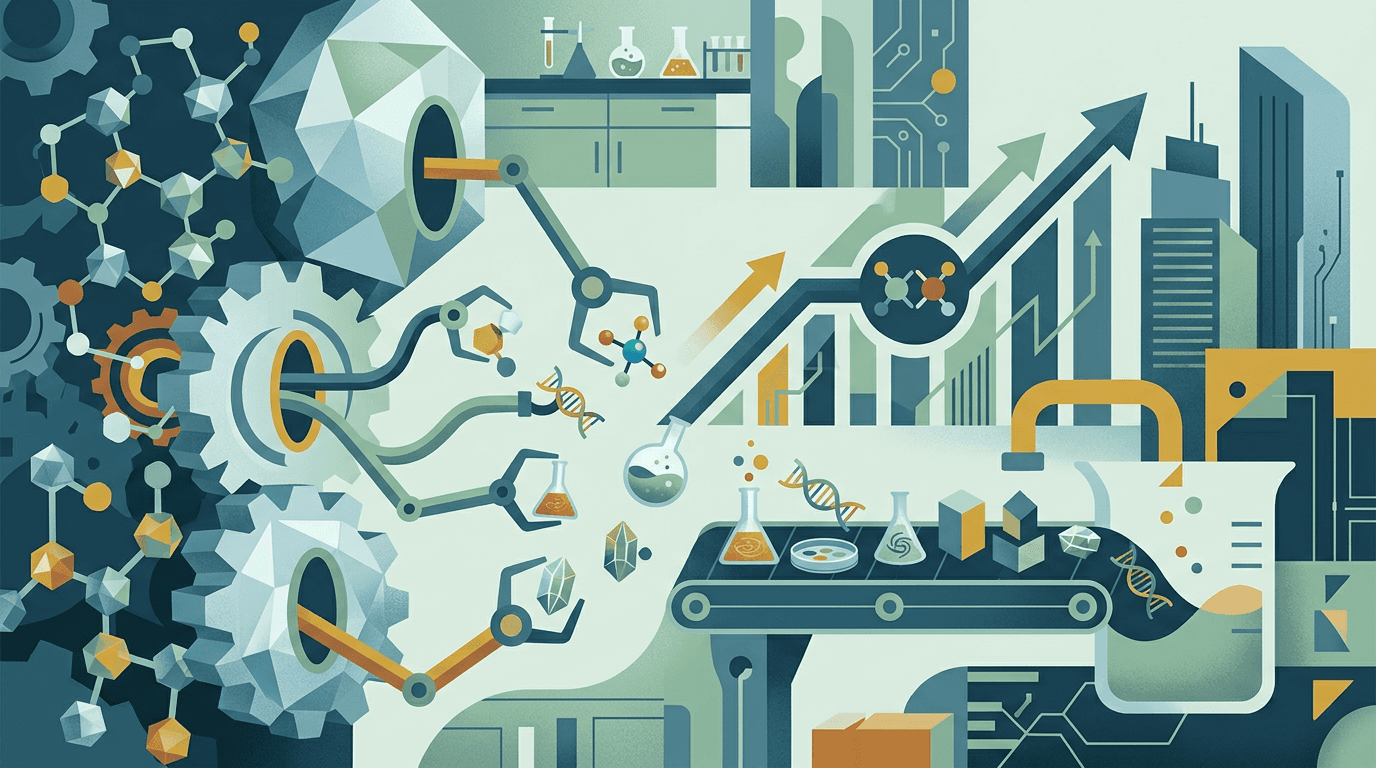
The third major storyline at BIO 2026 was artificial intelligence, which graduated from "interesting side topic" to "core pillar of the conference." BIO launched a dedicated AI Summit on the opening day, featuring practical case studies rather than the theoretical hand-waving that dominated previous years.
The headline deal landed right at the conference's opening: Insilico Medicine and SK Biopharmaceuticals announced a collaboration worth over $2.5 billion in potential milestones, Insilico Medicine's largest partnership with an Asia-Pacific company. Insilico will use its generative AI platform to identify drug candidates for neuroimmune disorders (think neuroinflammation and rare neurological diseases), while SK handles late-stage trials and commercialization. The deal includes up to $18 million in upfront and near-term milestone payments, with single-digit royalties on any eventual sales.
The deal structure tells you exactly where AI drug discovery stands right now. The technology is promising enough to command billion-dollar milestone packages, but the upfront money stays modest because most AI-discovered compounds haven't survived the gauntlet of human clinical trials yet. It's a bet on the future, not a reward for past performance.
On the mainstage, Genentech's CEO described designing a molecule in months instead of years using AI. A joint session with NVIDIA explored how computing infrastructure is becoming as important to drug development as lab equipment. The recurring message across sessions: AI partnerships are no longer optional for companies that want to stay competitive.
But the conference also struck a pragmatic tone. A session titled "Putting AI in Its Proper Place" focused on when and where to embed AI into expert workflows, acknowledging that the technology works best as a copilot, not an autopilot. The goal isn't replacing scientists; it's helping them fail faster and cheaper on bad ideas so they can spend more time on good ones.
Three Tensions, One Industry
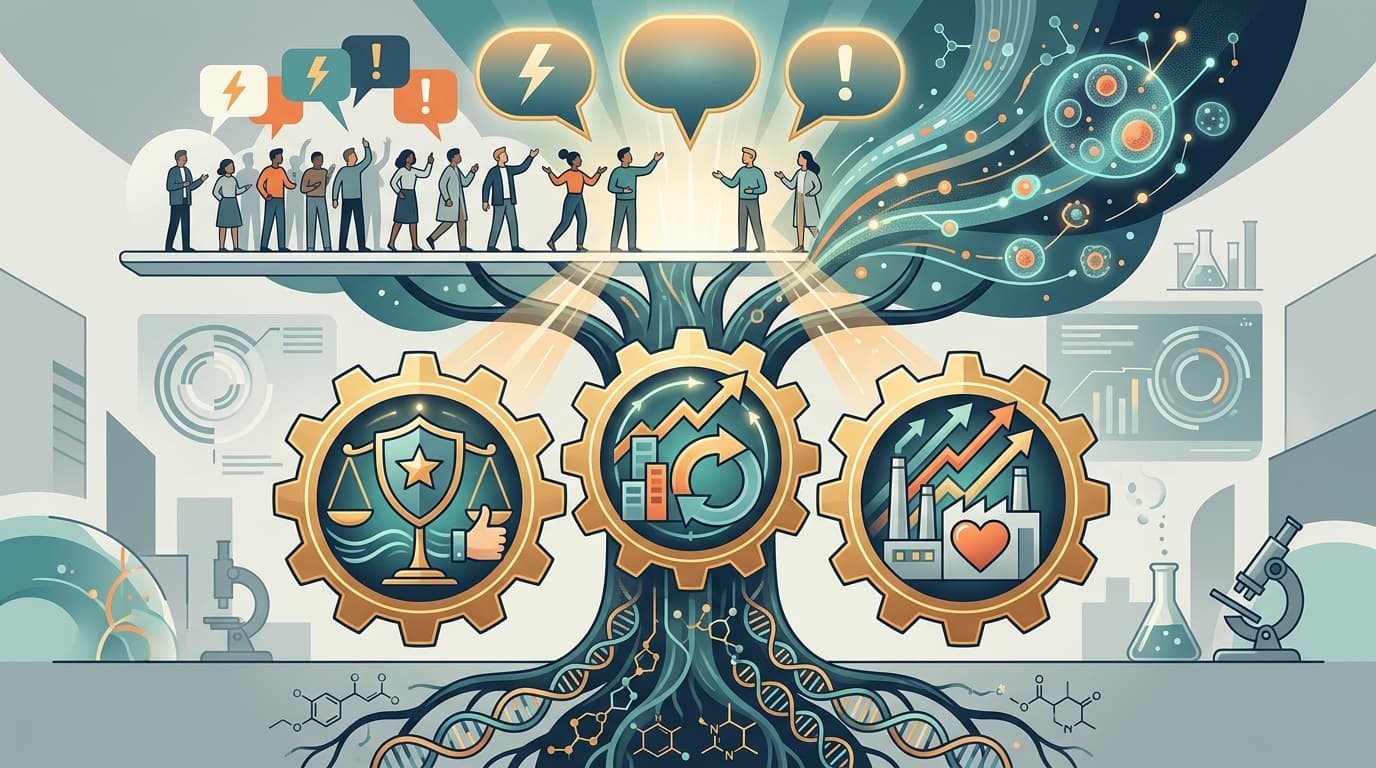
BIO 2026 didn't produce a tidy narrative. Instead, it surfaced three tensions that will define biotech strategy for the next decade.
First: how far to decouple from China without crippling the very innovation ecosystem that makes American biotech dominant. Second: how to absorb higher manufacturing costs as supply chains shift to more expensive (but politically safer) locations in the U.S., Europe, South Korea, and Singapore. Third: how to separate AI hype from AI results, investing enough to stay competitive without chasing every shiny algorithm.
None of these questions have clean answers. And that's exactly what made this year's conference more interesting than the usual deal-show. The biotech industry is navigating a genuine strategic crossroads, and for once, the conversations matched the stakes.
4 min read
Lantheus Had the Data. The Factory Broke the Dream.
Lantheus' cancer imaging agent had flawless clinical data and a clean safety profile. The FDA rejected it anyway, and the reason has nothing to do with science. It's a cautionary tale about the hidden risk that keeps torpedoing biotech approvals.