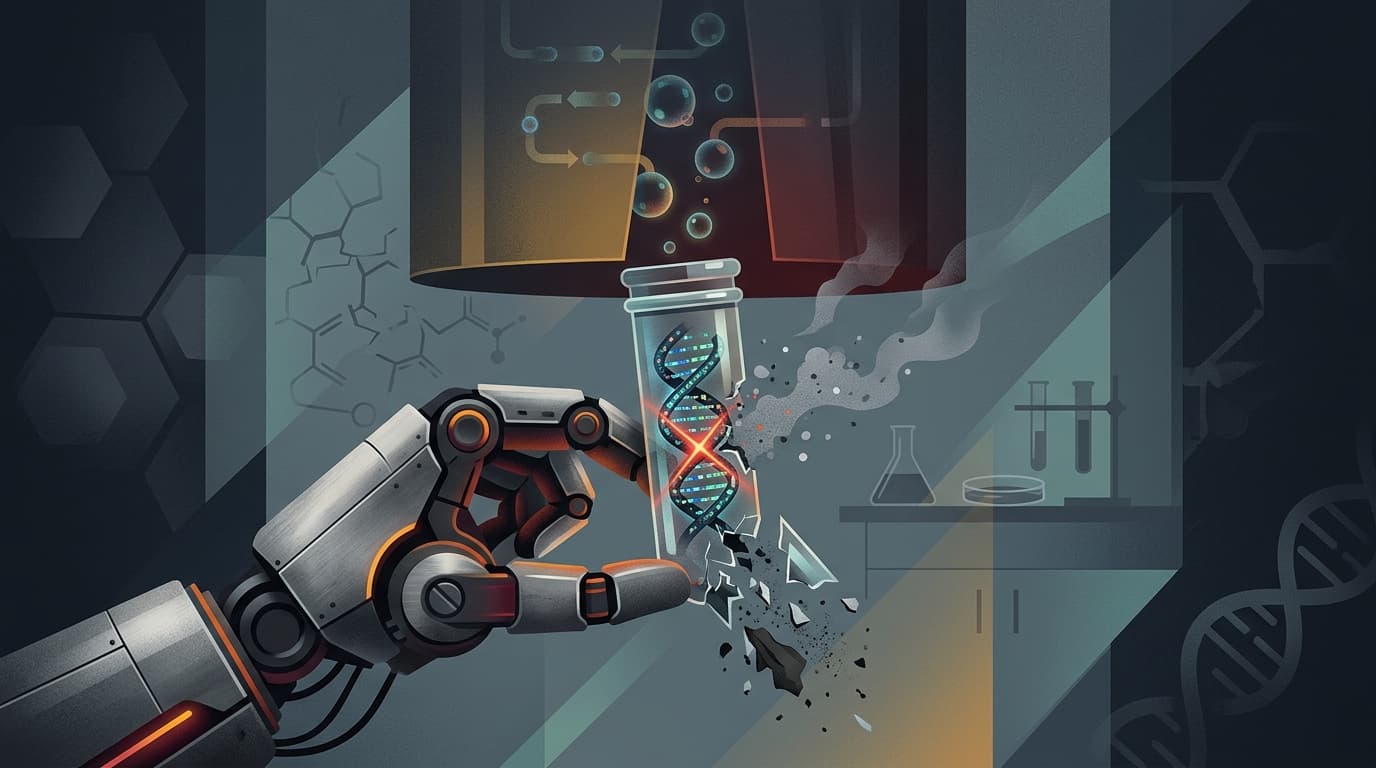

Astellas pulled the plug on its STING inhibitor trial for Sjögren's syndrome before it could even generate human data. The decision says as much about a notoriously undruggable target as it does about where Big Pharma is placing its bets.
Imagine discovering a light switch that controls inflammation in your body. Now imagine that every time you try to flip it, the switch shocks you, breaks off, or does the opposite of what you wanted. That's roughly where the pharmaceutical industry stands with STING, one of the most tantalizing (and frustrating) targets in immunology.
Astellas just walked away from its attempt to flip that switch. The Japanese pharma giant terminated its Phase 1 trial of ASP5502, a small molecule designed to block STING signaling in patients with primary Sjögren's syndrome. The drug never even got a real chance to prove itself. And the reason Astellas gave? Strategic pipeline prioritization. Translation: we'd rather spend our money somewhere else.
Sjögren's syndrome is a common rheumatic autoimmune disease, with about half of those affected walking around undiagnosed. It attacks moisture-producing glands, leaving patients with painfully dry eyes and mouth, crushing fatigue, joint pain, and in some cases, organ damage or lymphoma.
The treatment options? Basically symptomatic band-aids. Eye drops. Saliva substitutes. Immunosuppressants borrowed from other diseases. There is no FDA-approved targeted therapy for Sjögren's. Not one. That's a remarkable gap for a disease this common, and it's why the pipeline has attracted so much attention in recent years.
So when Astellas brought ASP5502 into the clinic, it carried real hope. The trial (NCT06544642) was designed to enroll up to 132 participants aged 18 to 65. It had three parts: single and multiple ascending doses in healthy adults, followed by a 28-day dosing period in actual Sjögren's patients. The goal was straightforward: figure out if the drug is safe, tolerable, and pharmacologically active in humans.
It never got the chance to answer those questions.
To understand why Astellas pulled the plug, you need to understand STING itself. STING (Stimulator of Interferon Genes) is a protein that acts like a smoke detector for your immune system. When it senses DNA floating around in the wrong part of a cell, it sounds the alarm, triggering a cascade of inflammatory signals through pathways called TBK1/IRF3 and NF-κB.

Kailera Therapeutics raised nearly $1 billion in private funding before most people knew its name. Now the obesity-focused biotech is going public, and its IPO could reveal whether Wall Street's love affair with weight-loss drugs still has room to grow.


Join thousands of biotech professionals who start their day with our free, daily briefing.
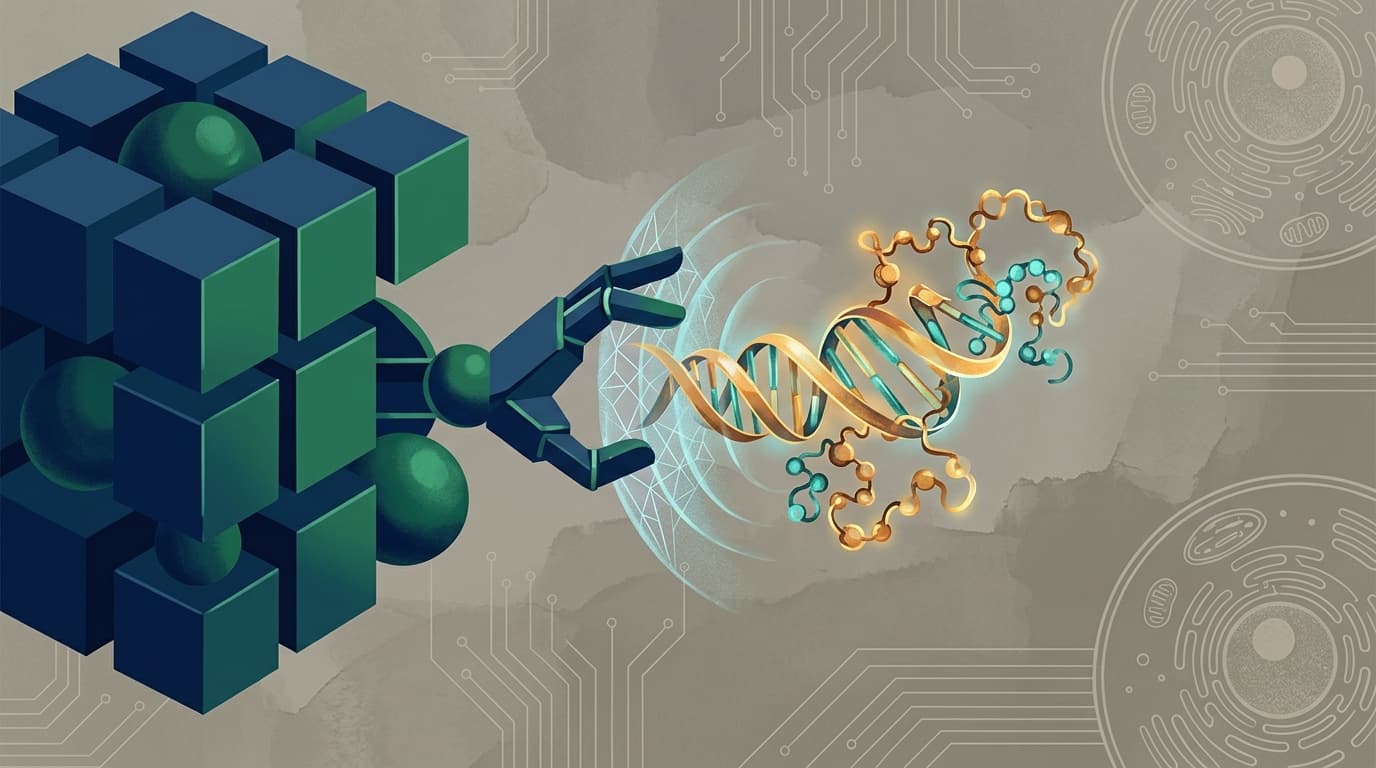
In healthy people, this system catches viruses and damaged cells. In autoimmune diseases like Sjögren's, the alarm goes off when there's no fire. The immune system starts attacking the body's own tissues because STING keeps detecting "self-DNA" that's leaked from stressed cells.
Blocking STING sounds like a logical fix. But the protein is expressed in virtually every tissue in your body. That makes targeting it precisely about as easy as trying to change one bulb on a Christmas tree without unplugging the whole strand.
The challenges are stacking up. STING inhibitors generally suffer from poor bioavailability, meaning they don't survive the journey through your gut and bloodstream very well. They also lack selectivity; it's hard to block STING in the joints without also blocking it in places where you actually need immune surveillance. And the pathway has a maddening dual personality: depending on the context, STING signaling can be either pro-inflammatory or anti-inflammatory. You're trying to tune a dial that keeps changing which direction "off" is.
Astellas isn't the only company that's struggled here. Most of the high-profile STING setbacks have come from the oncology side, where companies tried STING agonists (turning the signal up to fight cancer, rather than turning it down for autoimmune disease). GSK, Merck, and Bristol Myers Squibb have all watched their STING agonist programs stumble through clinical holds, patient safety events, and zero-percent response rates.
On the inhibitor side, the picture is even thinner. There simply aren't many programs that have made it to clinical trials for autoimmune diseases. Preclinical tools like H-151, one of the best-known STING inhibitors in research, ran into a wall when scientists discovered it worked in mouse cells but failed to translate to human cells due to structural differences in the protein. That kind of species-specific mismatch is a drug developer's nightmare.
ASP5502 was supposed to be different. Astellas designed it as an oral small molecule, a format that's easier to dose and scale than the injectable approaches that dominated early STING work. But "different" doesn't always mean "better," and the company apparently saw more promise elsewhere in its portfolio.
Look at Astellas' recent moves and the strategic logic becomes clearer. The company has been pouring resources into oncology, with seven new molecular entities in the clinic and programs spanning gastric cancer, colorectal cancer, and bladder cancer. It's presenting data at ESMO and ASCO GI, chasing FDA priority reviews, and building out a precision oncology platform around targets like KRAS G12D and Claudin 18.2.
Immunology, by contrast, looks like an afterthought. Astellas lists it as a pipeline category, but public disclosures reveal almost no autoimmune-specific programs beyond ASP5502. Killing this trial isn't just a single setback; it's a signal that Astellas may be quietly exiting the autoimmune space, at least for novel mechanisms like STING.
Sjögren's patients aren't entirely out of luck. Novartis' ianalumab just earned FDA Breakthrough Therapy designation in January 2026 after nailing two Phase III trials (NEPTUNUS-1 and NEPTUNUS-2). It works by targeting BAFF-R to deplete B cells, and Novartis plans to file for global approval starting early this year. If approved, it would be the first targeted therapy for Sjögren's, ever.
Behind ianalumab, there's telitacicept in Phase III, plus dazodalibep and nipocalimab, both now in Phase III, and Artiva's allogeneic NK cell therapy. The pipeline is more crowded than it's been in years.
But none of those programs are STING inhibitors. They're all going after B cells or other established immune targets, not the innate immune machinery that STING controls. The fundamental question of whether you can safely drug the cGAS-STING pathway in autoimmune disease remains unanswered.
Astellas killing ASP5502 won't make headlines the way a Phase III failure would. It was a Phase 1 program, early stage, small. But the signal matters more than the size. When a major pharma company walks away from a target before even generating human data, it tells you something about how that company (and possibly the field) views the risk-reward calculus.
STING remains one of the most scientifically interesting targets in immunology. It also remains one of the hardest to drug. Until someone figures out how to thread the needle of specificity, bioavailability, and dual-role signaling, this pathway will keep collecting casualties. Astellas just became the latest company to decide the needle isn't worth threading, at least not right now.
Merck just showed that a daily pill can lower cholesterol as well as the injectable drugs patients keep quitting. With 97% adherence and a nearly 60% LDL reduction, enlicitide could upend the $3 billion PCSK9 inhibitor market.