
A Japanese chemicals-and-housing conglomerate just dropped $920 million on a German antiviral biotech. It sounds absurd — until you look at what Asahi Kasei has been quietly building for the last 50 years.
Imagine you're at a party and the guy who makes plastic wrap walks up and says, "I just bought a cutting-edge antiviral drug company for nearly a billion dollars." You'd probably spill your drink.
That's basically what happened this week.
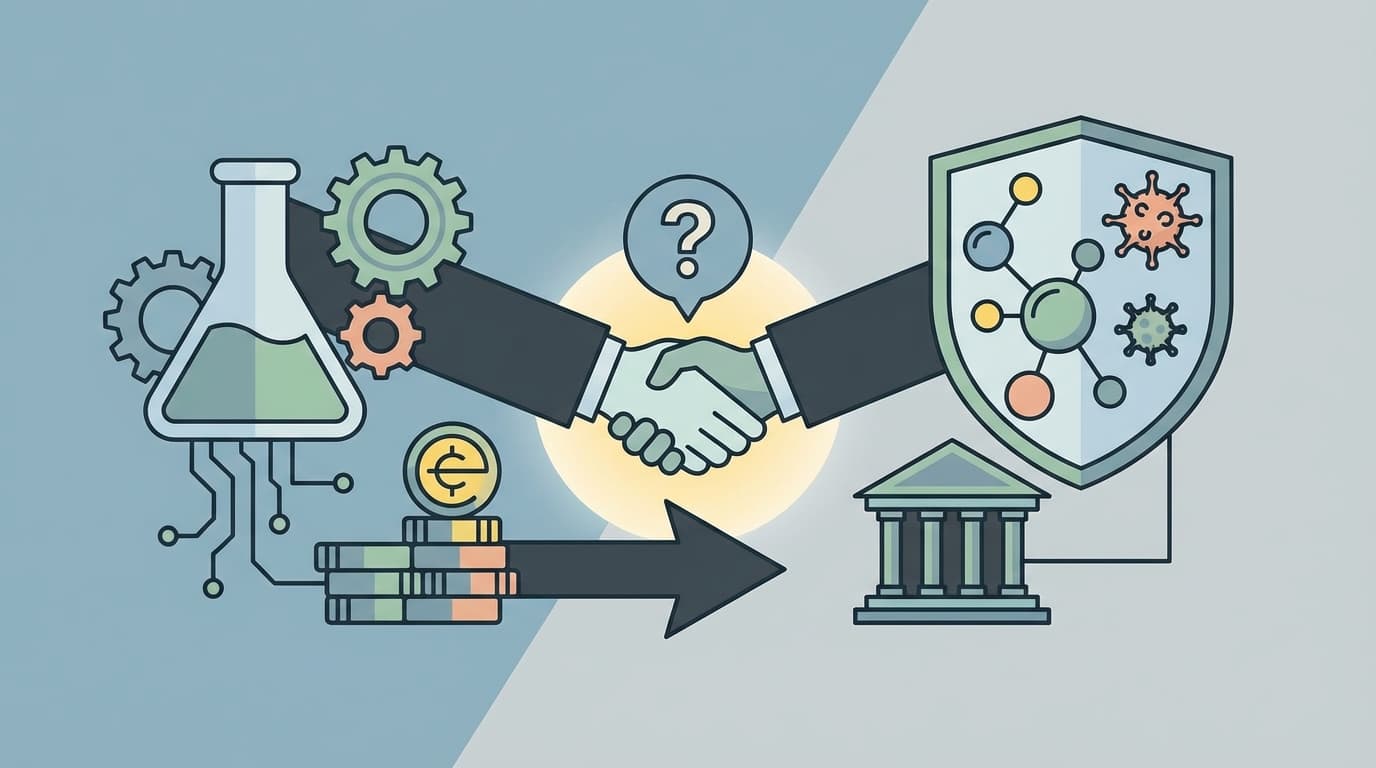
Asahi Kasei, a Japanese industrial conglomerate best known for chemicals, housing materials, and synthetic fibers, just agreed to buy Aicuris, a German biotech specializing in antiviral drugs, for approximately €780 million (~$920 million) in an all-cash deal. If you've never heard of either company, you're not alone, but this deal tells a much bigger story about where the biotech industry is heading.
Aicuris isn't some random startup. It was spun out of Bayer's anti-infective research unit back in 2006, and it's spent the last two decades quietly building one of the more interesting antiviral pipelines in the industry. Its crown jewel, a drug called pritelivir, just nailed its Phase 3 trial for treating herpes simplex virus (HSV) in immunocompromised patients, people whose immune systems are too weak to fight off infections that most of us never think about.
The FDA approval filing is expected this year. And Asahi Kasei wants to be the one holding the keys when it happens.
This isn't actually as random as it sounds. Asahi Kasei has been slowly, deliberately building a healthcare division for decades. In 1992, it absorbed a Japanese pharmaceutical company called Toyo Jozo to bolster its drug business.
But the real acceleration started recently. In 2024, Asahi Kasei acquired Calliditas Therapeutics, a Swedish kidney disease biotech, for roughly $1 billion. Now, less than two years later, it's adding Aicuris to the collection. The company has set an ambitious target: ¥300 billion in pharmaceutical net sales with 15%+ operating margins by fiscal 2030.
Think of it like a restaurant chain that started with one food truck. You don't go from making chemicals to treating herpes overnight, but Asahi Kasei has been adding ingredients to this recipe for over 50 years. Aicuris is just the latest, and most expensive, item on the shopping list.

Accent Therapeutics killed its entire DHX9 inhibitor program after safety concerns torpedoed its first-in-human cancer trial. The setback raises tough questions about whether RNA helicases (one of oncology's most tantalizing target families) can ever be safely drugged.

Join thousands of biotech professionals who start their day with our free, daily briefing.
So what does $920 million buy you in the antiviral world? Three things worth paying attention to.
First, pritelivir. This is the headliner. It's an oral drug that works through a completely different mechanism than existing herpes treatments like acyclovir. While acyclovir-type drugs target one step of viral replication, pritelivir goes after the helicase-primase complex, a different part of the virus's copying machinery. That matters because a growing number of immunocompromised patients have HSV strains that are resistant to standard treatments. Pritelivir hit its primary endpoint in the Phase 3 PRIOH-1 trial with a p-value of 0.0047, showing it was significantly better than standard-of-care at healing lesions. It already has FDA Breakthrough Therapy Designation, and the company is targeting approval in 2026.
Second, AIC468. This is an earlier-stage antisense oligonucleotide (basically a short piece of synthetic DNA designed to silence a specific virus) targeting BK virus in kidney transplant patients. There are currently zero approved treatments for BK virus, which can destroy a transplanted kidney. It finished Phase 1 with good safety data, and Phase 2 is planned for the first half of 2026. Commercialization is targeted around 2030.
Third, royalty income from Prevymis. Aicuris already has money coming in the door. Prevymis (letermovir), which prevents cytomegalovirus (CMV) infections in transplant patients, is marketed globally by Merck. Aicuris collects royalties on every sale. That gives Asahi Kasei immediate revenue from day one, a nice cushion while it waits for pritelivir to hit the market.
The deal is expected to start contributing positively to Asahi Kasei's operating income by fiscal 2028.
Asahi Kasei isn't the only Japanese company raiding the global biotech aisle. This deal fits into a massive trend of Japanese firms looking abroad for growth because their domestic market has gone stale.
The numbers are striking. According to Jefferies data, Japanese pharma companies completed 9 cross-border biotech deals in 2025, up from just 2 in 2022. Ono Pharma bought Boston-based Deciphera for $2.4 billion. Even Fujifilm, which you probably associate with cameras, is building a $3.2 billion biomanufacturing plant in North Carolina.
Japan's pharmaceutical market has been largely stagnant for years. Meanwhile, the U.S. and Europe are teeming with small biotechs that have innovative pipelines but need commercial muscle and deep pockets to reach the finish line. Japanese conglomerates have the cash; Western biotechs have the science. It's a match that keeps getting made.
At $920 million for a company with one approved product generating royalties, one near-approval drug, and one early-stage candidate, this isn't exactly a bargain-bin purchase, but it's not crazy either.
Pritelivir addresses a genuine unmet need. Immunocompromised patients with drug-resistant HSV have almost no good options right now. If it gets approved, and the Phase 3 data looks strong, it could become a standard of care in transplant centers and oncology clinics worldwide. And Asahi Kasei already has commercial relationships at those exact hospitals through its transplant drug Veloxis and its Calliditas kidney franchise.
That overlap is the real strategic logic here. Asahi Kasei isn't trying to build a pharma salesforce from scratch; it's adding products that sell to the same doctors it already knows. It's like a pizza place adding calzones: same oven, same dough, same customers.
AIC468 is the wild card. If it works against BK virus, it could be the first approved treatment for a condition that currently has no solution. That's the kind of drug that commands premium pricing. But it's still early, and plenty of Phase 1 successes never make it to market.
The deal is expected to close in the first half of 2026, pending regulatory approvals. After that, all eyes turn to the pritelivir FDA filing. If the approval comes through on schedule, Asahi Kasei will have made the leap from industrial conglomerate to legitimate pharma player in record time.
Ken Shinomiya, who heads Asahi Kasei's Healthcare Sector, framed the deal as strengthening the company's position across autoimmunity, kidney disease, transplantation, and severe infectious diseases. Aicuris CEO Larry Edwards said the acquisition recognized "the strength of our research and development engine."
For Aicuris, which spent 20 years as a Bayer spinoff quietly building its pipeline with backing from the Struengmann family's SANTO Holding, this is the payoff. For Asahi Kasei, it's a bet that the world needs better antiviral drugs and that an industrial giant is the right company to deliver them.
Stranger things have happened in biotech. Actually, no, this might be one of the stranger ones.
Boehringer Ingelheim just dropped $500 million on a preclinical pill from a tiny Oxford biotech, and it's not the only massive immunology deal they've inked lately. The race to replace autoimmune injections with oral therapies is getting very expensive, very fast.