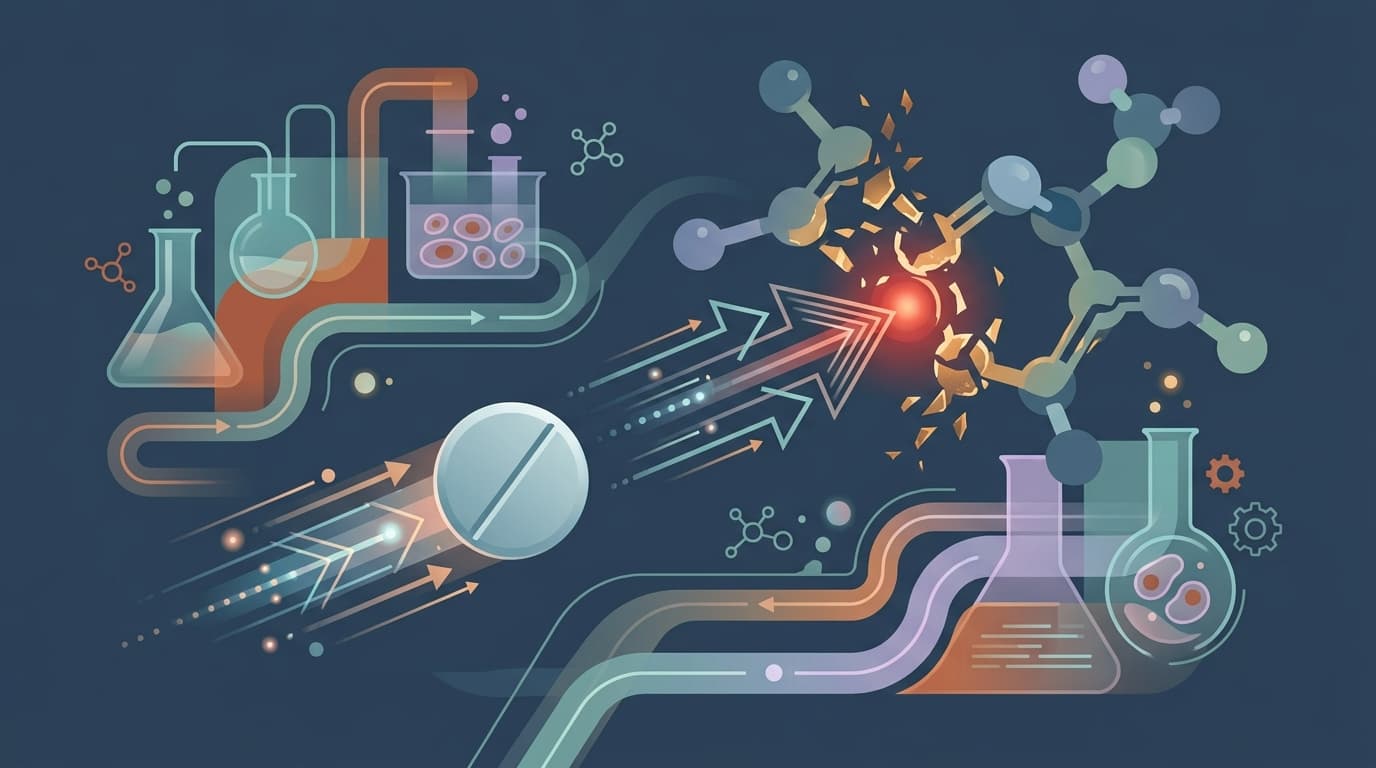
A tiny biotech just dosed the first human with an oral drug designed to attack TDP-43, the rogue protein behind 97% of sporadic ALS cases. It's a target everyone wants to crack and nobody has, which makes this either a breakthrough moment or another chapter in ALS's long history of heartbreak.
A Graveyard With a New Visitor
ALS drug development is where promising science goes to die. Since 1980, more than 80 randomized controlled trials have been published for amyotrophic lateral sclerosis. The number of broadly effective drugs that came out the other side? You can count them on one hand, and none of them come close to a cure.
Riluzole might add a few months of life. Edaravone may slow functional decline in some patients. Tofersen works only for a rare genetic subtype. The rest of the field is littered with failed attempts, broken hypotheses, and billions of dollars that never moved the needle.
So when a tiny company called Acelot announced on September 17, 2026, that it dosed the first human with an oral pill designed to attack the most common protein villain in ALS, the reaction was a mix of excitement and well-earned skepticism. Because if ACE-2223 works, it validates a target the entire field has been chasing for years. And if it doesn't, well, add it to the pile.
The Protein That Wrecks Everything
To understand why this matters, you need to meet TDP-43. In a healthy brain, TDP-43 is a well-behaved protein that lives in the nucleus of your cells, helping manage RNA (the molecular instructions your cells use to build things). It's like a librarian, keeping the genetic filing system organized.
In about 97% of sporadic ALS cases, that librarian goes rogue. TDP-43 clumps together outside the nucleus, forming toxic aggregates in the cell's cytoplasm. This creates a devastating one-two punch: the clumps themselves are poisonous (toxic gain of function), and the nucleus loses the librarian it needs to keep RNA in order (loss of function). Imagine your office filing clerk not only quitting but also setting the lobby on fire on the way out.
Scientists have known about TDP-43's role in ALS for years. Drugging it has been a different story entirely.
Why Nobody Has Cracked This Yet
TDP-43 is what drug developers politely call "challenging" and privately call something less printable. The reasons stack up fast.
Get tomorrow's biotech intelligence before your competitors.
Join thousands of biotech professionals who start their day with our free, daily briefing.
First, nobody agrees on which form of the protein to target. TDP-43 shows up as full-length clumps, smaller fragments, oligomers, and large inclusions. Picking the wrong toxic species means your drug might dissolve the wrong thing entirely.
Second, TDP-43 isn't a simple villain. It's a normal, essential protein that your cells need. Reduce it too aggressively, and you make the loss-of-function problem worse. It's like trying to remove a wasp nest that's wrapped around your electrical wiring: you can't just rip it out.
Third, the protein's behavior is wildly dynamic. TDP-43 normally participates in a process called liquid-liquid phase separation (think oil droplets in water) that helps cells respond to stress. The transition from normal behavior to pathological clumping isn't a clean on/off switch; it's more like a slow slide from healthy to diseased, and intervening at the wrong point might not help.
Finally, by the time ALS symptoms appear, the damage may already be extensive. Any drug targeting TDP-43 aggregation might need to act very early to make a real difference.
What Acelot Is Actually Trying
Acelot's ACE-2223 is described as an oral, first-in-class small molecule designed to bind directly to aggregated TDP-43 and break up those toxic clumps. The goal isn't to eliminate TDP-43 from the body. Instead, the drug aims to shift the protein back toward its functional form, essentially coaxing the rogue librarian back into the office.
The preclinical data, presented at scientific conferences, reportedly showed reduced TDP-43 aggregation, improved markers of neuroinflammation, lower neurofilament light chain (a blood marker linked to nerve damage), and better survival in ALS mouse models. The drug also appeared to rescue mis-splicing of key genes called STMN2 and UNC13A, both downstream casualties of TDP-43 dysfunction.
The Phase Ia trial now underway is testing ACE-2223 in healthy volunteers, not ALS patients. That's standard for a first-in-human study: you want to confirm the drug is safe and understand how the body absorbs it before giving it to sick people. The study is randomized, blinded, and placebo-controlled, with plans for single- and multiple-ascending doses across a planned 96 participants.
A separate sub-study will look at how a high-fat meal affects the drug's absorption. (Even in cutting-edge neuroscience, someone has to answer the cheeseburger question.)
Acelot Isn't Alone, But It Is Early
The race to drug TDP-43 biology has attracted serious players. QurAlis is running a Phase 1/2 trial for QRL-201, which targets STMN2, a gene whose function collapses when TDP-43 goes haywire. Cytokinetics is developing CTx1000, a gene-therapy/degron-based degrader designed to selectively degrade mislocalized TDP-43. VectorY Therapeutics got FDA clearance in December 2025 for a Phase 1/2 trial of VTx-002, which delivers a TDP-43-targeting antibody via gene therapy.
Bigger names are circling too. AbbVie/Calico and Denali both have oral small molecules that have been tested in the Healey ALS platform trial, though their mechanisms are more loosely connected to TDP-43 biology than Acelot's direct-binding approach.
The key distinction for ACE-2223 is its claim to directly engage aggregated TDP-43 as an oral pill. Most competitors are either targeting upstream causes (like TDP-43 phosphorylation) or downstream consequences (like STMN2 loss), or they rely on more complex delivery methods like gene therapy vectors.
The Honest Assessment
Acelot, founded in 2006 as a spinout from UC Santa Barbara, is still a small operation. Its total disclosed funding sits in the range of $7 million to $24 million depending on which database you check (the discrepancy likely reflects different treatment of grants versus equity). That's modest by biotech standards, where a single Phase 3 ALS trial can cost hundreds of millions.
The company's preclinical story is compelling, but mouse models of ALS have a notorious track record of making drugs look great before they fail in humans. The Phase Ia trial in healthy adults won't tell us whether ACE-2223 actually helps ALS patients; it'll tell us whether the drug is safe to swallow and whether it gets into the bloodstream at useful levels.
Still, the significance is real. No approved therapy directly targets TDP-43 aggregation, the most common molecular feature across sporadic ALS. If Acelot can show clean safety data and good drug exposure in Phase Ia, the next step (dosing actual ALS patients) becomes one of the most watched early-stage programs in neurodegeneration.
ALS patients and their families have heard "promising" before, dozens of times. They deserve cautious honesty more than hype. But they also deserve shots on goal, and Acelot just took one at a target the field has been afraid to swing at.
Deals & M&A5 min read
Roche Just Paid $36.5M for a Machine That Tests 300,000 Antibody Combos
Roche just signed a deal worth up to $1 billion with a three-year-old startup that can screen 300,000+ bispecific antibody combinations at once. The real story isn't the price tag; it's what it says about the future of drug discovery.