
AbbVie is paying up to $745 million for Chinese-developed pain drugs that target the same mechanism behind Vertex's breakthrough painkiller. The deal deepens U.S.-China biotech ties at precisely the moment Washington is trying to pull them apart.
Vertex got the first invite to the non-opioid pain party. AbbVie just crashed it.
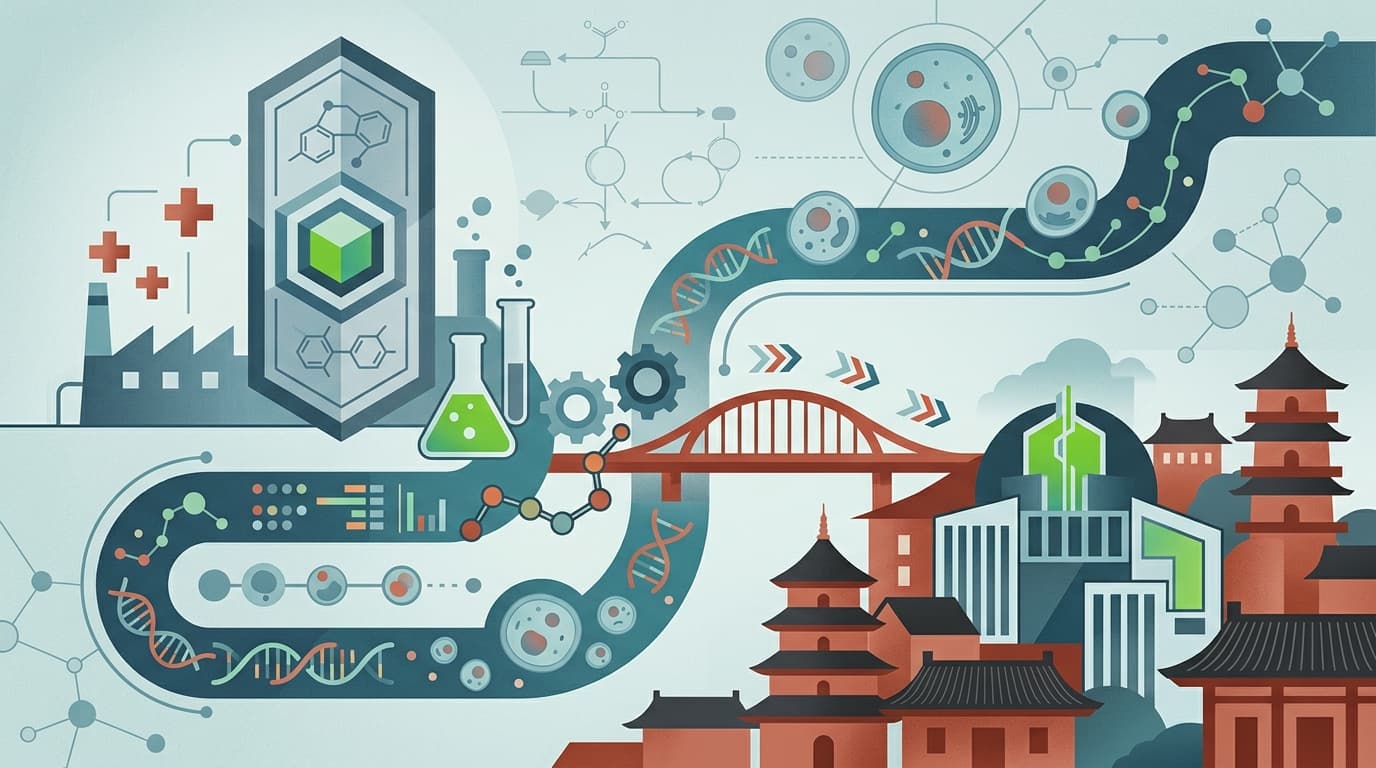
The company announced a deal worth up to $745 million with China's Haisco Pharmaceutical Group for rights to a portfolio of pain drug candidates. The target: a sodium channel called NaV1.8 that sits at the center of one of biotech's hottest races. The twist: AbbVie is placing this bet with a Chinese partner at a time when Washington is actively trying to untangle the U.S. biotech supply chain from China.
This is a story about pain, politics, and a pharma giant that decided the science was worth the headache.
If you break your arm or have surgery, your doctor has two main options for serious pain relief. Option one: opioids, which work great but come with addiction, constipation, and the risk of respiratory depression (your breathing slows dangerously). Option two: over-the-counter stuff like ibuprofen, which often isn't strong enough.
For decades, the pharmaceutical industry has been stuck in that gap, searching for something powerful enough to replace opioids but safe enough to avoid their worst side effects. Then in 2025, Vertex Pharmaceuticals launched Journavx, the first FDA-approved drug targeting NaV1.8. Think of NaV1.8 as a tiny gate on your pain-sensing nerve cells. Block the gate, block the pain signal. No opioid receptors involved.
Journavx proved the concept works in humans. Now everybody wants in.
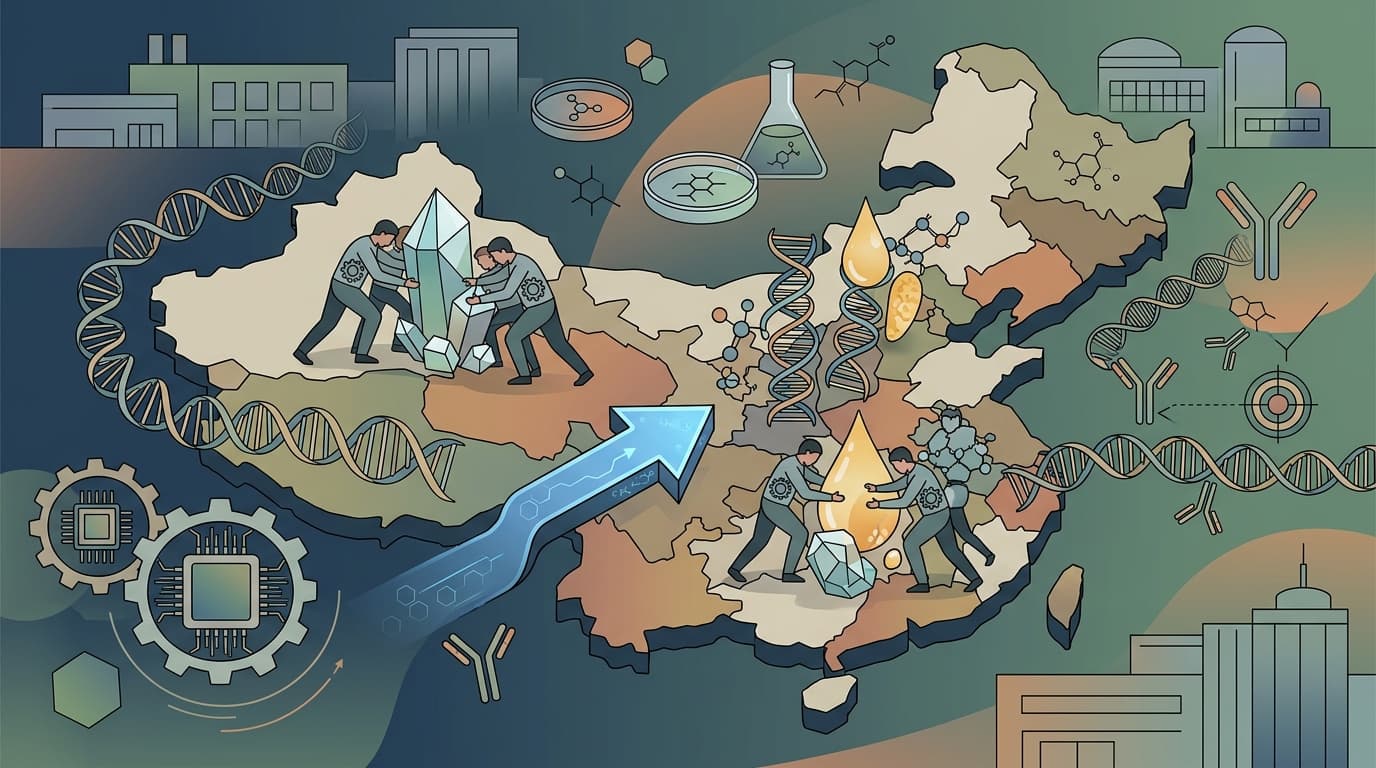
The deal gives AbbVie exclusive rights to develop and sell Haisco's NaV1.8 pain drugs everywhere outside Greater China (mainland China, Hong Kong, and Macau). Haisco keeps its home turf.
Two named compounds anchor the agreement:
HSK55718 is an intravenous NaV1.8 inhibitor designed for acute pain, particularly post-surgical settings. It's currently in a Phase 1 trial in China (the earliest stage of human testing, focused on safety in healthy volunteers).
HSK51155 is an oral version targeting the same channel. It's still preclinical, meaning it hasn't been tested in humans yet. But an oral pill opens the door to broader pain conditions beyond the hospital.

The FDA approved Lilly's oral obesity pill Foundayo in record time, then handed the company a 15-year monitoring homework assignment. What the agency's unprecedented post-marketing demands mean for the future of diet pills, and the entire oral GLP-1 class.


Join thousands of biotech professionals who start their day with our free, daily briefing.
Having both an IV and an oral option is smart portfolio design. The IV drug targets the $25-a-dose hospital market where patients are already hooked up to lines. The oral drug could eventually compete head-to-head with Vertex's Journavx in outpatient settings.
The headline number, $745 million, sounds enormous. But like most biotech deals, it's built on a mountain of "ifs."
AbbVie pays just $30 million upfront. That's pocket change for a company with over $50 billion in annual revenue. Another $10 million comes in near-term milestones. The remaining $705 million only materializes if the drugs hit specific development, regulatory, and commercial targets over many years.
Haisco also gets tiered royalties in the high single digits on any future sales. Translation: if AbbVie sells a billion dollars' worth of these drugs someday, Haisco collects roughly $70 to $90 million per year.
The structure tells you something important. AbbVie is interested, but cautious. A $30 million upfront for early-stage assets from a mid-sized Chinese biopharma is a calculated bet, not a conviction purchase. AbbVie is essentially buying lottery tickets with favorable odds, not a finished product.
This deal didn't happen in a vacuum. The BIOSECURE Act, signed into law in December 2025, restricts U.S. government agencies from contracting with companies tied to designated Chinese "biotechnology companies of concern." While no specific companies have been named yet beyond those on the Pentagon's existing list, the law has sent a chill through cross-border biotech partnerships.
U.S. pharma companies are now running every Chinese deal through a geopolitical filter. Legal teams are adding BIOSECURE-specific clauses to contracts. Due diligence timelines are stretching. Some companies are quietly steering away from Chinese partners altogether, especially for products that might touch government procurement (think VA hospitals or DoD contracts).
So why did AbbVie go ahead?
Because the deal is structured to minimize exposure. AbbVie controls manufacturing and development outside China. The compounds are early-stage small molecules, not biologics requiring complex cell-bank transfers from Chinese facilities. And the pain market is overwhelmingly commercial, not government-driven. Your local hospital buys post-surgical painkillers through its own supply chain, not through a federal contract.
In short, AbbVie found a deal where the political risk was manageable and the scientific upside was real.
This isn't a one-off. It's the opening move in what looks like a deliberate pain franchise strategy.
AbbVie already dominates migraine through its Allergan acquisition (Botox for chronic migraine, plus oral drugs Ubrelvy and Qulipta). It owns a deep neuroscience bench thanks to the $8.7 billion Cerevel acquisition, completed in 2024. What it lacked was a credible entry point into the broader, non-migraine pain market.
Now it has one. The Haisco deal positions AbbVie as a fast follower behind Vertex in NaV1.8, joining Eli Lilly (which picked up its own NaV1.8 asset through the SiteOne Therapeutics acquisition for up to $1 billion in 2025). The race is officially three-deep.
The question analysts keep asking: can AbbVie's compounds differentiate? Journavx already proved NaV1.8 works. Being second or third to market means AbbVie needs to show something better, whether that's faster onset, fewer side effects, or stronger efficacy in specific pain types. With one drug in Phase 1 and another still in the lab, those answers are years away.
AbbVie spent $30 million to buy a seat at the most important table in pain research. The NaV1.8 class represents the first genuinely new approach to serious pain relief in decades, and AbbVie wasn't going to watch from the sidelines while Vertex and Lilly carved up the market.
The China angle adds complexity, but the deal's structure suggests AbbVie's lawyers and strategists gamed out the BIOSECURE scenarios before signing. The real risk isn't political; it's scientific. These are early-stage assets in a field where many promising pain drugs have failed in late-stage trials.
But if even one of Haisco's molecules works? AbbVie just bought itself a franchise for the price of a rounding error on its balance sheet. That's the kind of math that makes deal-makers smile.
The Trump administration just made psychedelic therapies a federal healthcare priority, committing $50 million in funding and fast-track review vouchers for psilocybin and related compounds. It's the biggest shift in U.S. psychedelic policy in half a century, and the implications for patients, investors, and the future of psychiatry are enormous.