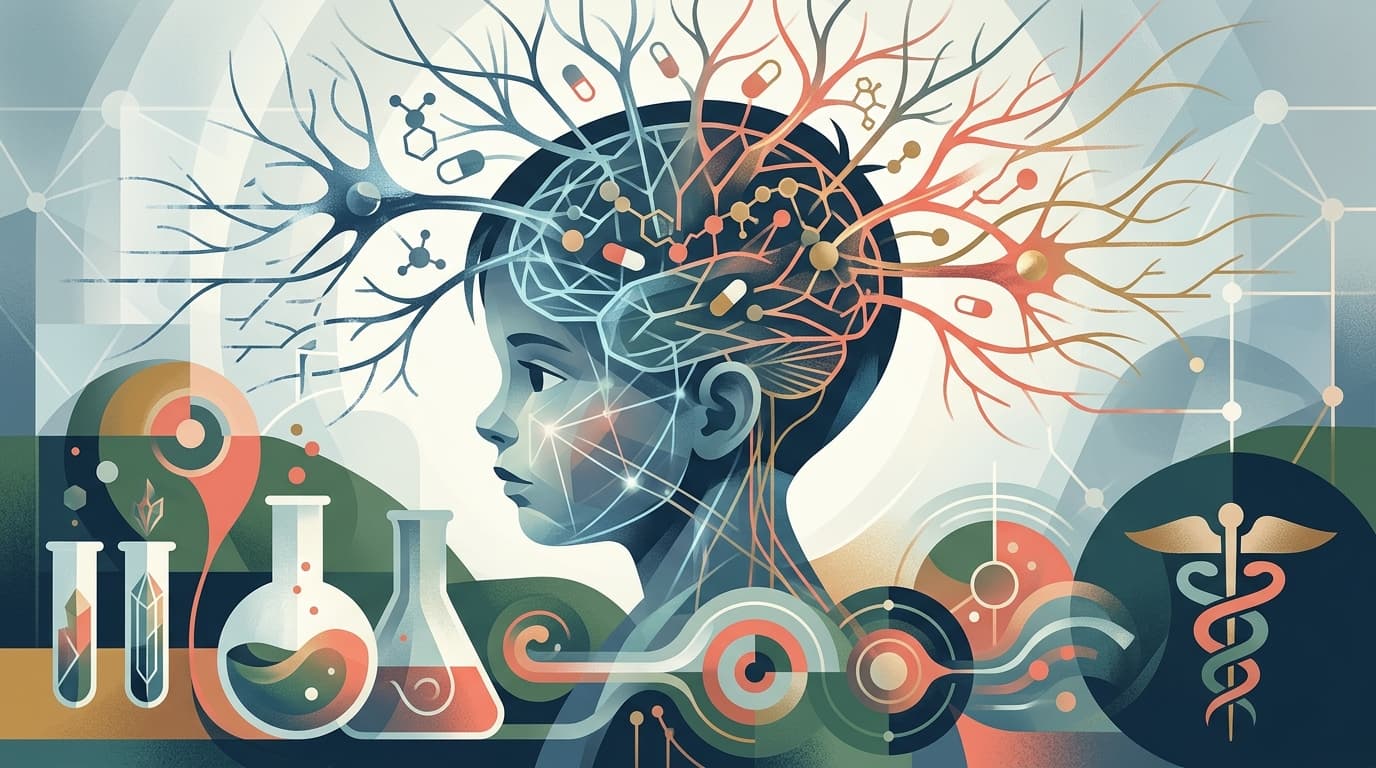
The Drug That Might Actually Rewire a Child's Brain
Four years of data show Stoke and Biogen's zorevunersen doesn't just reduce seizures in Dravet syndrome kids; it may actually improve their cognition. If the Phase 3 confirms it, this could rewrite the playbook for an entire class of genetic diseases.
A Rare Win in a Brutal Disease
Imagine your child's brain has a factory that builds critical electrical components, but one of the two assembly lines is broken. The remaining line works fine, but it can't keep up with demand. So the electrical system misfires constantly, causing devastating seizures, cognitive decline, and a shadow that follows every family affected: the risk of sudden death.
That's Dravet syndrome in a nutshell. It affects roughly 1 in 15,000 children, and for decades, the best doctors could offer was a cocktail of anti-seizure drugs (often three or four stacked together) that managed symptoms without touching the root cause. Good seizure control? Rare. Cognitive improvement? Basically unheard of.
Until now, maybe.
Four Years and Counting
Stoke Therapeutics and Biogen just dropped 4-year open-label extension data for zorevunersen, their experimental drug for Dravet syndrome. The headline numbers are striking: durable seizure reductions sustained across four full years of treatment, with continuing improvements in cognition, behavior, and quality of life.
Let that sink in. This isn't a six-month snapshot or a carefully manicured Phase 2 readout. This is four years of real-world follow-up showing that the drug keeps working.
Retention tells its own story. Of the 75 patients who entered the extension studies, 77% were still enrolled at the 4-year mark. In a disease this severe, where families cycle through treatments like Netflix shows, that kind of stickiness matters. Some patients have now been on zorevunersen for more than five years across the original and extension studies, with over 930 doses administered by late July 2026.
The Clever Part: Turning Up the Volume on a Good Gene
Zorevunersen isn't gene therapy, and it doesn't edit DNA. It's an antisense oligonucleotide (ASO), which is a fancy way of saying it's a short piece of synthetic genetic material that tweaks how cells read their instructions.
Think of it like this: Dravet patients have one broken copy and one perfectly good copy of the SCN1A gene, which builds sodium channels that neurons need to fire properly. The problem is that the cell's quality-control system accidentally destroys too many messages from the good copy. Zorevunersen sneaks in and tells the cell, "Hey, stop throwing away these perfectly good instructions." The result? More functional sodium channels get built from the working gene.
Get tomorrow's biotech intelligence before your competitors.
Join thousands of biotech professionals who start their day with our free, daily briefing.
This is Stoke's proprietary TANGO platform in action. Rather than replacing broken genes or editing mutations, it coaxes cells into producing more protein from the healthy copy they already have. It's the biological equivalent of turning up the volume on a speaker that was accidentally muted.
Not Just Seizures: The Disease-Modifying Question
This is where the data gets really interesting. Existing Dravet drugs are pure symptom management; they can dial down seizure frequency, but they don't touch the cognitive and behavioral decline that devastates families over time.
Zorevunersen's 4-year data showed sustained improvements across cognitive and behavioral measures, including gains on the Vineland-3 (a standardized test of adaptive behavior). Earlier data from the program reported a 73.6% median reduction in convulsive seizure frequency relative to baseline. But the cognitive piece is what separates this from everything else on the market.
Exploratory analyses also hinted at reductions in the most severe seizure types, the ones linked to SUDEP (sudden unexpected death in epilepsy). For Dravet families, that's not a footnote. That's the thing that keeps parents awake at 3 a.m.
The companies are calling this a "disease-modifying" signal, and while that's a bold claim to make from open-label data, the combination of seizure control plus functional improvement plus four years of durability is genuinely unusual for this disease.
The Fine Print (Because There's Always Fine Print)
Before anyone starts planning the victory parade: this is still open-label extension data. There's no placebo comparison, no blinding, and small patient numbers. Families who stay in long extension studies tend to be the ones doing well, which introduces survivorship bias.
Safety also deserves honest discussion. The drug is delivered via lumbar puncture (spinal tap), which is invasive and not trivial for children who need repeated dosing. Elevated cerebrospinal fluid protein has been the main recurring safety finding, though the companies say no new signals emerged through four years and the drug remains "generally well tolerated."
The definitive test is coming. The Phase 3 EMPEROR trial launched in mid-2025, with a readout expected in the second half of 2027. That randomized, controlled study will be the courtroom where zorevunersen either proves its case or falls short.
A Competitive Race Is Heating Up
Zorevunersen isn't alone in chasing disease modification for Dravet. Encoded Therapeutics is developing ETX101, a one-time gene therapy (delivered via AAV9 virus) that also aims to boost SCN1A expression. It's currently in Phase 1/2 and showed encouraging early safety and neurodevelopmental data at the end of 2025. Meanwhile, Ionis has ION337, another antisense approach, planning to enter Phase 1/2 in 2026.
The key distinction: zorevunersen requires ongoing dosing (repeated spinal taps), while ETX101 is designed as a single treatment. That trade-off between chronic maintenance therapy and a one-shot gene therapy will ultimately come down to efficacy, safety, and what families are willing to endure.
For now, zorevunersen is the clear frontrunner in terms of clinical maturity. Phase 3 versus Phase 1/2 is a meaningful gap.
The Business Behind the Biology
Biogen and Stoke inked their deal in February 2025, with Stoke keeping U.S., Canada, and Mexico rights while Biogen grabbed the rest of the world. The financials: $165 million upfront, up to $385 million in milestones, and tiered royalties in Biogen's territory ranging from the low double digits to the high teens.
Jefferies has pegged zorevunersen's peak sales potential at $1 billion to $4 billion-plus, contingent on the disease-modifying story holding up through Phase 3. For a rare pediatric disease, that's blockbuster territory, driven by the chronic dosing model and the sheer desperation of the unmet need.
Why This Matters Beyond Dravet
If zorevunersen's Phase 3 confirms what four years of open-label data suggest, it won't just change the standard of care for one rare epilepsy. It'll validate an entire therapeutic approach: using antisense technology to crank up protein production from healthy gene copies in haploinsufficiency diseases (conditions where one gene copy isn't enough).
That's a playbook that could extend to dozens of other genetic conditions. Stoke's TANGO platform was designed to be modular, and Biogen's deal even includes options on future SCN1A follow-on compounds.
For now, though, the story is simpler and more human than any platform thesis. Somewhere, parents of children with Dravet syndrome are reading these four-year results and feeling something they haven't felt in a long time: hope that's backed by data.
6 min read
The Cancer Therapy That Killed Three People Who Didn't Have Cancer
Three patients with autoimmune diseases died in Novartis CAR-T trials, forcing the company to pause eight studies and the entire field to confront an uncomfortable question: can cancer's most powerful therapy ever be safe enough for diseases that aren't trying to kill you?