The Two-Year-Old Who Might Never Know She Has Sickle Cell
The FDA just cleared Vertex's CRISPR gene therapy for kids as young as two with sickle cell disease, making it the first gene therapy ever approved for toddlers with blood disorders. The science is stunning, but at $2.2 million a pop, almost nobody can get it yet.
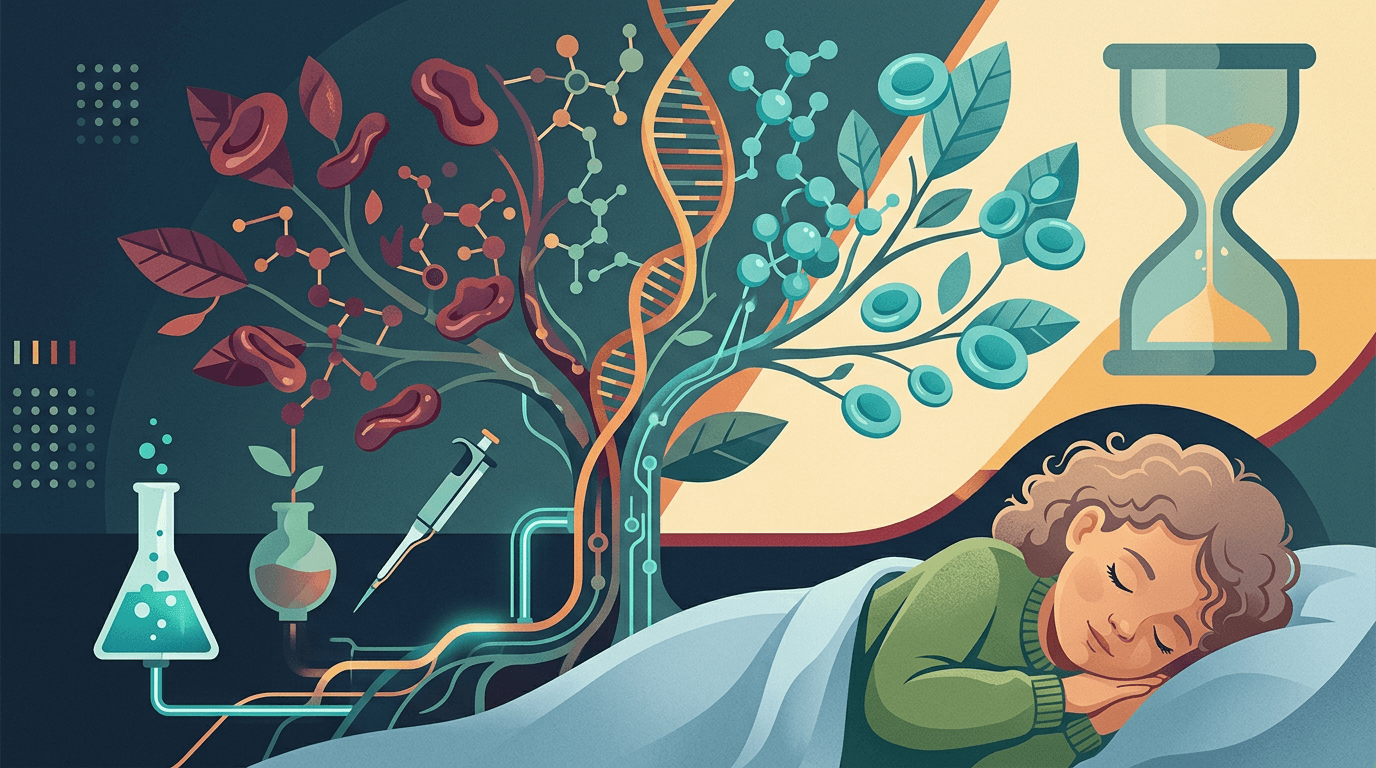
Imagine telling a parent their toddler could be cured of a genetic blood disease before she's old enough for preschool. That's no longer hypothetical.
On July 1, the FDA approved Vertex's CASGEVY (exagamglogene autotemcel) for children as young as two years old with sickle cell disease or transfusion-dependent beta thalassemia. It had previously been limited to patients 12 and older. Now it's the first gene therapy ever cleared for kids this young with either condition.
This isn't just a label tweak. It's a philosophical shift in how we treat genetic disease: fix it before it breaks you.
Why Age Two Changes Everything
Sickle cell disease is cruel, and it's impatient. It doesn't wait for adulthood to start doing damage. Organ injury begins in infancy, silently chewing through the brain, lungs, kidneys, and heart while kids are still learning to talk. By the time a teenager finally qualifies for a curative therapy, they may already carry a decade of vascular scarring.
Think of it like water damage in a house. You can rip out the drywall and fix the pipes at year ten, but wouldn't you rather catch the leak on day one?
That's the logic behind pushing gene therapy earlier. The younger you restore normal hemoglobin function, the more organ damage you prevent. A child treated at age two has potentially 70+ years of protected health ahead. A teenager treated at 14 may already be playing catch-up.
Vertex estimates that roughly 3,000 to 4,000 additional children in the U.S. now become eligible for CASGEVY because of the age expansion. That's a meaningful population bump for a therapy that has struggled to reach patients at scale.
What CASGEVY Actually Does
For those unfamiliar with the therapy, CASGEVY uses CRISPR gene editing (think: molecular scissors) to snip a specific stretch of DNA in a patient's own blood stem cells. The edit reactivates fetal hemoglobin, a type of hemoglobin that babies naturally produce before birth. Fetal hemoglobin doesn't sickle. So flooding the bloodstream with it essentially neutralizes the disease.
Get tomorrow's biotech intelligence before your competitors.
Join thousands of biotech professionals who start their day with our free, daily briefing.
The process is intense, though. Doctors first harvest stem cells from the patient. Those cells get edited in a lab, then shipped back. Before reinfusion, the child undergoes myeloablative conditioning: high-dose busulfan chemotherapy that wipes out the existing bone marrow to make room for the corrected cells. It's the biological equivalent of reformatting a hard drive before installing a new operating system.
The whole journey, from stem cell collection through recovery, can eat up most of a year. It requires prolonged hospitalization at a specialized treatment center. For a two-year-old and their family, that's an enormous commitment.
The Data That Got the FDA on Board
The expanded approval rests on two Phase 3 trials: CLIMB-151 (sickle cell, ages 2 to 11) and CLIMB-141 (beta thalassemia, ages 2 to 11). The results presented at ASH in December 2025 were striking.
In the sickle cell trial, 11 children ages 5 to 11 received the therapy. Among those with enough follow-up to measure, all four evaluable patients went at least 12 consecutive months without a single pain crisis. Not one child experienced a vaso-occlusive crisis (the brutal, hospitalizing pain episodes that define severe sickle cell) after infusion. The longest crisis-free stretch was about two years.
The beta thalassemia numbers told a similar story. Thirteen children were dosed, and among the six with sufficient follow-up, all six achieved transfusion independence for at least 12 months. Twelve of the 13 children are currently transfusion-free.
Those numbers mirror what Vertex saw in the original adolescent and adult trials, where 29 of 31 sickle cell patients stayed crisis-free for over a year. Reproducing that kind of efficacy in younger kids gave the FDA confidence to extrapolate the benefit down to age two, even without published data yet in the two-to-four age group.
The Risks Are Real (and Harder in Little Kids)
No one should confuse "approved" with "easy." The safety profile in children 5 to 11 was consistent with what doctors expect from myeloablative conditioning and stem cell transplant. Translation: it was rough.
Busulfan chemotherapy can cause liver damage (including a dangerous condition called veno-occlusive disease), severe mouth sores, prolonged immune suppression, and serious infections. In the beta thalassemia trial, one child died from pneumonia with multi-organ failure linked to busulfan-related liver toxicity. That death is attributed to the conditioning regimen, not the gene editing itself, but it's a sobering reminder of the stakes.
Then there's the fertility question, which gets thornier the younger you go. Busulfan is gonadotoxic; it can permanently destroy reproductive cells. Teenagers and adults can bank sperm or eggs before treatment. A five-year-old cannot. Fertility preservation techniques for prepubertal children exist but remain experimental. For parents making this decision on behalf of a toddler, that's an agonizing trade-off: cure the disease now, but potentially sacrifice your child's ability to have biological children someday.
Longer-term unknowns loom as well. Off-target gene edits, late-developing blood cancers, effects on growth and neurodevelopment: these questions simply can't be answered yet with two years of follow-up in a handful of young children. They'll require decades of monitoring.
A $2.2 Million Therapy That Almost Nobody Can Get
CAGEVY's list price is $2.2 million per patient for the drug alone. Factor in chemotherapy, hospitalization, and months of monitoring, and the total episode cost lands closer to $3 million. That's the sticker price for a single treatment.
The commercial reality has been humbling. Through early 2026, only about 165 patients in the U.S. had received CASGEVY. The therapy generated $116 million in revenue for all of 2025, which sounds like a lot until you remember Vertex itself had guided to just over $100 million. CASGEVY accounted for roughly 1% of Vertex's total revenue last year.
Why so slow? The barriers stack up like a traffic jam. Treatment centers are limited in number, often hundreds of miles from patients. The process requires months of medical leave. About 50% of Americans with sickle cell disease are on Medicaid, and state-level coverage has been uneven despite a new CMS outcomes-based payment model that now includes over 30 participating states.
Commercial insurers have been even stingier, sometimes requiring multiple prior hospitalizations before approving coverage. Patient advocacy groups have reported outright denials and lengthy appeals. For a disease that disproportionately affects Black Americans, a population already facing systemic barriers to care, these access hurdles carry a particularly bitter edge.
The Competitive Chessboard
Vertex isn't alone in the gene therapy space for blood disorders, but it just grabbed a significant advantage. Bluebird bio sells Lyfgenia for sickle cell and Zynteglo for beta thalassemia. Lyfgenia has not secured approval in children under 12, and while Zynteglo's label includes pediatric patients, it is not approved for children under four.
By locking in the toddler-and-up age range, Vertex now covers the broadest pediatric population of any gene therapy in hematology. That matters commercially (more eligible patients) and strategically (physicians may default to the therapy with the widest approved label when counseling families).
The broader gene therapy landscape for kids is heating up, too. The FDA approved therapies for epidermolysis bullosa, Wiskott-Aldrich syndrome, and severe LAD-I in 2025 and 2026. Regulators are clearly getting more comfortable with gene therapies in pediatric populations, which could pave the way for even younger treatment windows in the future.
What Comes Next
The honest answer: it's complicated. The science is working beautifully in the children who can access it. The problem is that almost nobody can access it.
Vertex needs to solve a logistics puzzle that involves specialized centers, months-long treatment timelines, and multi-million-dollar price tags in a patient population where most people are on public insurance. The pediatric age expansion adds thousands of newly eligible kids to the mix, but eligible and treated are very different things.
Pediatric hematologists are cautiously optimistic. The consensus is that earlier intervention is conceptually ideal, but the decision is deeply individual. A child's disease severity, current organ status, family resources, and tolerance for fertility risk all factor in. This isn't the kind of therapy you recommend to everyone; it's the kind you offer to families willing to accept significant short-term pain for the chance at a lifetime free of sickle cell.
The real game-changer won't be this approval alone. It'll be what comes after: less toxic conditioning regimens that don't require scorched-earth chemotherapy, in vivo gene editing that skips the need for stem cell harvesting entirely, and financing models that make a $3 million cure accessible to a two-year-old on Medicaid in Mississippi.
Until then, CASGEVY's approval for toddlers is a landmark. It proves gene therapy can work in very young children with devastating blood disorders. Now the health system has to figure out how to actually deliver on that promise.
Deals & M&A
5 min read
A Startup Just Bet $2.2 Billion That It Can Crack Alzheimer's
A venture-backed Danish biotech just licensed an Alzheimer's drug platform in a deal worth over $2.2 billion, backed by some of Europe's biggest life sciences VCs. It's one of the boldest startup bets in neurodegeneration history, and it says a lot about where the smart money is headed.