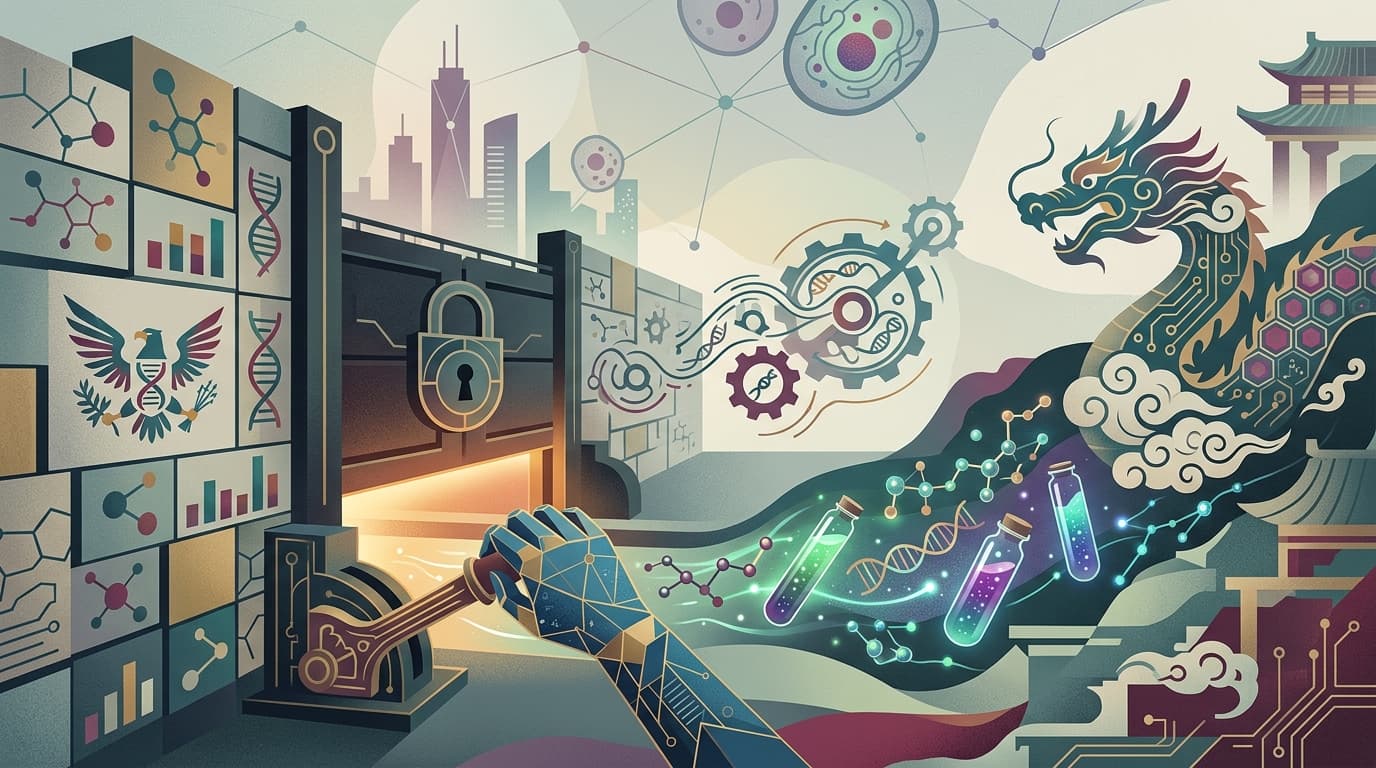

The U.S. Treasury is drafting rules that would let most pharma licensing deals with China continue, targeting only pathogen and weapons-related biotech. After $137 billion in cross-border deals last year alone, the biotech industry may have just dodged a massive policy grenade.
For the past two years, biotech executives with Chinese partnerships have been sleeping with one eye open. Would the U.S. government slam the door on cross-border pharma deals? Would billions in licensing agreements suddenly become political liabilities?
Now, according to Reuters, the answer looks like: probably not.
U.S. Treasury officials are drafting rules that would allow most pharmaceutical licensing deals with China to continue. The restrictions would be narrow, targeting only transactions involving pathogens or biotechnology that could be weaponized. Everything else? Fair game.
If that sounds anticlimactic after years of escalating rhetoric, well, that's kind of the point. The biotech industry just dodged what could have been a catastrophic policy grenade.
Let's put some numbers on the table. In 2025, cross-border licensing deals tied to Chinese biotech hit $137.7 billion in total value. That's a tenfold increase from 2021. Only about $7 billion of that was paid upfront (the rest is milestones), but the trajectory is unmistakable: Western pharma is increasingly shopping for drugs in China.
And not just window shopping. Look at the deals that have already been signed: BMS licensed 13 early-stage programs from Jiangsu Hengrui for up to $15.2 billion. Eli Lilly struck a deal with Innovent Biologics worth approximately $8.5 billion in milestones plus $350 million upfront. GSK went in with Hengrui for up to $12.5 billion. Pfizer, AstraZeneca, AbbVie; the list reads like a pharma all-star roster.
Telling these companies they can't do deals with China would be like telling a restaurant it can't buy ingredients from its best supplier. Technically possible, practically devastating.
To understand why Treasury's draft rules feel like a relief, you need to know what the industry was bracing for. The BIOSECURE Act, signed into law in December 2025 as part of the defense spending bill, created a framework to restrict federal agencies from working with designated Chinese "biotechnology companies of concern."

Curium is paying up to $8 billion to acquire Lantheus, combining two radiopharmaceutical giants in what could be the defining deal of nuclear medicine's hot streak. The merger signals that radioactive cancer therapies aren't a niche anymore; they're the next arms race in oncology.


Join thousands of biotech professionals who start their day with our free, daily briefing.

The law's direct scope is government procurement: federal contracts, grants, and loans. It doesn't technically ban private licensing deals. But it created an atmosphere of uncertainty that chilled dealmaking and spooked investors. If the government was willing to restrict procurement, what was next? Could licensing be on the chopping block?
Some lawmakers wanted exactly that. Smaller U.S. biotechs, worried about Chinese competition, pushed for stricter scrutiny of cross-border licensing. Security hawks argued that every deal was a potential technology transfer to a geopolitical rival.
The Treasury draft, if finalized, would represent the opposite approach: targeted screening, not a blanket ban.
The BIOSECURE Act isn't just an abstract policy debate for everyone. WuXi AppTec, one of China's biggest contract research and manufacturing organizations, got added to the Pentagon's Section 1260H list of Chinese military companies in June 2026. That designation could eventually trigger BIOSECURE restrictions on any U.S. government work flowing through WuXi's services.
But the situation is legally messy. A U.S. court injunction in August 2026 barred the Department of Defense from enforcing WuXi's designation while the company challenges it in court. Meanwhile, the broader BIOSECURE restrictions haven't fully kicked in because the Federal Acquisition Regulation (the rulebook for government contracting) hasn't been updated yet. Existing contracts can be grandfathered for five years after that update happens.
So the practical reality in September 2026: BIOSECURE is law, but the sharpest teeth haven't bitten yet. Companies are planning for compliance, not panicking over enforcement.
Before anyone pops champagne, some important caveats. The Treasury rules are not finalized. Reuters noted they could change, especially if President Trump decides to intervene. With a Trump-Xi meeting reportedly on the horizon, the political calculus could shift overnight.
Then there's the narrower but real restriction that would remain. Deals involving pathogens or weaponizable biotech would still be off limits. That carve-out is small in dollar terms but could create gray areas. What exactly counts as "potentially weaponizable"? Molecular biology is inherently dual-use; the same tools that make cancer drugs can theoretically make bioweapons. Expect lawyers to bill a lot of hours on that question.
And even without formal restrictions, the geopolitical overhang isn't gone. Companies doing deals with Chinese partners face reputational risk, congressional scrutiny, and the possibility that rules tighten again in the future. "Diligence drag" is how some industry insiders describe it: deals still happen, but they take longer, cost more in legal fees, and come with political baggage.
The market's read on this is fairly straightforward. The reported draft removes a lot of the downside that investors had been pricing in. If you're holding shares in companies with major Chinese licensing deals (think the Lillys, Pfizers, and BMS's of the world), this is reassuring news.
But the story isn't over. Three things to monitor:
1. The final rule text. Draft rules and final rules can look very different, especially when national security politics are involved.
2. The Trump-Xi meeting. Reuters indicated Treasury was unlikely to announce new rules before that diplomatic encounter. Whatever happens at that meeting could reshape the policy landscape.
3. The OMB designation list. By December 2026, the Office of Management and Budget must publish its initial list of biotechnology companies of concern under BIOSECURE. Which names land on that list will determine who actually feels the pinch.
China's biotech sector has gone from copycat to co-creator in less than a decade. Western pharma companies aren't doing deals with Chinese partners out of charity; they're doing it because that's where some of the most promising drug candidates are coming from. Cutting off that pipeline entirely would slow down drug development for American patients, not just hurt Chinese companies.
Policymakers, it seems, have recognized that reality. The emerging approach is a scalpel, not a sledgehammer: keep the pipeline open, but screen for genuine security threats.
Whether that balance holds through an unpredictable political environment is another question entirely. For now, though, the biotech industry can exhale. The gate to China's drug pipeline isn't closing. It's just getting a new lock.
A tiny California biotech just showed its cannabinoid drug could double semaglutide's weight loss in obese mice. The catch? It was originally designed to help cancer patients gain weight. The obesity arms race just got a lot weirder.