
Ulefnersen just delivered the strongest clinical data ever seen in FUS-ALS, a rare and brutal genetic form of Lou Gehrig's disease. The Phase 3 results could reshape how we think about treating neurodegeneration, one gene at a time.
Imagine being diagnosed with a disease that typically kills in about two years, often striking before your 40th birthday. That's the reality for people with FUS-ALS, a rare genetic form of amyotrophic lateral sclerosis (Lou Gehrig's disease) caused by mutations in a gene called FUS. Younger patients sometimes progress to respiratory failure in less than a year.
Now, for the first time, a drug has shown it can fight back.
Ionis Pharmaceuticals and Otsuka announced that their experimental therapy ulefnersen met its primary endpoint in the Phase 3 FUSION trial, significantly prolonging survival and slowing disease progression in FUS-ALS patients. The result was statistically significant at p=0.0005, which in clinical trial terms is about as convincing as a slam dunk from the free-throw line.
To understand why this matters, you need to know what's going wrong in FUS-ALS. The FUS gene normally produces a protein that helps neurons function. But when the gene is mutated, it churns out a toxic version that poisons motor neurons, the cells responsible for controlling muscles. Over time, those neurons die, and patients lose the ability to move, speak, swallow, and eventually breathe.
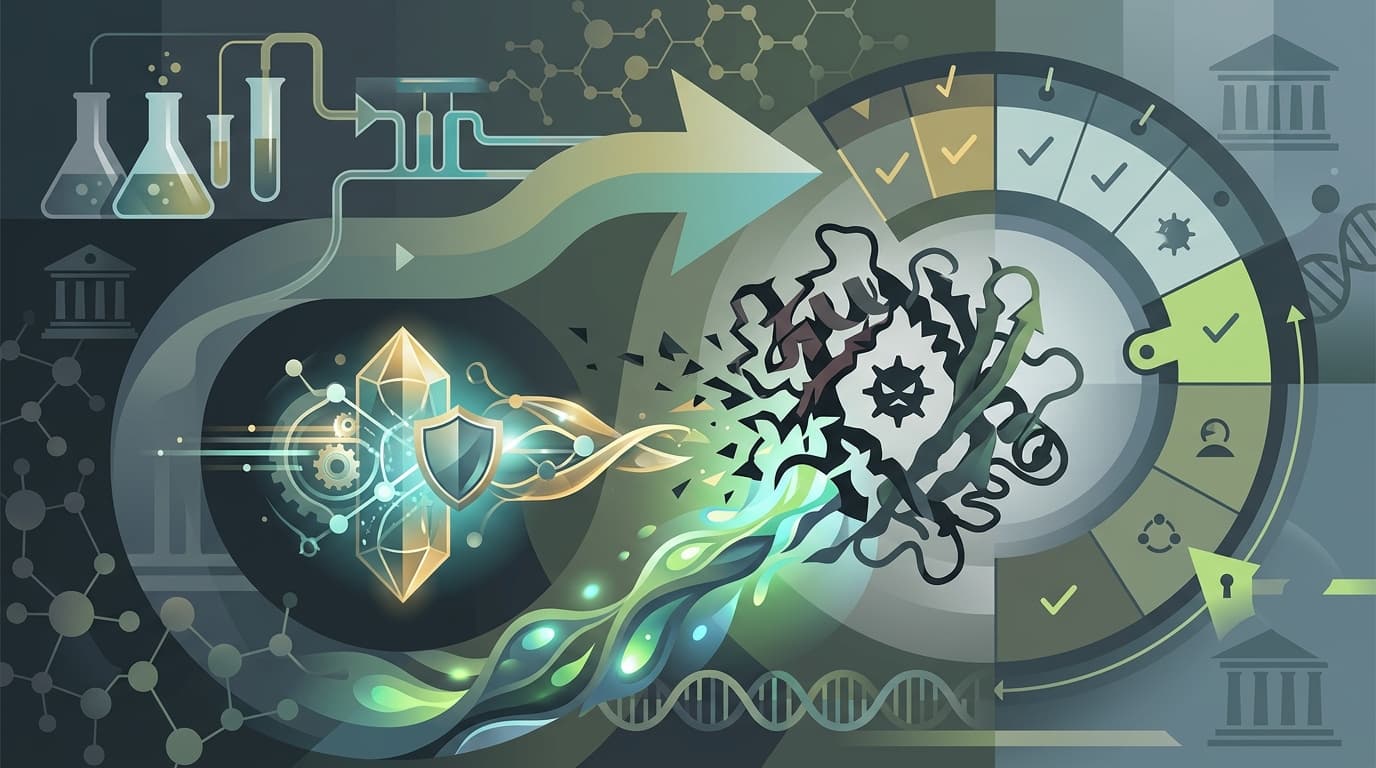
Ulefnersen is an antisense oligonucleotide (ASO), which is essentially a tiny strand of synthetic genetic material designed to intercept a specific message inside your cells. Think of it like a spam filter for your biology: it binds to the RNA instructions made from the FUS gene and flags them for destruction before they can be turned into toxic protein. Less toxic protein means slower motor neuron death.
The drug is injected directly into the spinal fluid, which gives it direct access to the nervous system. It's a similar approach to tofersen (brand name Qalsody), another ASO that's already FDA-approved for a different genetic ALS subtype caused by SOD1 mutations. If that drug was the proof of concept, ulefnersen is the sequel.
The FUSION trial enrolled patients with confirmed FUS gene mutations and tested ulefnersen against placebo. The primary endpoint was a combined measure (called a joint rank analysis) that looked at three things simultaneously: time to death or permanent ventilation, time until patients needed rescue therapy, and how much their physical function declined over about 17 months.

Sarepta just added a black box warning to its only approved gene therapy while cutting a third of its workforce. The company that was supposed to prove gene therapy could go mainstream is now fighting for survival at $20 a share.


Join thousands of biotech professionals who start their day with our free, daily briefing.
Ulefnersen won on all fronts. The drug hit that primary composite endpoint with a p-value of 0.0005. Secondary endpoints told a similar story: patients on ulefnersen showed significant improvement on a composite that included death, permanent ventilation, rescue therapy, or disease-related withdrawal.
Another encouraging signal came from serum neurofilament light chain (NfL), a blood-based biomarker that acts like a smoke detector for nerve damage. When NfL levels drop, it generally means neurons are dying more slowly. Ulefnersen brought those levels down significantly compared to placebo. Safety was described as favorable, with most side effects being mild or moderate.
FUS-ALS is vanishingly rare. FUS mutations account for roughly 0.6% of all ALS cases in some estimates, and about 3-4% of familial ALS in European populations. In Asian cohorts, the numbers run a bit higher. But the mutation punches way above its weight in juvenile ALS, where it may account for nearly half of all cases.
So why should anyone beyond this small group of patients care? Three reasons.
First, ALS treatment options are still tragically thin. The approved therapies in the U.S. are riluzole (a modest survival benefit), edaravone (modest in select patients), and tofersen for SOD1 mutations only. Relyvrio, which was approved earlier, was pulled from the market in 2024 after its confirmatory Phase 3 trial failed. Every new ALS win is hard-fought and meaningful.
Second, this validates the playbook. Tofersen proved that an ASO could hit a genetic target in ALS and get FDA approval, but that approval was based on biomarker effects rather than a definitive clinical win. Ulefnersen just delivered what tofersen's pivotal trial didn't: a statistically significant benefit on a composite that includes actual survival. That's a stronger hand to play with regulators.
Third, the precision medicine model keeps expanding. Each genetic subtype of ALS that gets its own targeted therapy proves the concept that cracking the genetic code of neurodegeneration can lead to real treatments. It's like picking locks one at a time on a door that's been sealed shut for decades.
Otsuka holds exclusive worldwide rights to commercialize ulefnersen through a licensing deal signed with Ionis in 2024. The terms included a $10 million upfront payment, plus regulatory and sales milestones and royalties. Not exactly blockbuster deal economics, which makes sense given how small the patient population is.
The drug already has FDA Fast Track designation and orphan drug designation from the FDA, EMA, and Swissmedic. Otsuka says it plans to review the FUSION data with the FDA and pursue expedited regulatory pathways. No formal submission date has been announced yet, but the pieces are falling into place.
The big question is whether the FDA will want to see more granular survival data before acting. The companies haven't released detailed survival event counts or median survival estimates, just the topline composite result. Those details will likely come at a medical conference in the months ahead, and they'll matter for both the regulatory review and the broader ALS community's assessment of how clinically meaningful this benefit really is.
FUS-ALS patients have been waiting for something, anything, that could change their trajectory. A disease that disproportionately hits young people, progresses fast, and has had zero targeted treatments just got its first real shot at one.
Ulefnersen's FUSION results are the strongest clinical data ever generated for this form of ALS. The p-value is rock solid. The survival signal is real. And the regulatory pathway looks clear. For a disease area that's seen more failures than almost any other in medicine, this is what progress looks like: one genetic subtype at a time, one carefully designed molecule at a time.
It's not a cure. It's not going to help the vast majority of ALS patients (yet). But for the families living with FUS mutations, this might be the day the story started to change.
Novartis just committed up to $900 million for a preclinical radioligand therapy from China's Boomray Pharmaceuticals, and nobody even knows what the drug targets. With Big Pharma's radioligand arms race heating up and geopolitical tensions simmering, this mystery deal says a lot about where oncology is headed.