UCB Just Bet $1.15 Billion That Brain Cells Can Cure Seizures
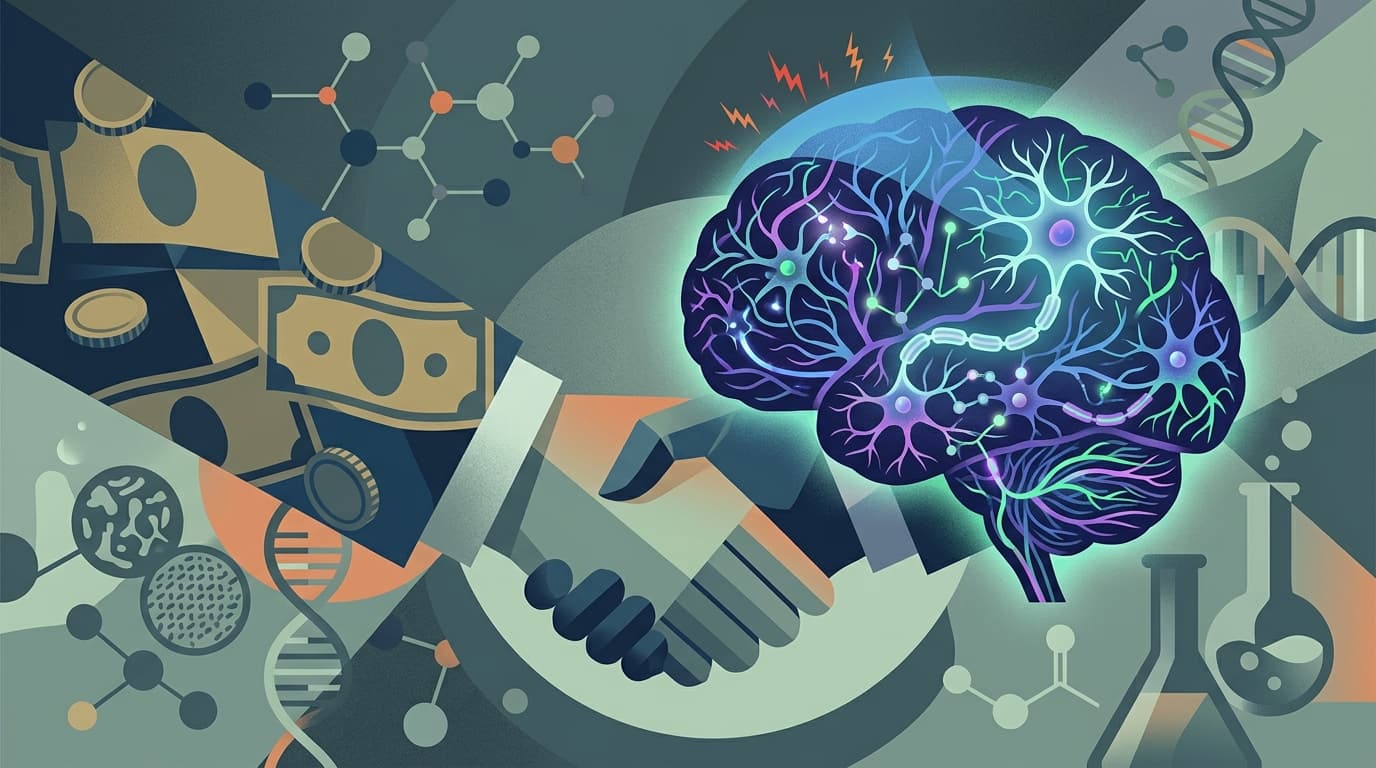
UCB is paying up to $1.15 billion for Neurona Therapeutics and its brain cell therapy that cut seizures by 92% in early trials. It's one of the boldest bets yet that cell therapy can work far beyond cancer.
Imagine your brain is a house with faulty wiring. Every few hours, the lights flicker, the breakers trip, and the whole system shorts out. That's life with drug-resistant epilepsy. For decades, the best fix has been ripping out the walls (brain surgery) or installing a dimmer switch (stimulator devices). Now UCB is betting over a billion dollars on a radically different idea: what if you could just rewire the house?
The Belgian pharma giant announced a deal to acquire Neurona Therapeutics for up to $1.15 billion, paying $650 million upfront in cash with another $500 million tied to future milestones. The prize? A cell therapy called NRTX-1001 that's showing jaw-dropping early results in one of neurology's toughest problems.
Not Your Typical Cell Therapy Story
When most people hear "cell therapy," they think cancer. CAR-T treatments have been the darling of oncology for years, reprogramming a patient's immune cells to hunt down tumors. But Neurona is playing a completely different game.
NRTX-1001 doesn't fight cancer. It repairs broken brain circuits. The therapy uses stem cells to grow a specific type of brain cell called GABAergic interneurons (think of them as the brain's natural "calm down" signals). Doctors inject these cells directly into the part of the brain where seizures start. Once there, the cells integrate into existing neural networks and help restore normal signaling.
One injection. No tissue destroyed. No wires implanted. Just new brain cells doing what old brain cells couldn't.
The Numbers That Caught UCB's Attention
NRTX-1001 is still early, currently in Phase 1/2 trials. But the data so far reads like a highlight reel.
In the low-dose group of patients with unilateral mesial temporal lobe epilepsy (a common and severe form of drug-resistant seizures), researchers saw a 92% median reduction in disabling seizures between months seven and twelve. That's not a typo. Patients who had been failing multiple medications for years suddenly experienced near-complete seizure control.
Even more impressive: the effect seems to last. Patients followed beyond 18 months showed a . For a disease where "50% fewer seizures" counts as a win, these numbers are extraordinary.
Get tomorrow's biotech intelligence before your competitors.
Join thousands of biotech professionals who start their day with our free, daily briefing.
97% median reduction
The safety profile has been clean too. Across all patients enrolled, there have been no serious adverse events attributed to the therapy. Quality-of-life scores improved across the board, and nobody experienced lasting cognitive decline. Some patients actually showed cognitive improvements.
Why This Disease Is So Brutal
To appreciate why UCB is writing such a big check, you need to understand the problem. About 30% of all epilepsy patients don't respond adequately to medication. For those with mesial temporal lobe epilepsy and hippocampal sclerosis (scarring in a key memory region of the brain), the rate of drug resistance climbs to roughly two-thirds.
These patients cycle through drug after drug with little relief. When medications fail, the options get grim. Temporal lobectomy, where surgeons remove part of the brain's temporal lobe, can help with seizures but risks memory loss, vision damage, and personality changes. It's also not an option for patients with seizures on both sides of the brain. Laser ablation is less invasive but still destroys tissue permanently. Implanted brain stimulators? Limited effectiveness for most patients.
So you've got a large population of suffering patients, no good options, and a therapy that might actually fix the underlying problem rather than just managing symptoms. That's the kind of setup that makes pharma companies reach for their checkbooks.
UCB Is Building Something Bigger
This isn't a random shopping spree. UCB has been the quiet kid in the epilepsy classroom for years, steadily assembling one of the industry's deepest seizure portfolios. The company already sells Vimpat, Keppra, Briviact, and Fintepla (which it picked up through its 2022 acquisition of Zogenix). Together, Briviact and Fintepla alone generated close to €1.2 billion in net sales in 2025.
But all of those are traditional small-molecule drugs: pills that manage symptoms without addressing root causes. NRTX-1001 represents a philosophical leap, moving from symptom control to structural repair of the nervous system. UCB's leadership has framed the deal as entering "regenerative medicine," which is a fancy way of saying they want to fix brains, not just quiet them down.
Neurona is planning to dose the first patients in a Phase 3 pivotal trial in the first half of 2026, so the path to a regulatory filing is already taking shape.
The Bigger Picture: Cell Therapy Leaves the Cancer Ward
Zoom out, and this deal is part of a trend that's been building for a couple of years. Cell therapy technology, proven in blood cancers, is migrating into autoimmune diseases, cardiac conditions, and now neurology. The underlying logic is compelling: if you can engineer cells to kill tumors, why can't you engineer them to repair tissue, calm inflammation, or restore lost function?
Neurona's approach is particularly elegant because it doesn't require modifying a patient's own cells. NRTX-1001 is allogeneic, meaning the cells come from a universal donor source rather than from each individual patient. That's a huge manufacturing advantage; it's the difference between a custom tailor and off-the-rack. Patients need temporary immunosuppression after the procedure, but early data shows some can eventually stop those drugs while maintaining seizure control.
What Could Go Wrong
Let's pump the brakes for a second. Phase 1/2 data from a handful of patients is exciting, but it's not proof. We've seen stunning early results collapse in larger trials more times than anyone in biotech wants to admit. The patient numbers here are small, and the follow-up periods, while encouraging, are still measured in months rather than decades.
There's also the question of durability. The longest-followed patients show sustained benefit past two years, which is great. But epilepsy is a lifelong condition. Will transplanted cells keep working at year five? Year ten? Nobody knows yet.
And $650 million upfront for a Phase 1/2 asset is a hefty price tag, no matter how you slice it. UCB clearly believes the risk is worth taking, and they've structured the deal so that the biggest payouts only come if the therapy actually gets approved and sells well. But the upfront alone represents a significant bet on science that's still maturing.
The Bottom Line
UCB is making one of the boldest moves in neurology this year. If NRTX-1001 works in larger trials the way it's worked in small ones, it could redefine how we treat drug-resistant epilepsy, replacing destructive surgeries with a single injection of healing cells. If it doesn't, UCB will have paid $650 million for a very expensive lesson.
Either way, the message to the rest of pharma is clear: cell therapy isn't just for cancer anymore. The brain is open for business.
Clinical & Regulatory4 min read
The Kidney Drug That Wasn't Supposed to Get Approved
Filspari just became the first FDA-approved treatment for FSGS, a rare kidney disease that's been without an approved therapy forever. The twist? The pivotal trial technically missed its main goal. How Travere pulled off the approval anyway is a story worth reading.