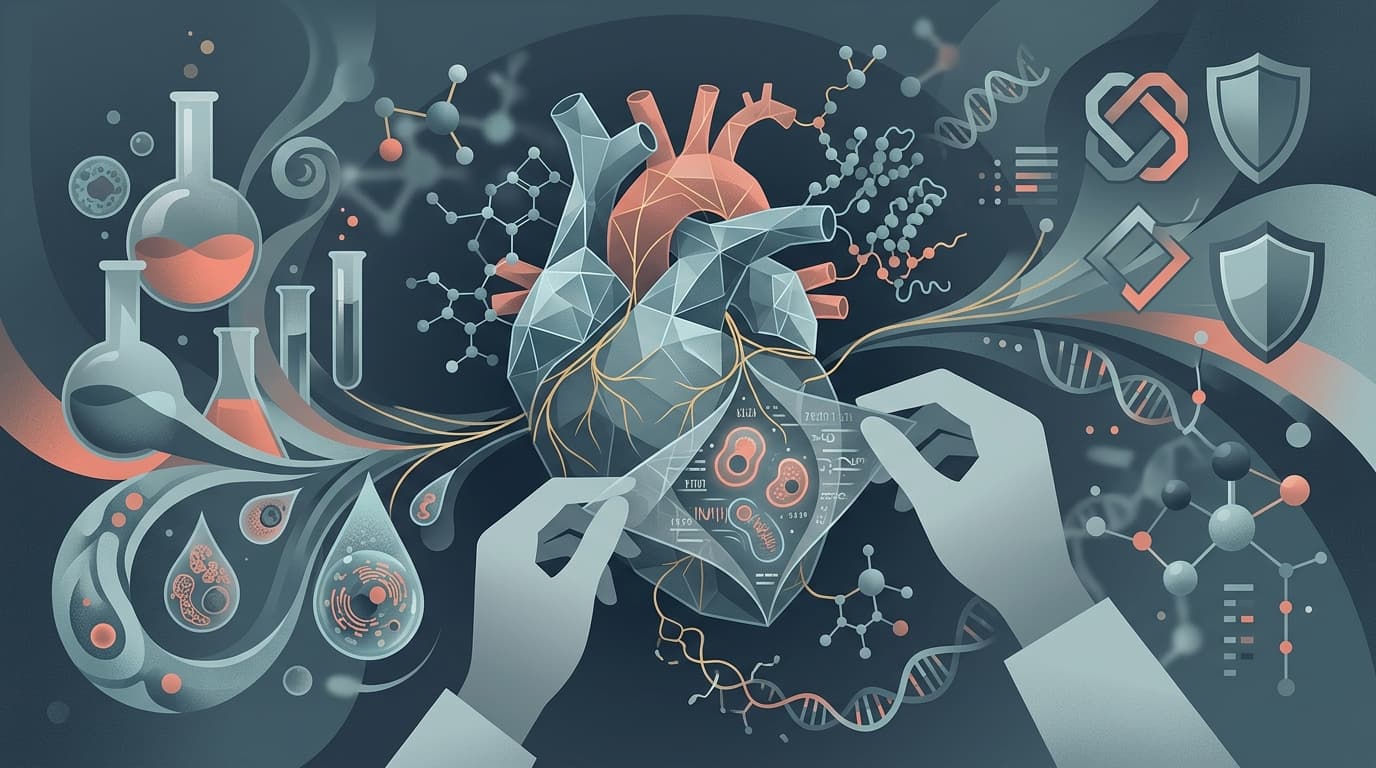

Tempus AI just got FDA clearance to turn the most common heart test in medicine into a screening tool for a deadly disease that doctors routinely miss. The twist: hospitals don't need any new equipment.
Every hospital in America has an ECG machine. It's the stethoscope's nerdy cousin: cheap, fast, and sitting in practically every exam room, urgent care clinic, and cardiologist's office in the country. For decades, those squiggly lines on the printout have been read the same way, mostly to check for heart attacks and rhythm problems.
But what if that same printout could whisper something else entirely? What if it could flag a deadly disease that doctors routinely miss for months or even years?
Tempus AI just got FDA 510(k) clearance for a tool that does exactly that.
The device is called Tempus ECG-PH, and it uses artificial intelligence to scan a standard 12-lead ECG (the kind you've probably had at a checkup) for hidden signs of pulmonary hypertension, a condition where the blood pressure in the arteries of your lungs climbs dangerously high.
Pulmonary hypertension, or PH, is a nasty disease. It strains the right side of the heart, causes crushing fatigue and shortness of breath, and can be fatal if left untreated. It affects roughly 1% of the global population, and that number rises to about 10% of people over 65. Yet it's one of the most commonly missed cardiovascular diagnoses in medicine.
Why? Because the symptoms look like a dozen other things. Shortness of breath, tiredness, chest pain, swollen ankles. Your doctor's first instinct is probably asthma, heart failure, or just being out of shape. PH rarely tops the list.
Even when a doctor suspects PH, confirming it is a process. The first-line screening test is an echocardiogram (an ultrasound of the heart), which can estimate the probability but can't definitively diagnose the disease. And echos aren't perfect; they can be unreliable in patients with obesity or lung disease. About one-third of patients without a measurable tricuspid regurgitant jet (a specific blood-flow signal the echo looks for) actually do have PH when tested further.

For patients with a rare liver disorder, life means waking up every few hours to eat raw cornstarch or risk a medical emergency. Ultragenyx's gene therapy DTX401 cut that dependence by 61% in trials, and the FDA's decision could open the floodgates for a whole new class of metabolic gene therapies.


Join thousands of biotech professionals who start their day with our free, daily briefing.
The gold standard for diagnosis? A right heart catheterization, which involves threading a catheter into the heart to directly measure pressures. It's accurate, but it's also invasive, expensive, and requires a specialist. Nobody's doing that on a hunch.
So the typical PH journey looks something like this: a patient bounces between doctors for months (sometimes years), gets misdiagnosed, maybe gets treated for asthma or anxiety, and finally lands at a pulmonary hypertension center when the disease has already progressed. It's like trying to find a specific book in a library with no catalog system. You'll get there eventually, but you'll waste a lot of time.
Tempus wants to shortcut that entire process with a test every hospital already runs.
The AI analyzes resting 12-lead ECG recordings and looks for patterns associated with elevated mean pulmonary artery pressure (above 20 mmHg), the key indicator of PH. It spits out a simple binary result: this patient's ECG shows signs consistent with PH, or it doesn't.
There are important caveats. ECG-PH is not a standalone diagnostic tool. A positive flag doesn't mean the patient has PH; it means the patient needs further workup. Think of it less like a verdict and more like a smoke detector. It tells you something might be wrong so you can go check.
The device is cleared for use on patients 40 years or older who are at risk of heart failure and who don't already have a PH diagnosis. It shouldn't be used for monitoring patients over time, and it doesn't work on ECGs from patients with pacemaker rhythms.
The beauty of this approach is its simplicity. Hospitals don't need to buy new hardware. They don't need to train staff on a new device. They just need software that reads the ECG data they're already collecting.
That's the whole trick: turning a routine, ubiquitous test into a screening tool for a disease that's genuinely hard to catch early. It's like discovering your home security camera can also detect gas leaks. The infrastructure was already there; you just needed smarter software.
And Tempus is building a pattern here. ECG-PH is the third FDA-cleared device in its cardiovascular AI portfolio. The company previously won clearances for ECG-AF (which flags atrial fibrillation risk) and ECG-Low EF (which detects signs of weak heart pumping). Each clearance turns the same basic ECG into a screening tool for a different cardiac condition.
If you're keeping score, that's three diseases, one test. The value proposition for hospitals gets more compelling with each addition.
Tempus isn't the only company trying to make ECGs smarter. Anumana has its own FDA-listed ECG-AI algorithm for pulmonary hypertension, along with tools for low ejection fraction. Eko Health combines ECG data with digital stethoscope recordings for heart failure screening. Viz.ai has an FDA-cleared algorithm for hypertrophic cardiomyopathy. And AliveCor and iRhythm are active in arrhythmia detection.
The category has matured rapidly since 2023, evolving from single-purpose experimental algorithms into a competitive market of multi-condition cardiovascular AI tools. One factor accelerating adoption: CMS included AI-ECG technology in its 2025 hospital outpatient payment rules. Reimbursement is the oxygen that keeps medical devices alive, and this category is now breathing.
Founded in 2015 by Eric Lefkofsky (the Groupon co-founder who pivoted to health tech), Tempus started as a precision medicine company focused on cancer genomics. It rebranded from Tempus Labs to Tempus AI in 2023 and went public on Nasdaq in June 2024.
Since then, the company has been on an acquisition spree, announcing a deal to acquire Ambry Genetics in 2024 and completing the acquisition in early 2025, and announcing a deal to acquire Personalis in 2026. It formed an AI healthcare joint venture with SoftBank in Japan. By late 2025, the company had roughly 3,800 employees.
The cardiology AI portfolio fits into a larger strategy: Tempus wants to be the company that layers intelligence on top of routine clinical data, whether that's genomic sequencing for cancer patients or ECG analysis for cardiac screening. It's not building new diagnostic hardware; it's building the brain that makes existing tools smarter.
Pulmonary hypertension is a disease that hides in plain sight, mimicking common conditions while quietly destroying the heart. The traditional path to diagnosis is slow, expensive, and full of wrong turns.
Tempus ECG-PH doesn't cure any of that by itself. But if it can flag at-risk patients during a routine ECG (the kind millions of Americans get every year), it could shave months or years off the diagnostic timeline for a meaningful number of people. That's not a moonshot. That's a practical, incremental improvement built on infrastructure that already exists everywhere.
Sometimes the most powerful diagnostic tool isn't the newest machine in the hospital. It's the one that's been sitting there all along, waiting for better software.
A cardiac drug startup that didn't exist two years ago just raised $440 million in its Nasdaq debut. Braveheart Bio's blockbuster IPO headlined a billion-dollar week for biotech, and it all rides on a single heart drug.