
A Beijing-based biotech just raised $250 million in six months without a single drug in human testing. Syneron Bio's AI-powered peptide platform has AstraZeneca, sovereign wealth funds, and top VCs all placing big bets on molecules that could hit 'undruggable' targets.
Most biotech startups spend years scraping together enough cash to run a single clinical trial. Syneron Bio just raised $150 million in a Series B, barely three months after closing nearly $100 million in Series A funding. That's roughly $250 million in half a year for a company that hasn't even put a drug into human testing yet.
So what's everyone betting on? A class of molecules that could make some of today's blockbuster drugs look clunky by comparison.
To understand why investors are lining up, you need to understand macrocyclic peptides, the type of drug Syneron Bio is building its entire company around.
Think of today's drug world as two neighborhoods. On one side, you've got small-molecule drugs: tiny, cheap to make, easy to swallow as a pill. But they're blunt instruments. They often hit the wrong targets, causing side effects. On the other side, you've got biologics (large, complex proteins like antibodies): incredibly precise, but expensive to manufacture, hard to store, and almost always require an injection.
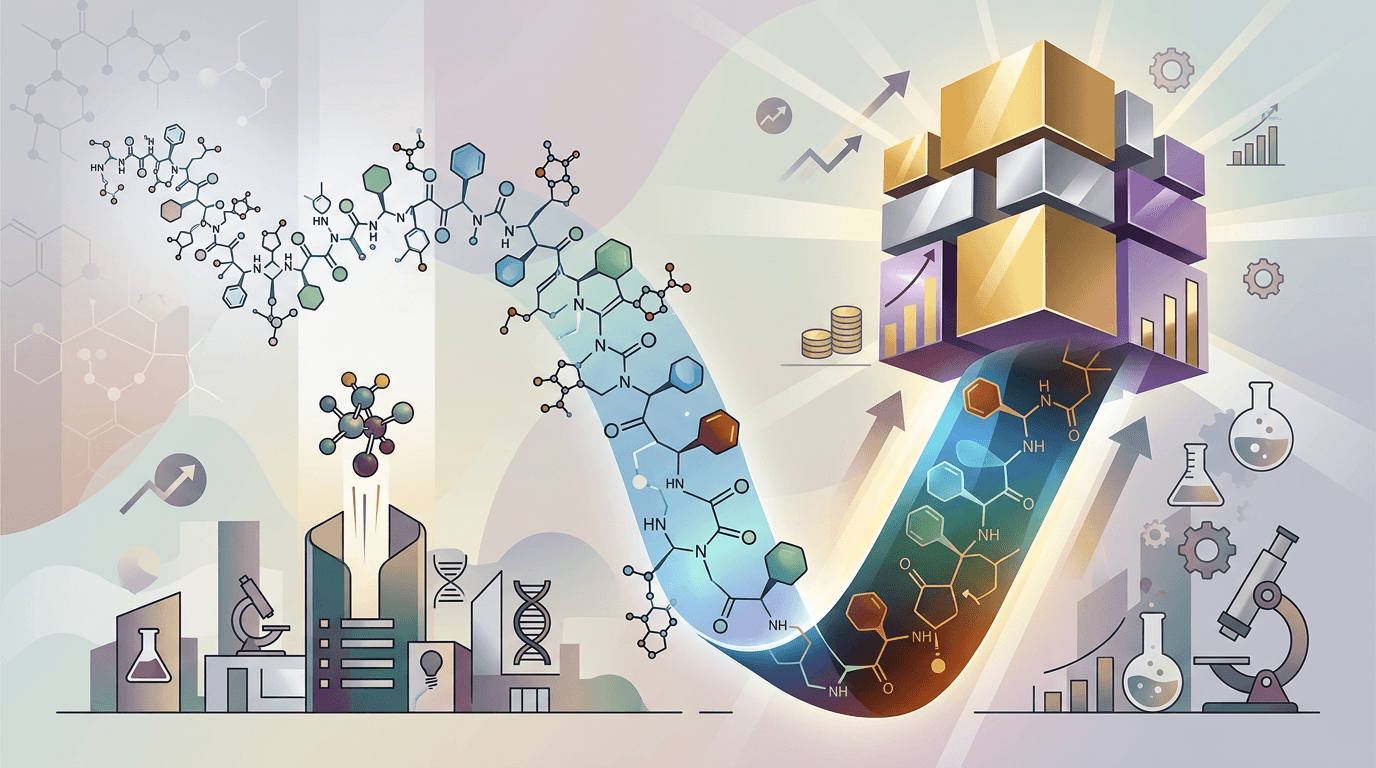
Macrocyclic peptides sit right in between. They're precise like biologics but simpler to manufacture like small molecules. They can hit protein targets inside cells that were previously considered "undruggable" by either approach. In drug development terms, they're the Goldilocks molecule: not too big, not too small.
And they come with a clinical track record that might surprise you. More than 80 peptide drugs already have FDA approval.
Plenty of companies are chasing peptides. What landed Syneron Bio a $150 million check is its Synova™ platform, an AI-powered discovery engine based in Guangzhou.
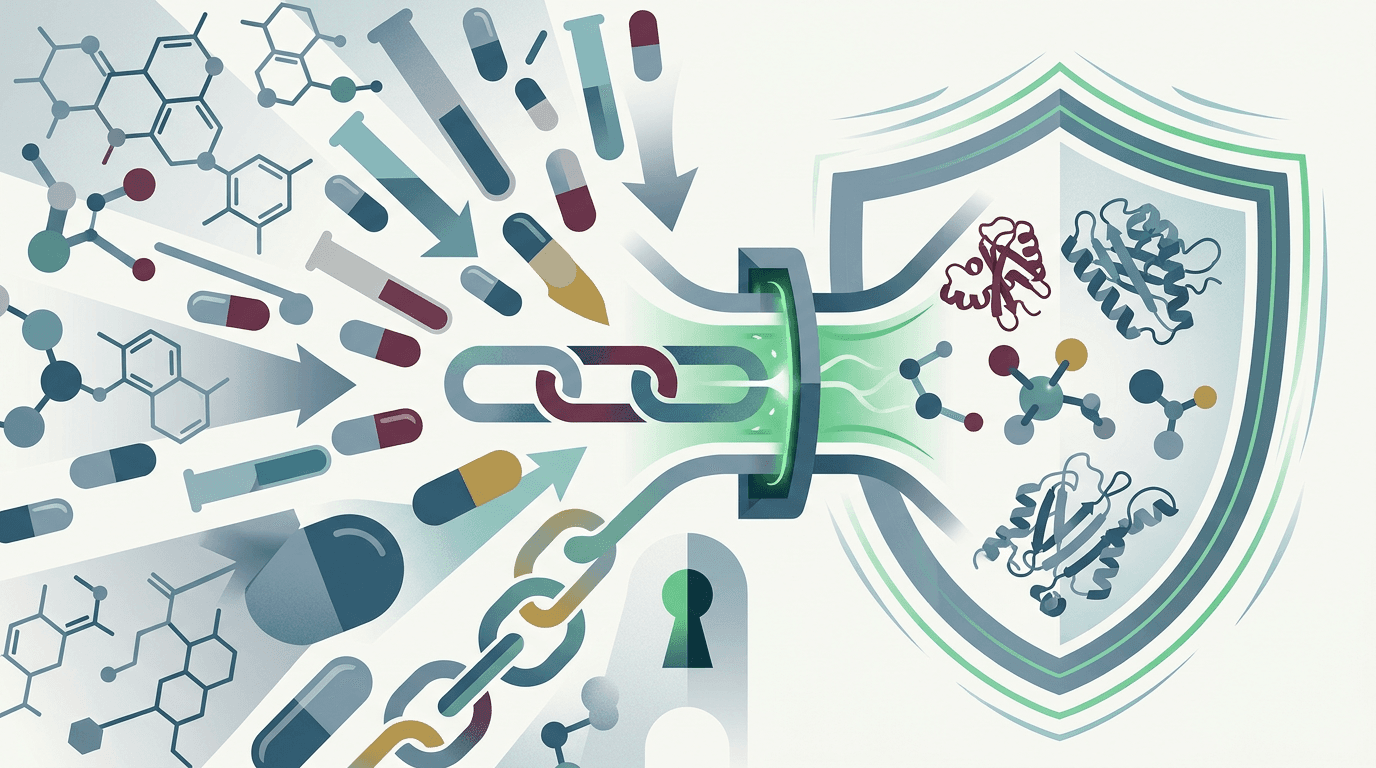
Traditional peptide drug discovery works like trying to find the right key by hand-carving thousands of blanks. Syneron Bio's approach is more like having an AI locksmith that can design and test millions of molecular keys simultaneously. The platform combines artificial intelligence with advanced automation to screen vast chemical libraries, computationally designing optimal peptide structures in a fraction of the usual time.

The Trump administration just dropped 100% tariffs on patented drug imports, the most aggressive pharma trade action in modern history. The real story isn't the tariff itself; it's the coordinated strategy pairing trade policy with FDA overhauls to fundamentally rewire how America makes and approves its medicines.


Join thousands of biotech professionals who start their day with our free, daily briefing.
The company is targeting oncology, autoimmune conditions, metabolic disorders, and rare diseases. Specific targets remain under wraps, but the immediate plan is to push several preclinical candidates into Phase 1 human trials.
The investor list reads like a who's who of life sciences capital. The round was co-led by Decheng Capital and CDH VGC, alongside an unnamed international life-science fund. But the names that followed tell a bigger story.
Abu Dhabi Investment Authority (one of the world's largest sovereign wealth funds) and True Light Capital (a subsidiary of Singapore's Temasek) both joined. So did Qiming Venture Partners and BioTrack Capital, along with unnamed industrial investors.
Perhaps more telling: existing shareholders like AstraZeneca, LAV, 5Y Capital, and GL Ventures all came back for seconds. When your Series A backers double down this quickly, it signals something stronger than polite optimism.
And about that AstraZeneca connection; it goes deeper than equity. In March 2025, Syneron Bio inked a collaboration deal with the pharma giant worth up to $3.4 billion in development and commercial milestones, plus $75 million in upfront and near-term payments. AstraZeneca gets access to the Synova™ platform. Syneron Bio gets validation from one of the world's top five pharmaceutical companies.
Syneron Bio isn't raising in a vacuum. The entire peptide space is on fire right now.
The peptide therapeutics market is projected to nearly double, growing from $84.2 billion to $162.4 billion by 2035. And the modality just got a major regulatory win: in March 2026, Johnson & Johnson received FDA approval for the first oral peptide targeting the IL-23 receptor for plaque psoriasis, proving that the historically injection-only world of peptides can go oral.
Investors are noticing. Parabilis Medicines, another peptide-focused biotech, raised a staggering $305 million Series F earlier this year for cancer therapeutics. Compared to many other modalities, peptide platforms are attracting disproportionate capital.
Let's be honest about the risks. Syneron Bio has zero clinical data. The company's drugs are still preclinical, meaning they haven't been tested in a single human being. The gap between "impressive platform" and "drug that actually works in patients" has humbled countless biotechs before.
The funding environment, while recovering, has become fiercely selective. Capital is flowing toward companies with strong science and clear paths to the clinic, which explains why Syneron Bio could raise this much. But investors in 2026 have a shorter leash than they did during the biotech boom years. If early clinical results disappoint, the next round won't come as easily.
There's also the question of geography. As a Guangzhou-based company partnering with Western pharma giants, Syneron Bio will need to navigate an increasingly complex geopolitical landscape around cross-border biotech collaboration.
Syneron Bio just pulled off something rare: raising $250 million in roughly six months, before entering human trials, in a market that punishes hype without substance. The AstraZeneca deal, the sovereign wealth fund backing, and the repeat investors all point to genuine scientific conviction rather than FOMO.
The peptide space is evolving from a niche corner of drug development into a full-blown modality war. Macrocyclic peptides in particular could unlock targets that neither small molecules nor antibodies can reach. If Syneron Bio's AI-driven platform delivers on its promise, this $150 million bet could look like a bargain.
But "if" is doing a lot of heavy lifting in that sentence. The next 18 months, when those first clinical readouts arrive, will tell us whether this is a platform company for the ages or another cautionary tale about funding ahead of the science. We'll be watching.
The UK just became the only country with tariff-free pharmaceutical access to the U.S. market, dodging 100% duties that everyone else still faces. The price? A 25% hike in what the NHS pays for new drugs, and a template that could reshape global pharma negotiations.