One Shot to Kill Your Cholesterol Forever? This Startup Is Betting $75 Million on It.
A UC Berkeley spinout co-founded by Nobel laureate Jennifer Doudna wants to go public and fund a CRISPR therapy that could permanently lower cholesterol with a single infusion. The catch? It's entering one of biotech's most competitive battlefields with zero human data.
The Pitch: Edit Your Genes, Skip the Pharmacy
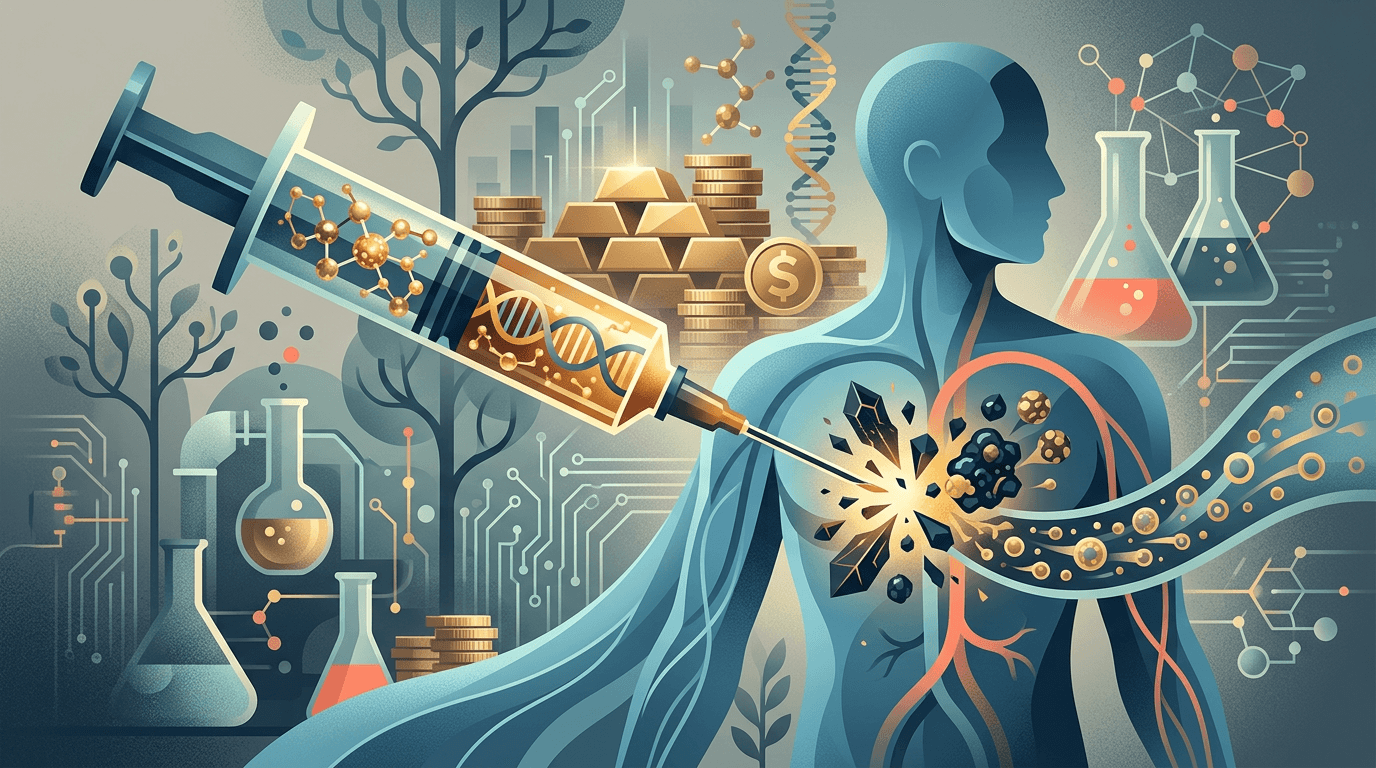
Imagine getting a single IV infusion and never worrying about your cholesterol again. No daily pills. No biweekly injections. Just one trip to the doctor, and your liver permanently stops making the protein that drives your LDL sky-high.
That's the promise Scribe Therapeutics is selling to Wall Street. The Berkeley-born CRISPR company filed its S-1 on July 2, signaling plans to raise up to $75 million in an IPO on the Nasdaq under the ticker SCTX. Leerink Partners, Goldman Sachs, Guggenheim Securities, and Wells Fargo are running the books. Final pricing hasn't been set yet (the share count and price range are still blank in the filing), but the intent is clear: Scribe wants public-market cash to fund a clinical showdown in one of medicine's most competitive arenas.
The target? Cardiovascular disease, the world's leading killer. The weapon? A proprietary CRISPR system that doesn't just edit DNA; it can also silence genes without cutting them at all.
Born in a Nobel Laureate's Lab
Scribe's origin story reads like a biotech fairy tale. The company was co-founded in 2018 by Benjamin Oakes, Nobel laureate Jennifer Doudna, Brett Staahl, and David Savage, all from UC Berkeley. Oakes had just finished his PhD in Doudna's lab, engineering improved CRISPR molecules. He became an Entrepreneurial Fellow at Berkeley's Innovative Genomics Institute, and the technology he refined there became the backbone of Scribe.
The company raised a $20 million Series A led by Andreessen Horowitz in October 2020, then followed up with a $100 million Series B in March 2021. Along the way, Scribe pulled in over $180 million in partnership payments from Sanofi and Eli Lilly. Not bad for a company most people have never heard of.
Now Scribe is stepping out of stealth mode and into the public markets. The question is whether investors will buy the story.
The Secret Sauce: Silencing Without Cutting
Most CRISPR therapies work like molecular scissors: they physically cut DNA to knock out a gene. Scribe does that too (for two of its programs), but its lead drug, , takes a completely different approach.
Get tomorrow's biotech intelligence before your competitors.
Join thousands of biotech professionals who start their day with our free, daily briefing.
STX-1150
Instead of snipping DNA, STX-1150 uses something called the ELXR system (Epigenetic Long-Term X-Repressor). Think of it like putting a "do not read" sticky note on a gene. The DNA stays intact, but the cell ignores the instructions. The target is PCSK9, a protein your liver makes that raises LDL cholesterol. People born with naturally broken PCSK9 genes enjoy low cholesterol and fewer heart attacks for life. Scribe wants to recreate that genetic lottery win with a single infusion.
The preclinical numbers are striking. In monkey studies, a single dose at 0.75 mg/kg produced a 50% or greater drop in LDL cholesterol lasting more than 515 days (and counting). In human liver cells grown in a dish, the system silenced over 95% of PCSK9 production. Repeat dosing drove even deeper reductions, suggesting the effect can be dialed up.
Scribe plans to start a Phase 1 trial in people with high cholesterol around mid-2026, conducted in Australia.
A Pipeline That Covers All Three Lipid Villains
STX-1150 isn't Scribe's only trick. The company is building a cardiometabolic portfolio that attacks the three main lipid drivers of heart disease:
STX-1150 (PCSK9 silencing) tackles LDL cholesterol. STX-1200 (LPA gene editing) goes after lipoprotein(a), a genetically driven risk factor with no approved treatments. Scribe says STX-1200 is the first CRISPR therapy to achieve over 95% Lp(a) reduction in animals at less than 0.5 mg/kg, with no detectable off-target editing. Then there's STX-1400 (APOC3 editing), which targets triglycerides; it achieved over 75% editing in primate liver cells at relevant doses.
All three are preclinical (STX-1150 is the furthest along), and all three use lipid nanoparticles to deliver the CRISPR payload to the liver via IV infusion. The logic is elegant: nature already proved these gene variants protect people from heart disease. Scribe is just trying to bottle that protection.
The Competition Is No Joke
Scribe isn't walking into an empty room. The CRISPR cardiovascular space already has serious players swinging hard.
Verve Therapeutics is furthest ahead with PCSK9, using a base-editing approach (think CRISPR's cousin). Its second-generation drug, VERVE-102, showed a mean 53% LDL reduction in early human trials, with the highest doses hitting 69%. No serious treatment-related side effects so far.
CRISPR Therapeutics is attacking different targets: its CTX310 program reduced LDL by up to 48.9% and triglycerides by 55.2% in a Phase 1 trial targeting ANGPTL3. Its Lp(a) program, CTX320, cut Lp(a) by 95% in monkeys and is now in Phase 1 in humans.
And then there's the non-CRISPR competition. Repatha (the PCSK9 antibody) still dominates the market. Leqvio (inclisiran, the siRNA) is the fastest-growing challenger, offering roughly 50% LDL reduction with just two shots per year. The overall PCSK9 market sits around $3 to $5 billion in 2025, depending on how you slice it, and it's growing fast.
Scribe's pitch to investors boils down to this: all of those options require repeat dosing, forever. We offer one and done.
The IPO Window: Open, But Picky
The timing could work. Biotech IPOs raised about $1.7 billion in Q1 2026 alone, the strongest quarter since 2021. But analysts are clear: the market is rewarding companies with clinical proof, not platform promises. The median IPO size last quarter was $287.5 million, tilted toward later-stage stories.
Scribe sits in an interesting middle zone. It has impressive animal data and big pharma partnerships, but no human efficacy data yet. The Phase 1 trial is just starting. Investors will essentially be buying the preclinical package, the Doudna pedigree, and the promise that epigenetic silencing (no permanent DNA cuts) offers a safety advantage over competitors who physically alter the genome.
That's a real differentiator, if it translates to humans. The "if" is doing a lot of heavy lifting.
The Bottom Line
Scribe Therapeutics is asking the public markets to fund a bet that its CRISPR platform can compete in one of medicine's biggest categories. The science is genuinely novel: silencing a gene without cutting it is a meaningful twist on the CRISPR playbook. The founding team has Nobel-caliber credentials, the preclinical data in monkeys looks impressive, and the $180 million from Sanofi and Lilly provides real-world validation.
But the competition is fierce, the clinical data is months away, and the IPO market doesn't hand out participation trophies. Scribe will need its Phase 1 readout to be a showstopper, because in a field this crowded, "pretty good" won't cut it.
Clinical & Regulatory4 min read
New Drug Prices Just Dropped for the First Time in Years. Don't Celebrate Yet.
Median launch prices for new drugs dropped more than 40% in 2025, falling to $216,000 from over $370,000 the year before. But before you celebrate, the reason has nothing to do with pharma companies charging less.