The Gene Therapy That Was Supposed to Be a Miracle
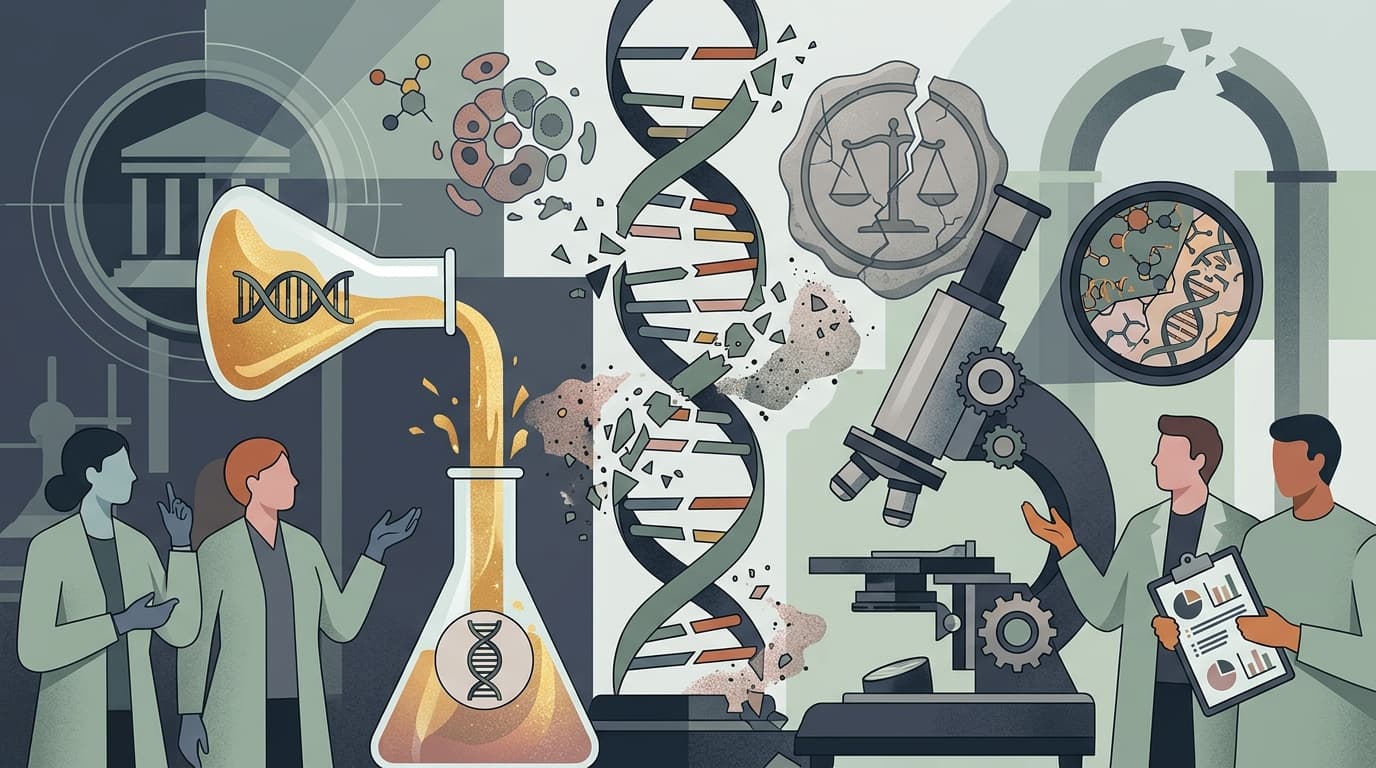
The FDA is investigating patient deaths linked to Sarepta's Duchenne gene therapy Elevidys, pulling the emergency brake on one of biotech's highest-profile treatments. The fallout is raising hard questions about whether the most promising gene therapies are also the most dangerous.
A Promise Meets Reality
Imagine you're the parent of a boy with Duchenne muscular dystrophy. Your son's muscles are slowly wasting away. There's no cure. Then a company tells you it has a gene therapy that could change everything: one infusion, one shot at slowing the disease. You'd do almost anything.
That's the emotional weight behind Elevidys, Sarepta Therapeutics' gene therapy for Duchenne. It earned accelerated FDA approval in June 2023 and quickly became one of the most closely watched treatments in rare disease. Now the FDA is investigating patient deaths linked to the therapy, and the whole field of gene therapy is holding its breath.
What Happened
The FDA reported three fatal cases of acute liver failure in patients who received Sarepta's AAVrh74-based gene therapies as of mid-2025. The first two deaths involved non-ambulatory boys with Duchenne (patients who had already lost the ability to walk) treated with Elevidys. Both were hospitalized with skyrocketing liver enzymes before their livers failed entirely.
A third death surfaced in Sarepta's broader gene therapy program. The agency also looked into the death of an 8-year-old boy in Brazil, but later determined that case was unrelated to the product itself.
The FDA's response escalated quickly. First came a safety communication in June 2025 flagging the risk of acute liver failure. Then the agency asked Sarepta to suspend distribution of Elevidys and pause all clinical trials involving the company's gene therapy platform. That's not a yellow flag. That's the regulator pulling the emergency brake.
Why Livers? A Quick Detour Into AAV Biology
Elevidys works by using a viral vehicle called AAV (adeno-associated virus) to deliver a shortened version of the dystrophin gene into a patient's muscles. Think of AAV as a biological FedEx truck: it carries the genetic instructions your body needs but can't make on its own.
The problem is that when you flood the body with billions of these viral particles through an IV, they don't go to the muscles. A huge number end up in the liver. The immune system notices all those foreign particles and, in some patients, launches an inflammatory attack that can spiral into full-blown liver failure.
Get tomorrow's biotech intelligence before your competitors.
Join thousands of biotech professionals who start their day with our free, daily briefing.
only
This isn't unique to Elevidys. Across all high-dose systemic AAV gene therapies, liver enzyme elevations show up in up to 90% of patients in some settings. Most cases are manageable. But in rare instances, the inflammation escalates beyond what steroids and monitoring can control. Researchers estimate at least 17 deaths have occurred across next-generation systemic AAV programs, mostly at very high doses.
So Elevidys isn't an outlier. It's part of a pattern the field has been nervously watching for years.
The Risk-Benefit Tightrope
Duchenne muscular dystrophy is devastating. Boys typically lose the ability to walk by their early teens. Most don't survive past their 20s or 30s. When your baseline is that grim, the tolerance for risk goes up. Families and doctors are willing to accept side effects that would be unthinkable for, say, a cholesterol drug.
But "higher risk tolerance" doesn't mean "unlimited risk tolerance." The deaths concentrated in non-ambulatory patients, who tend to be older, sicker, and potentially more vulnerable to liver injury. Sarepta responded by suspending commercial shipments for non-ambulatory patients while maintaining that the safety profile in ambulatory (still walking) patients showed no new concerns.
That distinction matters enormously. It's the difference between a therapy that's fundamentally dangerous and one that may be too risky for a specific subset of patients. The FDA eventually allowed shipments to resume for ambulatory patients, suggesting regulators see this as a nuanced problem rather than a blanket failure.
The Business Fallout
Elevidys was supposed to be a blockbuster. In Q1 2026, it brought in $102 million in net revenue. By Q2, that slipped to $98 million. Sarepta narrowed its full-year 2026 guidance to $1.2 billion to $1.3 billion in total net product revenue, but the restricted patient population clearly shrank the addressable market.
The commercial headwind goes beyond just losing non-ambulatory patients. The average journey from enrollment to treatment takes about six months, meaning any recovery in patient demand won't show up in revenue until 2027 at the earliest. Management has signaled that second-half 2026 demand will likely come in modestly below the first half. Stabilization, not a comeback.
Meanwhile, the law firm Kahn Swick & Foti announced a shareholder investigation in early October 2026, probing whether Sarepta's leadership breached fiduciary duties. That kind of legal action rarely changes a company's fundamentals, but it adds another layer of uncertainty for investors already spooked by the FDA's moves.
What This Means for Gene Therapy
Sarepta convened an expert committee spanning neuromuscular disease, hepatology, hematology, and immunology to review the fatal cases. The company is also pointing to newer data, including three-year results from its EMBARK Phase 3 trial (reported in January 2026), which it says show durable functional benefit with no new safety concerns in longer-term follow-up.
The bigger question hangs over the entire AAV gene therapy field. These therapies work by delivering massive doses of viral particles into the bloodstream. That's fundamentally different from, say, injecting a gene therapy directly into the eye (as with Luxturna for inherited blindness), where doses are tiny and systemic exposure is minimal.
For high-dose systemic programs, the field is learning that efficacy alone isn't enough. Regulators and clinicians need better tools to predict which patients are most vulnerable to severe immune reactions. They need better protocols for monitoring and intervening when liver enzymes start climbing. And they need honest conversations with families about where the risk-benefit line actually falls.
The Bottom Line
Elevidys isn't dead. It's still generating roughly $100 million per quarter, still treating ambulatory patients, and still backed by clinical data that supporters find compelling. But the investigation has exposed a tension that the gene therapy field can no longer ignore: the same powerful mechanism that makes these therapies transformative also makes them unpredictable in ways that can be fatal.
For the families living with Duchenne, the calculus hasn't changed. They still need better treatments, and they still face impossible choices. The question now is whether Sarepta, the FDA, and the broader scientific community can figure out how to deliver on the promise of gene therapy without losing the patients it's supposed to save.
Clinical & Regulatory
4 min read
The Drug That Could Rewrite How We Treat the Most Common Blood Cancer
AbbVie and Genmab's epcoritamab just delivered a 51% reduction in disease progression when added to frontline chemo for the most common aggressive lymphoma. After 30 years of the same standard of care, the first-line DLBCL playbook may finally be getting a rewrite.