Roche's Secret Weapon for Weight Loss Might Actually Save Your Muscles
Every blockbuster weight-loss drug has a dirty secret: they burn muscle along with fat. Roche just paid $190 million for a completely new type of obesity drug that might fix that, and the preclinical data is turning heads.
The Biggest Problem With Weight-Loss Drugs Isn't What You Think
Every blockbuster weight-loss drug on the market has a dirty little secret: they don't just melt fat. They eat muscle, too.
Studies show that 15–40% of the weight people lose on GLP-1 drugs like Wegovy and Zepbound comes from lean body mass, not fat. For a young, healthy person, that might be tolerable. For an older adult or someone already low on muscle, it's a real problem. Imagine going on a diet where your body burns the furniture for fuel instead of just emptying the pantry.
Roche thinks it found something that could change that equation entirely.
A $190 Million Bet on a Peptide You've Never Heard Of
In a deal with South Korea's Hanmi Pharmaceutical, Roche's Genentech unit paid $190 million upfront to license a drug called HM17321. The total deal could reach $2.3 billion with milestones and royalties. Genentech gets exclusive worldwide rights outside South Korea, while Hanmi keeps its home market and finishes the ongoing Phase 1 trial.
What makes this worth nearly a quarter-billion dollars before anyone has seen human efficacy data? The drug isn't a GLP-1. It isn't an incretin at all. It belongs to a completely different class: a long-acting urocortin-2 (UCN2) analog that targets the CRF2 receptor.
In plain English, it pulls a different biological lever than Wegovy or Zepbound. And the preclinical results suggest that lever might solve the muscle problem.
The Mouse Data That Got Roche's Attention
In obese mice, HM17321 significantly cut body fat. That alone would be interesting but unremarkable; plenty of compounds torch fat in rodents. The remarkable part: lean body mass actually went up.
A separate study showed even more dramatic results, with fat mass dropping 33.6% while lean mass climbed 11.9%. For context, semaglutide (the active ingredient in Wegovy) was associated with lean-mass in the same animal model.
Get tomorrow's biotech intelligence before your competitors.
Join thousands of biotech professionals who start their day with our free, daily briefing.
loss
Researchers also compared HM17321-treated mice to "pair-fed" controls, animals that ate the exact same reduced amount of food. The drug-treated mice still lost more weight, which means the effect goes beyond simple appetite suppression. Something metabolic is happening: the drug appears to boost energy expenditure on its own.
How It Actually Works (Without the Jargon)
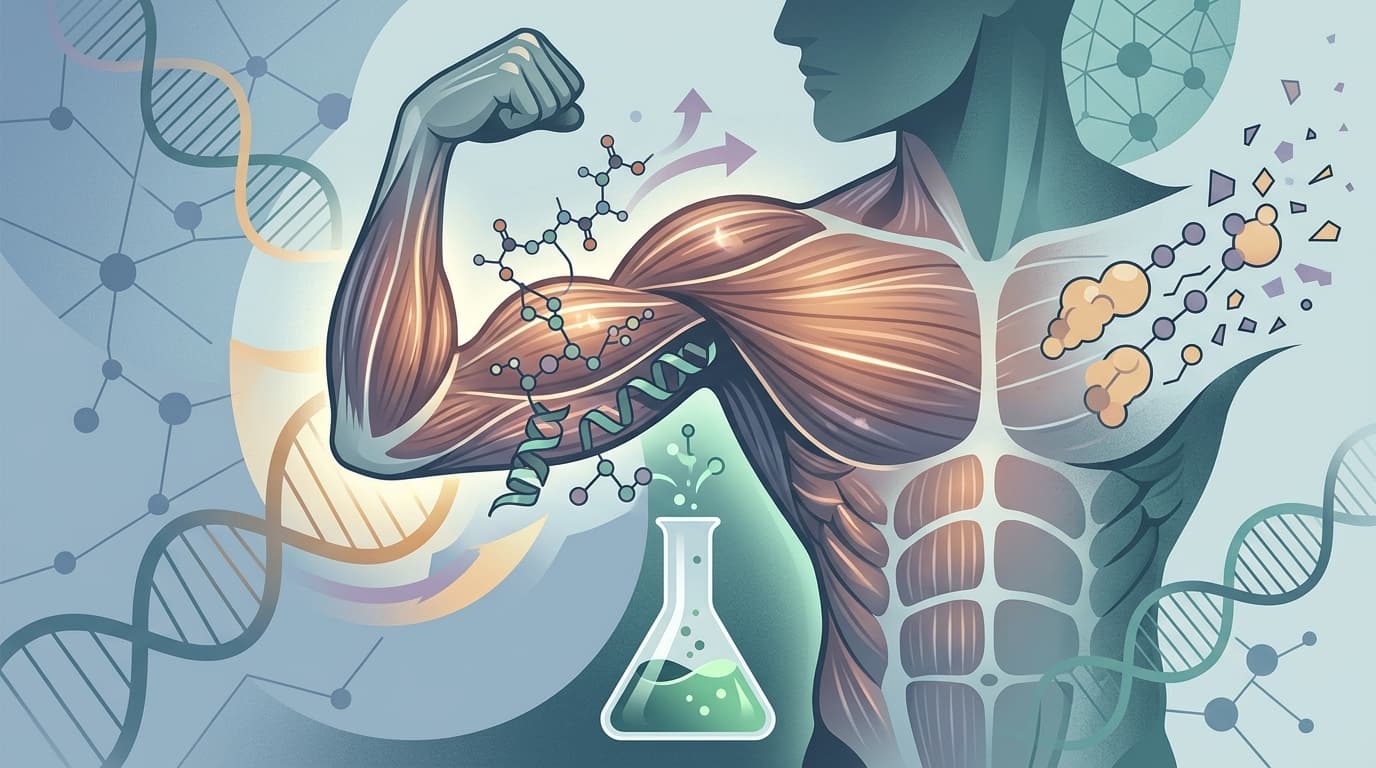
Think of CRF2 receptors as little switches sitting on the surface of fat cells and muscle cells. When HM17321 flips the switch on fat cells, it triggers lipolysis (fat breakdown). When it flips the switch on muscle cells, it nudges them toward growth and better metabolism.
The underlying biology involves a signaling cascade (cAMP, PKA, Akt/mTOR, for the science nerds) that essentially tells fat to burn and muscle to build. In lab dishes using human cells, the drug promoted fat breakdown in fat cells and enhanced development in muscle cells. It's like having a personal trainer and a nutritionist built into one molecule.
This dual action is what separates HM17321 from the GLP-1 playbook. GLP-1 drugs work primarily by crushing appetite and slowing digestion. They're phenomenal at driving weight loss, but they don't specifically protect muscle. HM17321 appears to do both, at least in animals.
Roche Is Building an Obesity Army
This deal doesn't exist in a vacuum. Roche has been assembling an obesity pipeline with the urgency of someone who showed up late to a party and is determined to make an entrance.
The centerpiece is CT-388, a dual GLP-1/GIP agonist Roche acquired when it bought Carmot Therapeutics for $2.7 billion. Phase 3 trials are expected in the first half of 2026. Roche also struck a $1.65 billion upfront deal with Zealand Pharma for petrelintide, an amylin-based drug, with combination trials alongside CT-388 planned for mid-2026.
Now add HM17321 to the mix. Roche's strategy is becoming clear: build a portfolio that can attack obesity from multiple angles. An incretin for raw weight loss. An amylin analog for combination power. And a UCN2 analog that might preserve the muscle everyone else's drugs are sacrificing.
Preclinical data even showed greater fat loss when HM17321 was combined with GLP-1 or amylin-based therapies, hinting that Roche could eventually stack these assets together.
Wall Street Sees the Vision (With Caveats)
Analysts are calling HM17321 a play on "quality weight loss," a term that signals the obesity market is evolving past the simple question of how many pounds you can drop. The next frontier is body composition: losing the right kind of weight.
Meritz Securities reportedly raised its valuation outlook for Hanmi based on the deal, arguing that muscle-sparing weight loss represents a meaningful market shift. And the potential isn't just cosmetic; preserving muscle function and strength matters for mobility, metabolic health, and aging.
But the caveats are significant. Every number cited above comes from mice, not humans. The Phase 1 trial is focused on safety, tolerability, and how the drug behaves in the body. Human efficacy data is still years away. We've all seen promising mouse data crumble the moment it meets human biology.
Roche essentially paid $190 million for an option on a hypothesis. A compelling hypothesis, backed by clean preclinical data, but a hypothesis nonetheless.
The Obesity Market's Next Chapter
The obesity drug market is projected to exceed $100 billion, and right now it's dominated by two giants: Novo Nordisk and Eli Lilly. Roche is trying to muscle its way in (pun very much intended) as a top-three player before 2030.
The bet on HM17321 reveals where Roche thinks the market is heading. First-generation GLP-1 drugs proved that pharmacological weight loss works. The next generation will need to prove it works better: more fat loss, less muscle loss, fewer side effects, and ideally in both injectable and oral forms.
If Roche can show in human trials that HM17321 genuinely preserves lean mass while torching fat, it won't just have a differentiated drug. It'll have an answer to the single loudest criticism of every obesity medication on the market today.
That's a big "if." But for a company that spent $4.35 billion acquiring Carmot and partnering with Zealand, another $190 million to cover the muscle-loss angle looks less like a gamble and more like insurance.
6 min read
The Cancer Therapy That Killed Three People Who Didn't Have Cancer
Three patients with autoimmune diseases died in Novartis CAR-T trials, forcing the company to pause eight studies and the entire field to confront an uncomfortable question: can cancer's most powerful therapy ever be safe enough for diseases that aren't trying to kill you?