
Roche just paid $190 million upfront (with $2.5 billion on the line) for a Phase 1 obesity drug that claims to do something no GLP-1 can: burn fat while actually preserving muscle. It's a bold bet on an unproven mechanism, and the biggest signal yet that the obesity drug wars are entering a new phase.
Every obesity drug on the market has a dirty little secret: they don't just melt fat. They eat muscle too.
Patients on blockbuster GLP-1 drugs like semaglutide and tirzepatide can lose impressive amounts of weight. But roughly one-fifth to three-tenths of what disappears isn't fat at all. It's lean mass: the muscle, bone density, and tissue your body actually needs. For younger, active patients, that's manageable with resistance training and extra protein. For older adults or anyone with low muscle reserves, it's a serious problem that can lead to frailty, weakness, and functional decline.
Roche just bet $2.3 billion that it found a fix.
Roche's Genentech unit signed a licensing agreement with South Korea's Hanmi Pharmaceutical for a drug called HM17321, a long-acting urocortin-2 (UCN2) analog. The financials: $190 million upfront, with up to approximately $2.1 billion more in development, regulatory, and commercial milestones, plus tiered royalties on future sales, for a total deal value of up to $2.3 billion.
Genentech gets global rights to the drug outside South Korea. Hanmi keeps its home market and will finish the ongoing Phase 1 trial before handing the baton to Genentech for Phase 2 and beyond.
Hanmi's stock price surged on the news. And for good reason: this is one of the largest obesity licensing deals ever signed for a drug that's still in Phase 1.
Most obesity drugs work by mimicking gut hormones (like GLP-1) that suppress appetite. They're effective at making you eat less, but they're essentially indiscriminate about what your body burns through. Fat goes. Muscle goes too. Think of it like a demolition crew that knocks down the whole building when you only wanted to remove one floor.
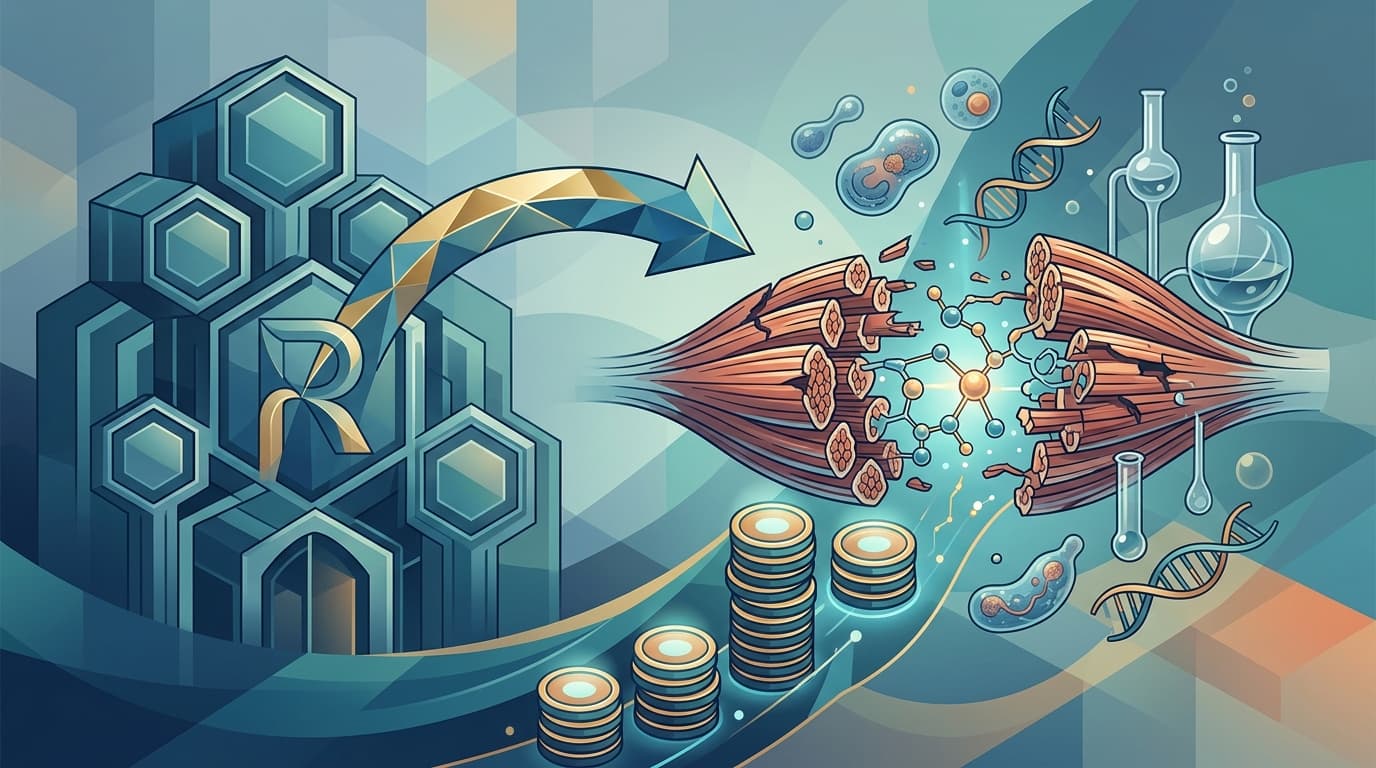
HM17321 takes a completely different approach. Instead of targeting appetite hormones, it activates something called the CRF2 receptor, which triggers a cascade of signals (through a pathway called cAMP) that does two things simultaneously: it helps the body shed fat while actively protecting and even growing muscle tissue.

For patients with a rare liver disorder, life means waking up every few hours to eat raw cornstarch or risk a medical emergency. Ultragenyx's gene therapy DTX401 cut that dependence by 61% in trials, and the FDA's decision could open the floodgates for a whole new class of metabolic gene therapies.


Join thousands of biotech professionals who start their day with our free, daily briefing.
In preclinical studies, the science looks compelling. In animal models of obesity, including obese non-human primates, HM17321 produced significant weight loss and reduced fat mass while preserving lean mass. Separate research on the UCN2 pathway showed that the molecule can boost protein synthesis in skeletal muscle, inhibit muscle breakdown, and even cause muscle hypertrophy (growth) in normal mice. The animals didn't just lose weight; they got leaner and stronger.
That's a fundamentally different value proposition than anything GLP-1 drugs currently offer.
To understand why Roche wrote this check, you need to zoom out and look at what the company has been building.
Roche arrived late to the obesity party. While Novo Nordisk and Eli Lilly were racking up billions with Wegovy and Zepbound, Roche was still assembling its roster. The shopping spree started in late 2023 with the $2.7 billion acquisition of Carmot Therapeutics, which brought in two key assets. The first is CT-388, a dual GLP-1/GIP agonist that showed 18.8% weight loss at 24 weeks in early clinical data. The second is CT-996, an oral GLP-1 candidate that demonstrated 6.1% weight loss versus placebo in initial studies.
Then came the partnership with Zealand Pharma for petrelintide, an amylin analog, in a deal valued at up to $5.3 billion. Roche's plan is to combine these assets (think CT-388 plus petrelintide) to reduce the nausea and side effects that cause many patients to quit GLP-1 therapy.
Now add Hanmi's muscle-sparing UCN2 analog to the mix, and a clear strategy emerges: Roche isn't trying to build one obesity drug. It's building an entire portfolio of differentiated options: injectable, oral, combination, and now muscle-preserving.
Analysts have been somewhat skeptical of Roche's obesity ambitions. Some have called the company's earlier candidates "largely undifferentiated" compared to what Novo and Lilly already have on the market. If you're going to show up late to the biggest therapeutic market in a generation, you'd better bring something new.
The Hanmi deal directly addresses that criticism. HM17321 isn't another GLP-1 me-too; it works through an entirely separate biological mechanism. Analysts are describing it as exactly the kind of differentiated asset investors have been looking for in the next wave of obesity therapies. The logic is straightforward: as the market matures, patients and doctors will demand more than just weight loss. They'll want weight loss that preserves body composition, maintains strength, and avoids the muscle-wasting trade-off.
Roche is essentially betting that the obesity market's future belongs to how you lose weight, not just how much.
Before anyone gets too excited, let's be honest about the risk. HM17321 is a Phase 1 asset. That means the only completed studies in humans are safety and dosing trials in healthy volunteers. There are no human efficacy results showing this drug actually produces meaningful weight loss while preserving muscle. All of the body-composition data (the fat loss, the lean mass preservation, the muscle hypertrophy) comes from animal studies.
If drug development were a road trip, HM17321 just pulled out of the driveway. Phase 2 and Phase 3 trials will take years, and the failure rate for early-stage drugs is brutal. Plenty of compounds that looked spectacular in monkeys have fizzled in humans.
There's also a biological complexity worth noting: research suggests that UCN2's metabolic effects depend heavily on dose and duration. Chronic treatment improved insulin sensitivity in one study, while acute exposure actually reduced insulin-mediated glucose uptake. The therapeutic window may be narrow, and getting the dosing right in humans will be critical.
Roche has now committed roughly $10.7 billion in maximum potential deal value across Carmot, Zealand, and Hanmi to build its obesity franchise, with a publicly stated goal of becoming a top-three obesity company and generating more than $3 billion in annual sales from the portfolio. Much of that total consists of contingent milestone payments that may never be paid out.
That's an enormous bet. But the obesity market is enormous too, projected to exceed $100 billion annually as GLP-1 drugs continue their explosive adoption curve. Roche's thesis is that the market is big enough for multiple winners, especially if you can solve problems the current leaders haven't.
Muscle loss is problem number one. And with the Hanmi deal, Roche just bought what might be the most interesting potential solution on the planet.
Now it just has to prove it works in humans.
A cardiac drug startup that didn't exist two years ago just raised $440 million in its Nasdaq debut. Braveheart Bio's blockbuster IPO headlined a billion-dollar week for biotech, and it all rides on a single heart drug.