Roche Just Bet $2 Billion on a Company Most People Haven't Heard Of
Roche signed a deal worth up to $2 billion with Atavistik Bio, a five-year-old startup most people have never heard of. The kicker: there's no late-stage drug involved, just a discovery platform and a very big bet on what comes after GLP-1s.
A $70 Million Check and a Very Long Wish List
Most $2 billion biotech deals involve a drug that already works. A Phase 3 winner. Something with revenue projections and a launch date. Roche just threw that playbook out the window.
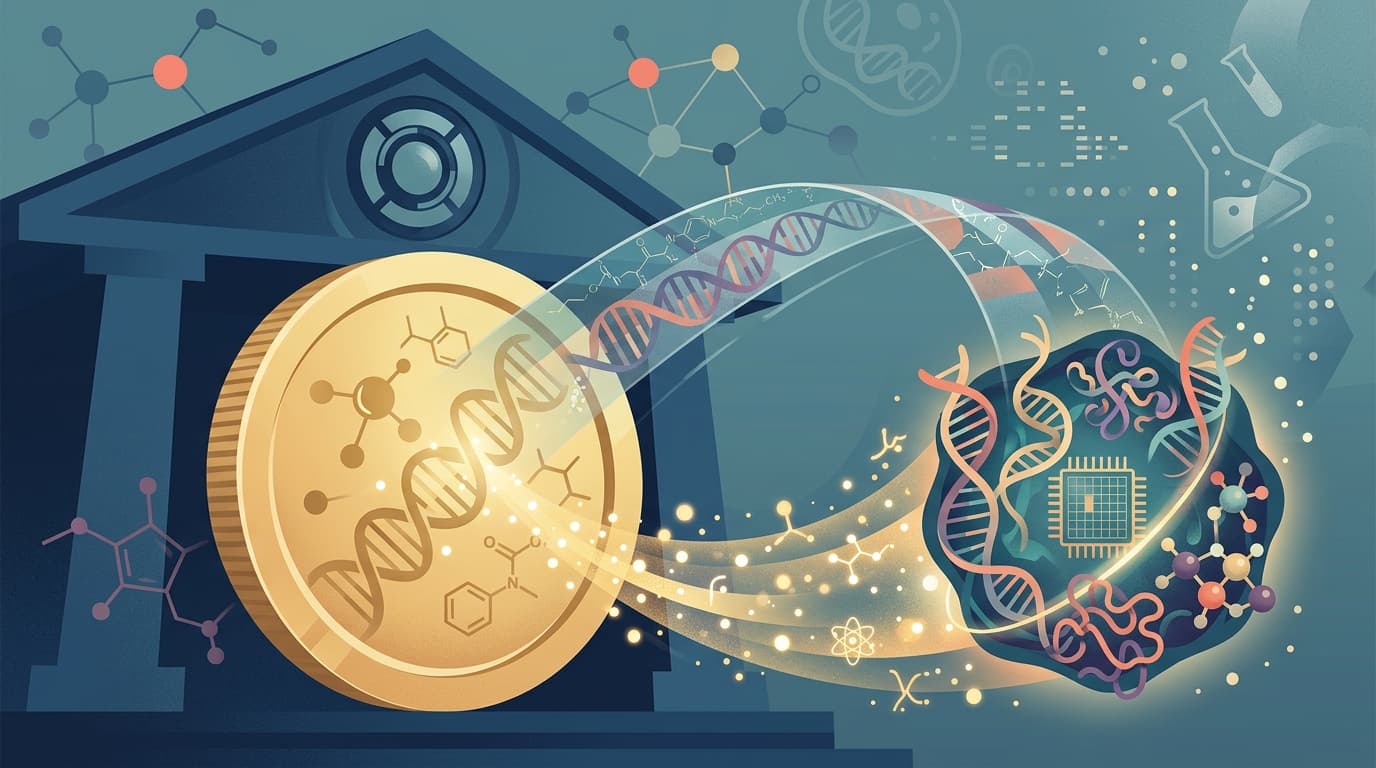
The Swiss pharma giant signed a deal worth up to $2 billion with Atavistik Bio, a Cambridge, Massachusetts startup founded in 2021. The target? Not a single drug. Not even a single disease. Roche is paying for access to Atavistik's discovery platform, betting it can uncover new medicines across cardiovascular, renal, and metabolic (CVRM) diseases. Think of it like buying the factory instead of the car.
Atavistik pockets $70 million upfront, with up to $1.9 billion in milestone payments tied to research, development, and commercial success. Royalties on future sales sweeten the pot further. It's a classic "small check now, enormous check later if this works" structure.
But the sheer scale of the deal for something this early-stage? That's what makes people pay attention.
Who Is Atavistik Bio, Exactly?
Atavistik is one of those companies that flies under the radar until a giant shows up with a checkbook. Founded on research by scientists Jared Rutter, PhD and Ralph DeBerardinis, MD, PhD, the company has built a platform called AMPS (Atavistik Metabolite-Protein Screening). In plain English, it's a system that finds hidden pockets on disease-causing proteins where small-molecule drugs can latch on.
Most drugs work by jamming themselves into a protein's active site, the molecular equivalent of blocking a doorway. Atavistik's approach is different. It targets allosteric sites: side doors and back entrances that can change how a protein behaves without blocking the main entrance. This opens up targets that traditional approaches have struggled to crack.
The company pairs AMPS with AI-driven drug design to move from "interesting pocket" to "actual drug candidate." Its existing pipeline includes ATV-1601, an oral drug for a rare vascular disorder called hereditary hemorrhagic telangiectasia, plus a program targeting a specific mutation linked to blood cancers.
Get tomorrow's biotech intelligence before your competitors.
Join thousands of biotech professionals who start their day with our free, daily briefing.
Atavistik has raised at least $260 million across multiple venture rounds, backed by The Column Group, Lux Capital, Nextech Invest, Regeneron Ventures, and RA Capital Management. A March 2026 extension round valued the company at roughly $422 million post-money. Not bad for a five-year-old startup with no approved products.
Why Roche, and Why Now?
Roche has been on a CVRM shopping spree for two years, and this deal fits a clear pattern.
In 2024, Roche acquired Carmot Therapeutics to get incretin-based drugs for obesity and diabetes. It partnered with Alnylam on zilebesiran, an RNA-based therapy for high blood pressure. In 2025, Roche teamed up with Zealand Pharma on petrelintide, a long-acting obesity drug, and bought 89bio for pegozafermin, a treatment for fatty liver disease (MASH).
Notice the pattern? Roche isn't betting on one type of medicine. It's assembling a toolkit: RNA therapies, incretins, amylin analogs, and now allosteric small molecules. Each piece targets a different slice of the cardiometabolic universe, and some could eventually be combined.
The Atavistik deal adds the earliest, most exploratory piece to the puzzle. Atavistik handles discovery and research; Roche takes over once a program is ready for preclinical testing, clinical trials, regulatory filings, and commercialization. It's a clean division of labor. The startup does what startups do best (innovate fast), while Roche does what Big Pharma does best (develop and sell drugs globally).
Roche has also been building a CVRM innovation center in Boston, combining discovery biology, computational science, and academic partnerships. The Atavistik collaboration feeds directly into that infrastructure.
The Bigger Picture: Pharma's Platform Obsession
Roche isn't alone in writing big checks for early-stage platforms in the cardiometabolic space. This has become a full-blown trend.
Eli Lilly signed a $1.3 billion platform deal with Superluminal to explore undisclosed GPCR targets in obesity. Novo Nordisk inked a $550 million collaboration with Replicate using self-replicating RNA technology for metabolic diseases. Novo also partnered with Orbis on oral macrocycle therapeutics.
The common thread? Everyone is looking for what comes after GLP-1 drugs like Ozempic and Mounjaro. Those blockbusters proved the cardiometabolic market is enormous, but they also created a land grab for the next generation of therapies. Pharma companies want drugs that are oral (not injectable), that hit new targets (not just GLP-1), and that can be combined with existing treatments.
Platform deals let Big Pharma place multiple bets without buying entire companies. Pay a modest upfront, preserve optionality, and let the science play out. If something hits, the milestones and royalties are a bargain compared to a full acquisition. If nothing pans out, the losses are contained.
What Could Go Wrong (and Go Right)
Let's be honest: $70 million upfront for early-stage discovery is real money, but it's not bet-the-company money for Roche. The $1.9 billion in milestones sounds enormous, but those payments only trigger if programs advance through development and reach commercialization. Many won't.
The risk for Atavistik is subtler. Partnering this early means Roche controls the development and commercial path. If the platform delivers a blockbuster target, Atavistik collects milestones and royalties, not the full economic upside of owning that drug outright. It's the classic biotech trade-off: cash and validation now versus potential billions later.
The upside scenario is tantalizing, though. If AMPS can systematically unlock new allosteric targets in CVRM diseases, this single collaboration could spawn multiple drug programs. That's the promise of a platform deal versus a one-asset partnership. One fishing rod versus an entire trawling net.
Neither Roche nor Atavistik disclosed how many targets the collaboration covers or provided development timelines. That ambiguity is typical for deals this early, but it also means investors and observers are largely flying blind on when (or whether) tangible results will emerge.
The Bottom Line
Roche just made one of the largest platform-based discovery deals in the CVRM space, and it did so with a company that most people outside biotech venture circles have never heard of. That alone tells you something about where the industry is headed.
The GLP-1 boom proved that cardiometabolic disease is a trillion-dollar opportunity. Now, the race is on to find what's next. Roche is betting that Atavistik's side-door approach to protein targets could be part of the answer. Whether that bet pays off is years away from being clear. But the willingness to write this kind of check for this kind of science? That's a signal worth watching.
Clinical & Regulatory4 min read
Kyverna's CAR-T Therapy Just Did Something Its Rivals Can't
Kyverna's CAR-T therapy miv-cel just posted one-year data in stiff person syndrome and myasthenia gravis with durable responses and zero high-grade toxicities. While competitors pause trials after patient deaths and safety scares, Kyverna's clean profile could make it the first approved therapy for SPS.