Repligen Just Bet $1.5 Billion on the Plumbing of Cell Therapy
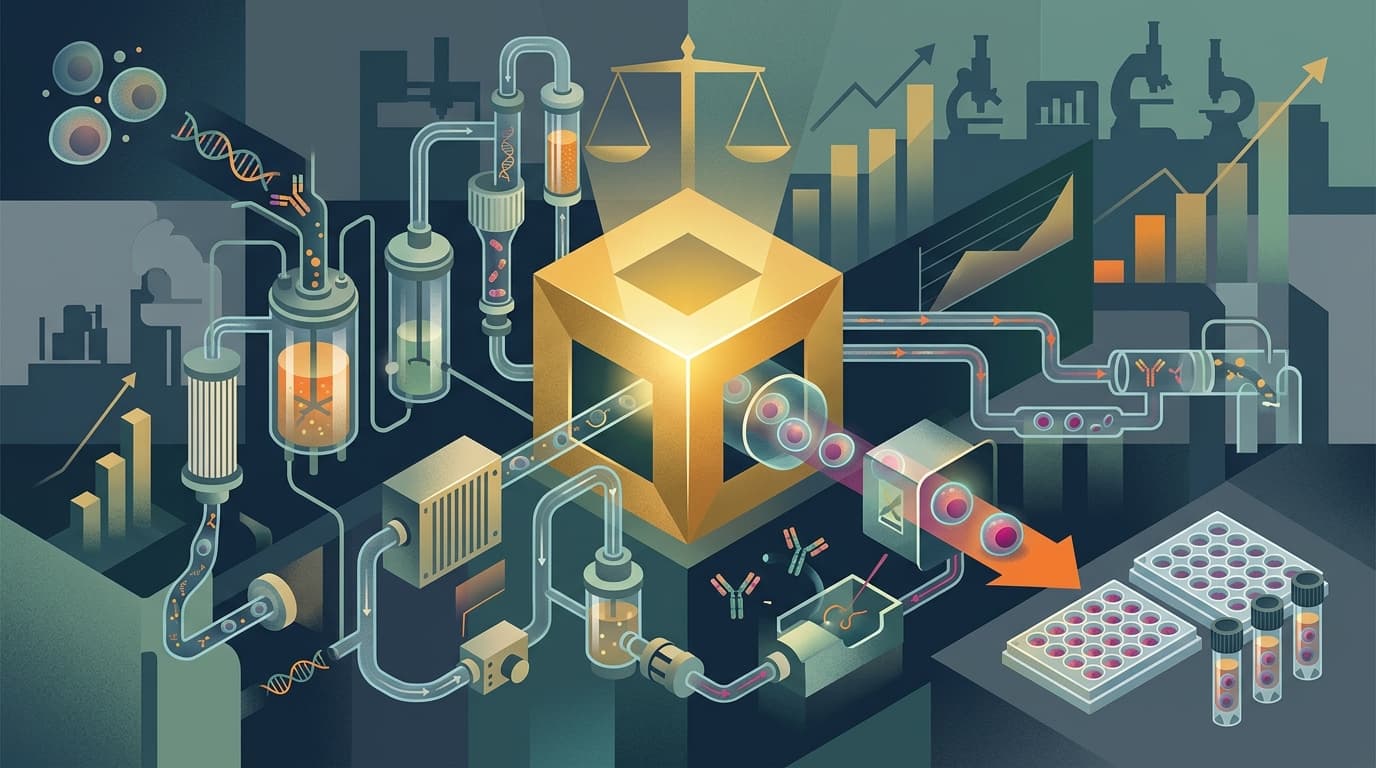
Repligen is spending $1.5 billion to acquire BioLife Solutions, the company that makes the freezers, thawing devices, and shipping containers keeping cell therapies alive. It's the biggest bet yet that CGT's real bottleneck isn't the science; it's the supply chain.
The Unsexy Stuff That Makes Cell Therapy Work
Nobody writes breathless headlines about freezer media. No one's live-tweeting a cold-chain shipping container launch. But without these workhorse products, every CAR-T cell therapy sitting in a hospital freezer is just an expensive popsicle.
Repligen just agreed to buy BioLife Solutions for roughly $1.5 billion, and the deal tells you everything about where the cell and gene therapy (CGT) industry is heading. Not toward flashier science, but toward better plumbing.
What Repligen Is Actually Buying
BioLife Solutions, based in Bothell, Washington, makes the unsexy-but-essential toolkit for keeping living cells alive as they move through the manufacturing and delivery process. Think of it like this: if a CAR-T therapy is a gourmet meal, BioLife makes the Tupperware, the cooler bag, and the microwave that ensures it arrives at your table still edible.
Their product lineup reads like a supply closet for cell therapy labs:
CryoStor: freeze media that keeps cells alive during cryopreservation (fancy word for deep-freezing biological material)
HypoThermosol: cold storage media for when cells need to stay chilled but not frozen during transport
ThawSTAR: automated thawing devices that warm frozen therapies without using water baths (which are contamination risks)
evo: cloud-connected shipping containers that track temperature-sensitive biologics in transit
Biopreservation media, primarily the CryoStor line, accounts for roughly 85% of revenue. And business is booming: cell processing revenue hit $23 million in Q2 2025 alone, up 28% year over year.
The Deal, Decoded
BioLife shareholders will receive $31 per share, split between $11.25 in cash and 0.1442 shares of Repligen stock. That works out to a 64/36 stock-to-cash split. Repligen plans to fund the cash portion from money it already has on hand and will issue about to cover the stock side.
Get tomorrow's biotech intelligence before your competitors.
Join thousands of biotech professionals who start their day with our free, daily briefing.
7.2 million new shares
Both boards unanimously approved the deal, which is expected to close in Q4 2026. There's a $59 million breakup fee if things fall apart under certain conditions.
One interesting wrinkle: BioLife was actually trading above the $31 deal price after the announcement. That's unusual. It could mean the market expects a competing bid, or it could reflect special situations traders positioning around the deal. Either way, it suggests Wall Street doesn't think $31 is the ceiling.
Why Repligen Wants This
Repligen already sells bioprocessing tools (proteins, filtration, chromatography systems, fluid management gear) to the same customers BioLife serves. The acquisition logic is straightforward: become a one-stop shop for CGT manufacturers instead of making them cobble together supply chains from a dozen different vendors.
It's the Costco strategy applied to bioprocessing. Bundle more products under one roof, cross-sell to existing accounts, and let purchasing departments consolidate their vendor lists.
Repligen expects the deal to generate $20 million in cost savings during the first year and $30 million by year two. The company also called the acquisition accretive, meaning it should boost earnings rather than dilute them.
Wall Street Liked It (For Once)
The market's initial reaction was positive on both sides. BioLife shares rose about 6% and Repligen gained roughly 4% after the announcement. That's notable because acquirer stocks often drop when big deals are announced; investors tend to punish companies they think are overpaying.
William Blair called the deal "a great fit for Repligen" and said it "checks a lot of the key boxes," noting the price was "reasonable" at roughly 11x estimated 2027 sales. That multiple is slightly above comparable transactions, but not egregiously so for a market leader in a fast-growing niche.
The Bigger Picture: CGT's Infrastructure Arms Race
This deal doesn't exist in a vacuum. Across the CGT landscape, 2025 and 2026 have been defined by a clear pattern: consolidation of infrastructure assets. Big pharma and platform companies are snapping up the picks-and-shovels businesses that make scaled cell therapy manufacturing possible.
The logic is simple. Cell and gene therapies are incredibly promising, but manufacturing them is still painfully complex. Every approved CAR-T product requires cells to be collected from a patient, shipped to a manufacturing facility, engineered, expanded, frozen, shipped back, and thawed at the point of care. Each step is a potential failure point, and the entire chain depends on specialized tools and logistics.
As more CGT products move from clinical trials to commercial launch, the bottleneck isn't the science; it's the supply chain. Companies that own standardized, integrated infrastructure (manufacturing, cold chain, software, distribution) are becoming the most strategically valuable assets in the space.
That's exactly what Repligen is assembling. By adding BioLife's biopreservation and cell processing tools to its existing filtration, chromatography, and fluid management portfolio, Repligen is positioning itself as the connective tissue of the CGT manufacturing workflow.
What to Watch
The deal still needs regulatory and shareholder approval before its Q4 2026 close. But the real question isn't whether this deal gets done. It's whether $1.5 billion will look like a bargain or a splurge three years from now.
If the CGT market keeps expanding (and most analysts believe it will), owning the infrastructure layer could be like owning the railroad tracks during a gold rush. The miners come and go, but the tracks always get used.
BioLife was already expanding its reach before this deal, having invested in Pluristyx and acquired a 90% stake in PanTHERA CryoSolutions in 2025. Repligen inherits those bets too, plus a portfolio of products that are deeply embedded in CGT manufacturing workflows.
For an industry obsessed with breakthrough therapies and billion-dollar drug launches, the biggest winner might just be the company that kept the cells alive during shipping.
4 min read
Biotech's IPO Window Just Cracked Wide Open
BlossomHill Therapeutics just pulled off a $150 million upsized IPO in the busiest week for biotech listings all year. With 2026 already blowing past 2025's full-year IPO numbers, the biotech market's comeback is looking very real.