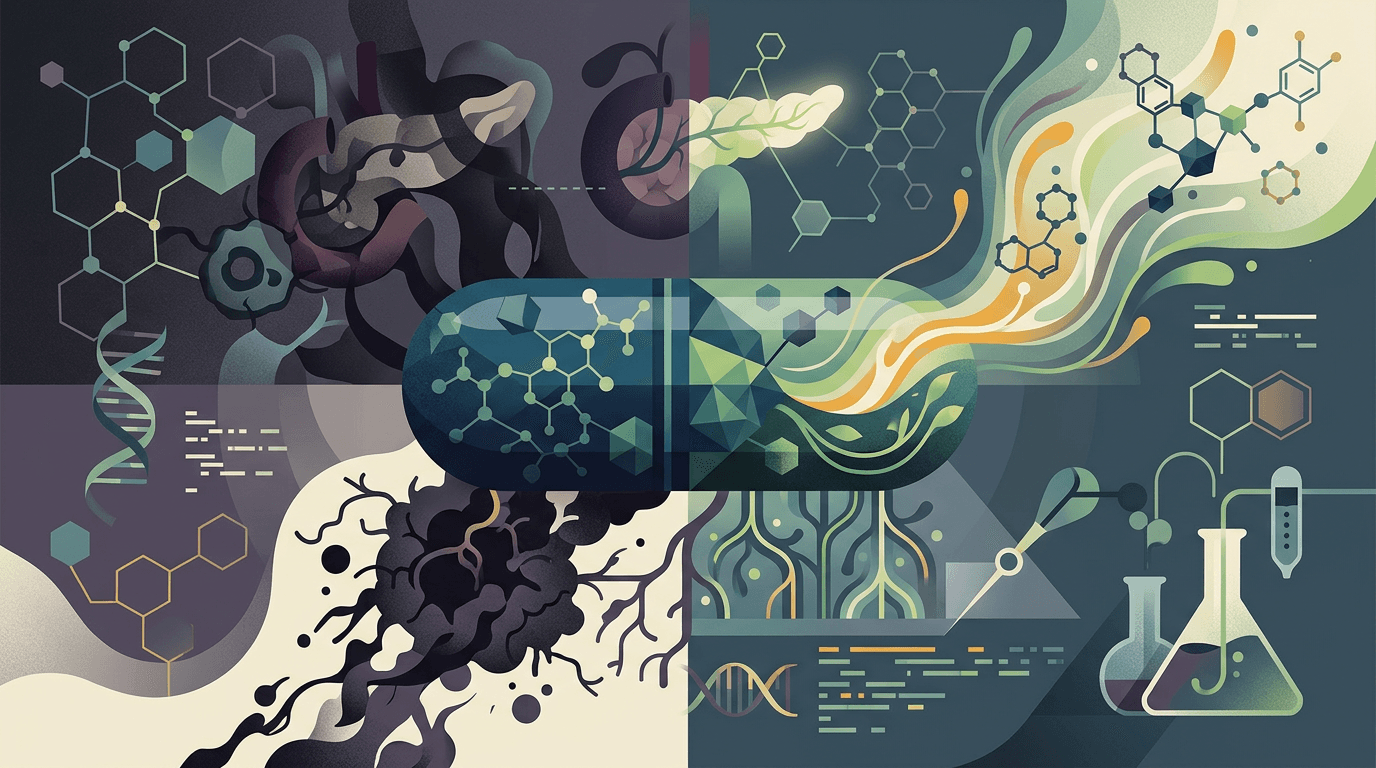

A daily pill from Revolution Medicines nearly doubled survival in advanced pancreatic cancer patients compared to chemo, cracking a target that scientists called 'undruggable' for 40 years. The results were so strong the trial was stopped early, and even a former U.S. senator enrolled.
Pancreatic cancer is the bouncer at the worst nightclub in oncology. It lets almost nobody out alive. Only 3% of patients with metastatic disease survive five years. Most people diagnosed with advanced pancreatic cancer are told they have months, not years. Chemotherapy buys some time, but it rarely buys much.
So when a daily pill nearly doubles how long patients live compared to chemo, the entire field stops and stares.
That's exactly what happened on April 13, when Revolution Medicines dropped data from its Phase 3 trial of daraxonrasib, an oral cancer drug targeting a protein that scientists spent decades calling "undruggable." The results were so strong that the company stopped the trial early. And Wall Street lost its mind.
The trial, called RASolute 302, enrolled patients with metastatic pancreatic cancer who had already failed a round of chemotherapy. Half received daraxonrasib (a once-daily 300 mg pill). The other half got standard chemo.
Patients on the pill lived a median of 13.2 months. Patients on chemo lived 6.7 months. That's a 60% reduction in the risk of death, with a p-value under 0.0001 (translation: this wasn't a fluke).
To appreciate how remarkable that is, you need context. In second-line pancreatic cancer, doctors are essentially playing defense. The goal isn't to win; it's to not lose as fast. Extending survival by even a couple of months in this setting would be noteworthy. Doubling it? That's like a last-place team winning the championship.
The trial hit every major benchmark: both its primary endpoints (overall survival and progression-free survival in patients with RAS G12 mutations) and key secondary endpoints in the broader patient population. Revolution didn't just clear the bar. They pole-vaulted over it.
Over 90% of pancreatic cancers are driven by mutations in a family of proteins called RAS. Think of RAS as a light switch inside cancer cells that gets stuck in the "on" position, telling the cell to grow and divide nonstop. For 40 years, scientists tried to build a drug that could flip that switch off. They kept failing. RAS became known in oncology circles as "undruggable," the white whale of cancer research.

Spain is dropping $200 million on a government-backed biotech VC fund anchored in Boston, the first time a European country has seeded a venture fund on U.S. soil. It's a bold play to close Europe's biotech funding gap, and it might reshape how countries compete for life sciences talent.


Join thousands of biotech professionals who start their day with our free, daily briefing.
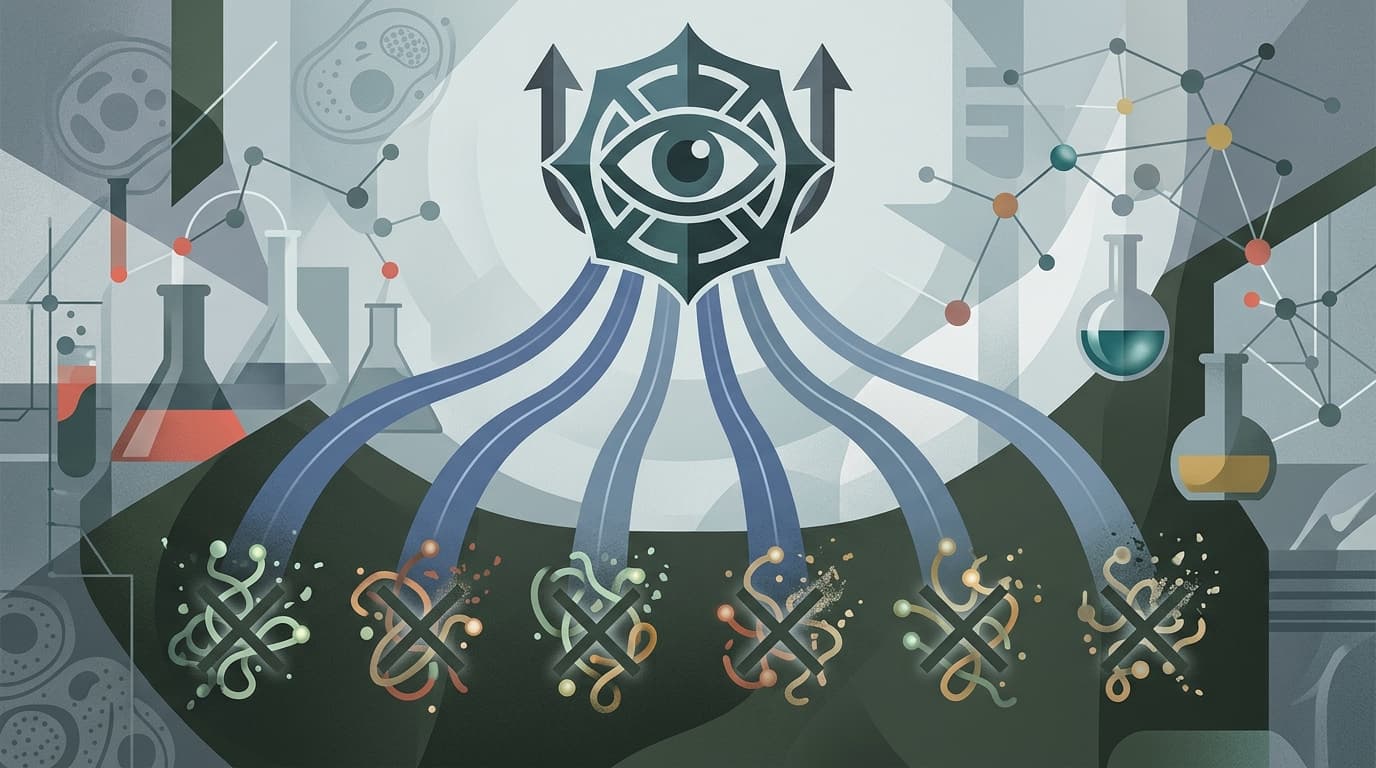
Daraxonrasib is what Revolution calls a RAS(ON) multi-selective inhibitor. Instead of trying to turn the switch off indirectly, it grabs the switch while it's stuck on and blocks the signal from going anywhere. It's a fundamentally different approach, and it works across multiple types of RAS mutations, not just one.
Revolution isn't a one-trick pony here, either. They have four RAS-targeting drugs in clinical trials, each designed for different RAS mutations. One of them, zoldonrasib (targeting the G12D mutation specifically), already earned FDA Breakthrough Therapy Designation in January 2026 for lung cancer. Another, RMC-5127, entered its first human trial earlier this year targeting G12V mutations. The company is building an entire arsenal against a target that everyone else had given up on.
The data carries extra weight because of a high-profile patient: former U.S. Senator Ben Sasse. Sasse announced his diagnosis of stage 4 metastatic pancreatic cancer on December 23, 2025.
Sasse enrolled in an early-phase trial of daraxonrasib as a first-line treatment, calling it his "best, only option." By mid-March 2026, his CA 19-9 levels (a key pancreatic cancer blood marker) had dropped from over 8,000 to 374, reflecting roughly a 60% reduction in tumor volume. He described the drug as "nasty" in terms of side effects, including bleeding, though Revolution noted that side effects were generally manageable with dose adjustments.
His story puts a human face on what would otherwise be a clinical abstraction. When a former senator says a drug gave him back time he wasn't supposed to have, people listen.
Revolution's stock surged roughly 35% on April 13, climbing to around $135. By April 15, it was trading above $150. The rally wasn't just hype; analysts backed it with price target increases across the board.
Evercore ISI set a target of $200. Wells Fargo landed at $167. Raymond James went to $175. Oppenheimer, Bank of America, and Leerink all raised their numbers, too.
For a company whose entire thesis rested on cracking the RAS code, this was validation day. The question was never whether RAS mattered in cancer biology. It was whether anyone could actually drug it. Revolution just answered that question with a Phase 3 trial.
Revolution plans to submit the data to the FDA, and they have a National Priority Voucher to expedite the review. Full results will be presented at the 2026 ASCO meeting later in May, where the oncology world will dissect every subgroup analysis and safety signal.
But pancreatic cancer's second line is just the starting point. Revolution is planning additional Phase 3 trials to test daraxonrasib in first-line metastatic pancreatic cancer (where it could be even more effective, given Sasse's frontline experience) and in adjuvant settings after surgery. If the drug works this well in patients who already failed chemo, what might it do as a first option?
The company is also preparing pivotal combination trials for its other RAS inhibitors across lung cancer and other solid tumors. Nine presentations are scheduled at the AACR Annual Meeting this month alone.
Pancreatic cancer has been oncology's most stubborn adversary. Five-year survival across all stages sits at just 13%. Most patients are diagnosed too late for surgery. For decades, progress was measured in weeks, not months.
Daraxonrasib doesn't cure pancreatic cancer. Nobody is claiming that yet. But doubling survival in a disease where every month matters isn't incremental. It's the kind of result that reshapes how doctors think about treatment, how patients think about hope, and how drugmakers think about targets they once considered impossible.
The "undruggable" target just got drugged. And pancreatic cancer patients, for the first time in a long time, have a reason to be genuinely optimistic.
Gene therapies can cost millions per patient, and most never achieve commercial success. Ocugen's CEO thinks the industry is solving the wrong problem, and he's betting the company on manufacturing scale and affordable pricing over scientific novelty.