
The Weirdest Cancer Treatment You'll Read About This Year
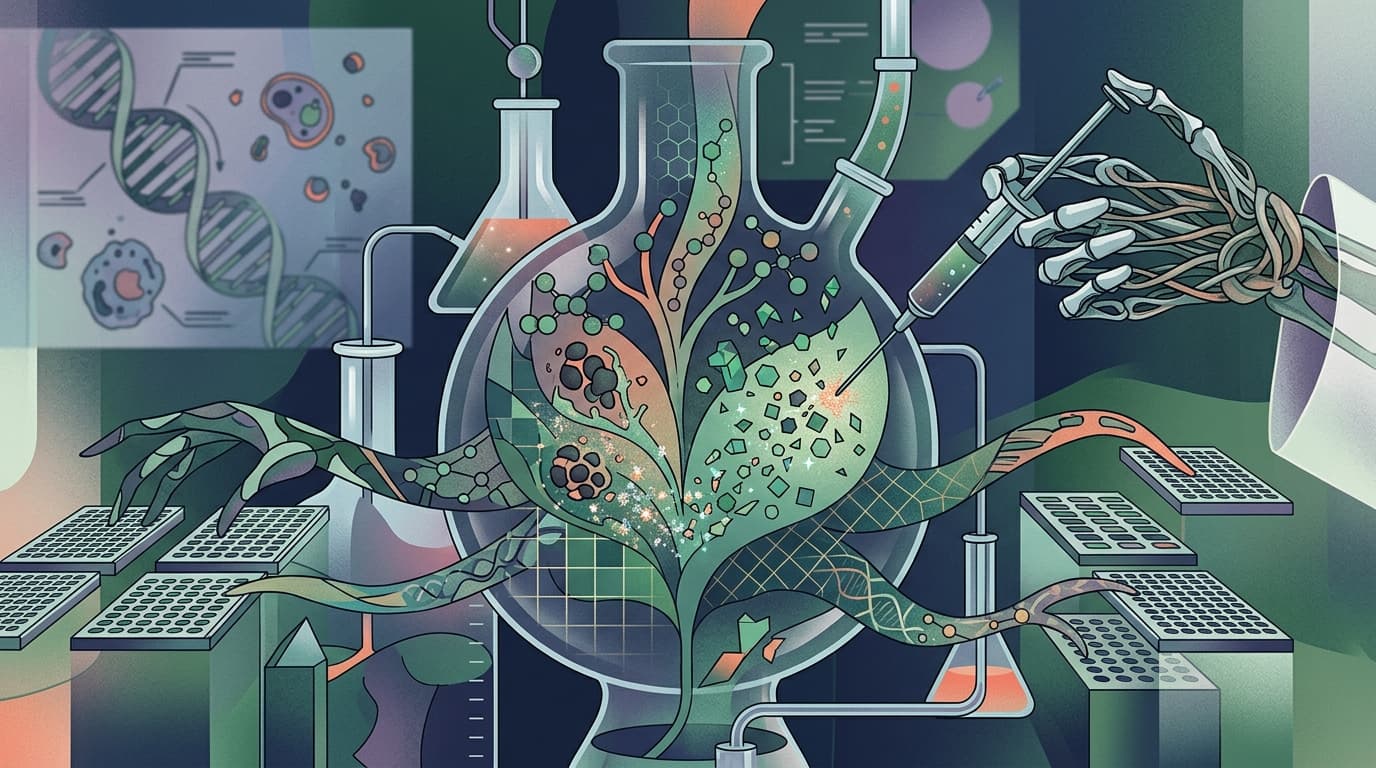
Scientists at a Chinese university made cancer-killing eye drops from pig semen exosomes, and they actually worked in mice. The research is bizarre, early, and surprisingly brilliant.
Of all the sentences you expected to read today, this probably wasn't one of them: scientists have made cancer-killing eye drops from pig semen.
Not a typo. Not satire. A team at Shenyang Pharmaceutical University in China published a study in Science Advances on March 27 showing that tiny particles extracted from boar semen can deliver cancer-fighting nanoparticles directly to the retina. In mice, the drops killed cancer cells, slowed tumor growth, and preserved vision. All without a single needle.
Let that sink in for a moment.
The Eye Is Basically Fort Knox
To understand why this matters, you need to appreciate how ridiculously hard it is to get drugs into the back of the eye. Your eyeball has layers upon layers of biological barriers: the cornea, the vitreous gel, the retina itself. Think of it like trying to mail a package to someone living inside a bank vault.
Right now, doctors treat eye cancers like retinoblastoma (a deadly childhood cancer of the retina) with injections directly into the eyeball, laser therapy, or chemotherapy. All of these carry real risks of damaging healthy tissue. And if you've ever winced at the thought of a needle near your eye, you understand the appeal of an alternative.
So how do you sneak drugs past the eye's security system? The team found their answer in a deeply unexpected place.
Why Pig Semen, of All Things
This is where the biology gets genuinely clever.
Sperm cells face a similar problem. To reach an egg, they need to cross multiple biological barriers in the reproductive tract. They do this partly by releasing exosomes: microscopic lipid-coated bubbles that act like molecular delivery trucks, ferrying cargo through tissues that would block most other particles.
The team realized that if these exosomes could penetrate the barriers of the reproductive tract, maybe they could penetrate the barriers of the eye too. Same concept, wildly different application. It's like discovering that a key designed for your front door also opens a safe deposit box.
The researchers extracted exosomes from pig semen (the Duroc breed, specifically) and loaded them with , which are nanoparticles that mimic enzymes and have anti-cancer properties. They also attached folic acid to the surface, essentially giving each exosome a GPS signal that guides it toward cancer cells. The exosomes cross the eye's barriers through a pathway involving epidermal growth factor receptors (EGFR), proteins on cell surfaces that help the particles slip through.
More from this issue
View full issue →
Get tomorrow's biotech intelligence before your competitors.
Join thousands of biotech professionals who start their day with our free, daily briefing.