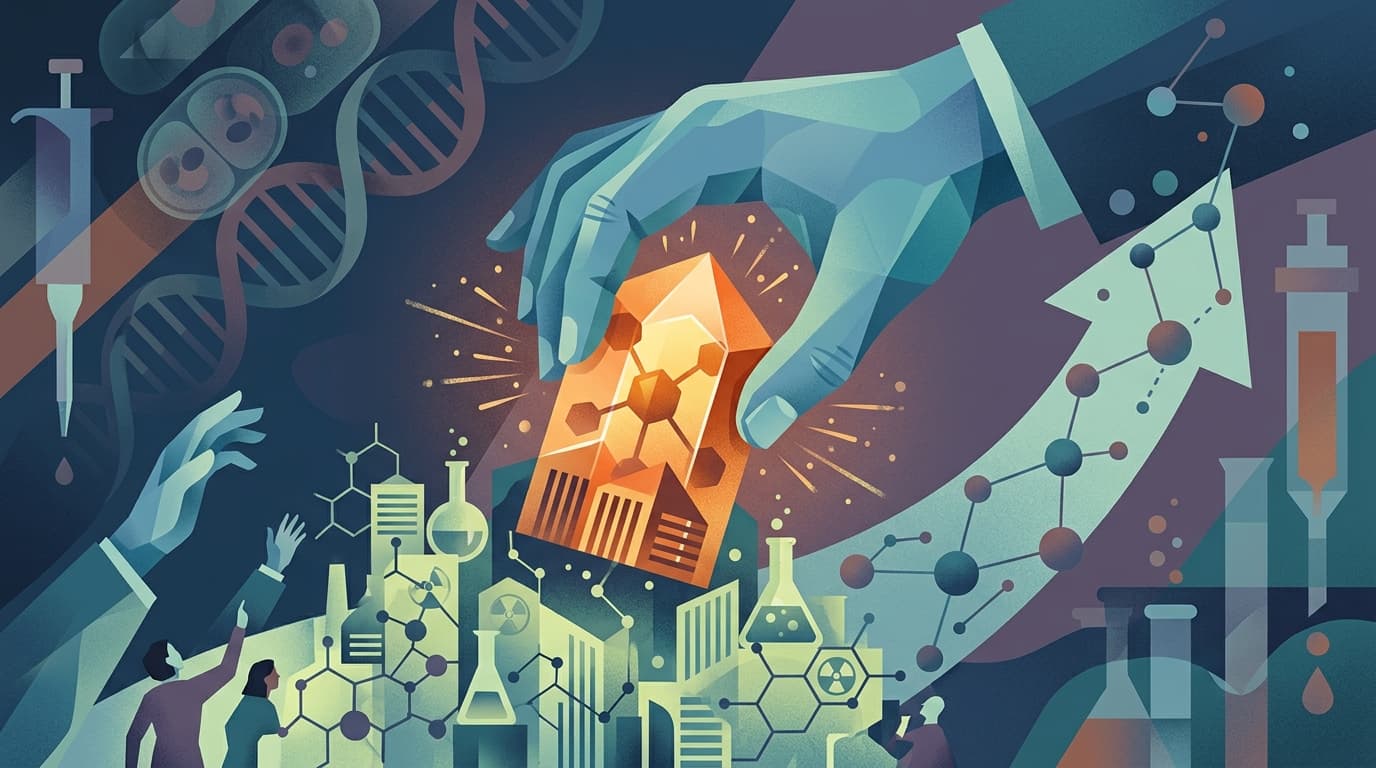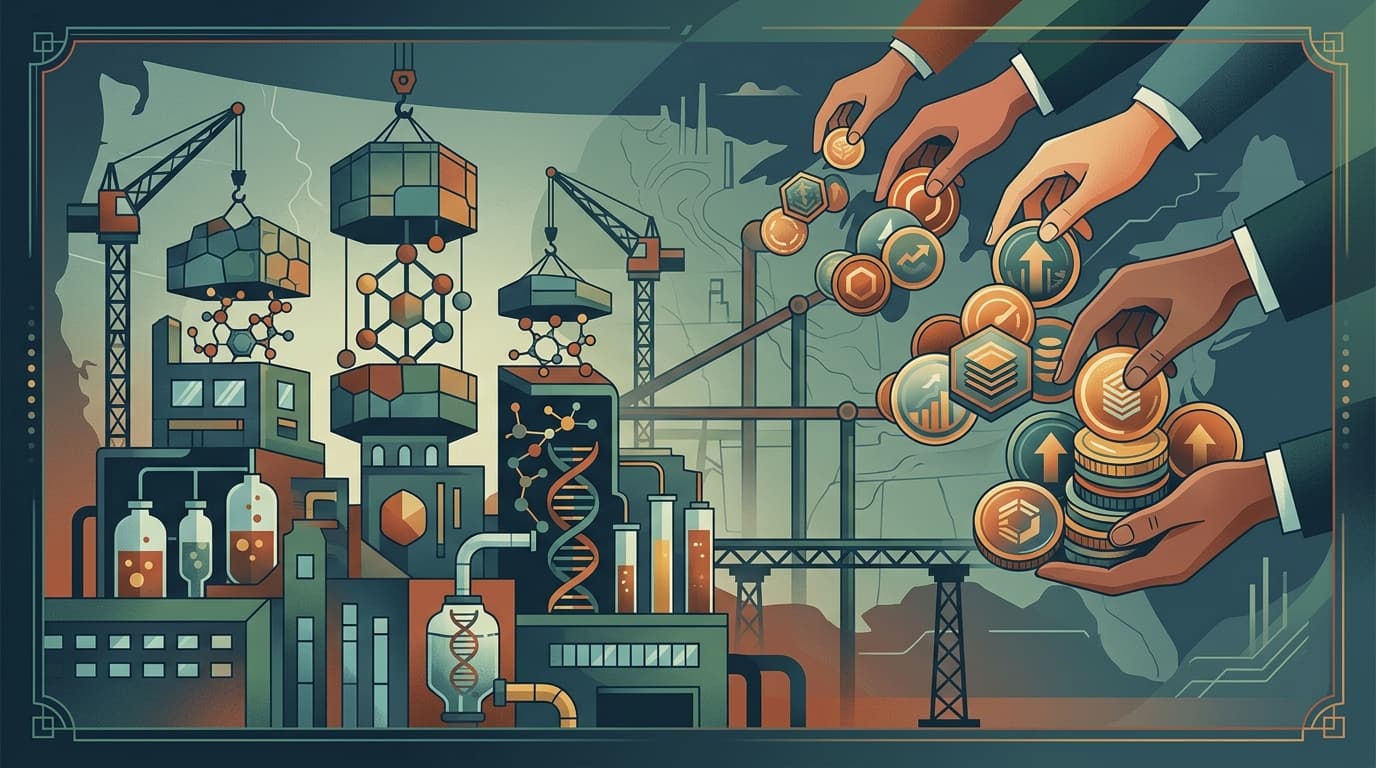

Pharma companies have pledged roughly $500 billion to build factories, labs, and manufacturing plants across the U.S. as 100% tariffs on imported drugs kick in. It's the biggest reshoring wave the industry has ever seen, but will it actually change anything?
Imagine every major pharmaceutical company on Earth suddenly decided to build a factory in America. At the same time. That's basically what's happening right now.
Drugmakers have collectively pledged roughly $500 billion in U.S. investments, racing to expand domestic manufacturing and research before a new tariff regime makes importing drugs painfully expensive. It's the biggest reshoring wave the industry has ever seen, and it's being driven by a simple calculation: build here, or pay up.
The trigger? A presidential proclamation issued on April 2, 2026, establishing 100% tariffs on patented pharmaceuticals not manufactured domestically. The first wave of tariffs hit on July 31 for the largest companies. A second wave hits everyone else on September 29. And just like that, decades of offshoring strategy got flipped on its head.
The numbers are staggering. Eli Lilly has committed $55 billion in U.S. capital commitments since 2020 and plans to build four new plants, including facilities in North Carolina.
AstraZeneca has pledged $50 billion by 2030, anchored by a new drug substance manufacturing facility in Virginia alongside expansions in Maryland, Massachusetts, California, Indiana, and Texas. GSK committed $30 billion over five years for R&D and supply chain spending. Roche is putting up $50 billion to build and expand 24 U.S. facilities across eight states.
Even mid-sized players are getting in on the action. Bristol Myers Squibb announced a $2.3 billion manufacturing facility in Houston on August 10. CSL pledged $1.5 billion for U.S. plasma therapy manufacturing. It's like watching an arms race, except the weapons are pill presses and bioreactors.
For decades, pharmaceutical companies did what any rational business would do: they chased lower costs overseas. Manufacturing shifted to countries where labor, raw materials, and utilities were cheaper. By the time anyone noticed, roughly serving the U.S. market were located abroad, with India (18%) and China (13%) accounting for the biggest shares.

President Trump's executive order just cut the universal childhood vaccine schedule from ~20 disease targets to 11, reclassifying shots like hepatitis B, rotavirus, and flu into optional categories. The medical establishment is furious, Merck could lose $2 billion in annual revenue, and the whole thing raises a bigger question: who should be writing your kid's shot card?


Join thousands of biotech professionals who start their day with our free, daily briefing.

It worked beautifully until it didn't. COVID-19 exposed the fragility of those supply chains when India and China imposed export restrictions on certain ingredients, causing shortages and price spikes. That was the wake-up call. The tariffs are the alarm clock that won't stop ringing.
The new tariff structure creates a tiered incentive system that's almost elegant in its coercion. Companies with an approved onshoring plan get the rate knocked down to 20% instead of 100%. Those who combine an onshoring plan with a pricing agreement through HHS (the Department of Health and Human Services) can get the tariff down to 0% through January 2029. But here's the kicker: that 20% onshoring-only rate climbs back to 100% by April 2030. It's a ticking clock, and pharma companies are sprinting to beat it.
There are some carve-outs worth noting. Products from the EU, Japan, South Korea, Switzerland, and Liechtenstein face a lower 15% rate. Generic drugs and biosimilars are currently exempt, though that exemption is scheduled for review within a year.
Before we pop the champagne on American pharmaceutical independence, some reality checks are in order.
Building a pharma plant isn't like opening a new Starbucks. Industry analysts say plant buildouts and validation commonly take three to five years, and broader supply chain realignment takes even longer. You need specialized equipment, trained workers, and regulatory approvals that move at their own glacial pace. These pledges are promissory notes, not finished factories.
Some analysts are even more skeptical. Leerink analysts have suggested that certain "onshoring" announcements may be more performative than substantive; a way to check a policy box without truly relocating large-scale drug production. Companies are also buffering risk the old-fashioned way, by front-loading shipments and stockpiling inventory to reduce near-term tariff exposure.
Modern pharmaceutical manufacturing is also capital-intensive, not labor-intensive. A $3 billion factory doesn't necessarily mean thousands of new jobs. Much of the employment impact will concentrate in construction, engineering, and specialized manufacturing roles rather than the kind of broad hiring that makes for great photo ops.
This is the question everyone wants answered, and the honest answer is: probably not much.
Some targeted price cuts are baked into the deals. Companies negotiating MFN-style pricing agreements with HHS are offering steep discounts on select diabetes, obesity, and IVF drugs. Those are real savings for specific patients on specific medications.
But manufacturing drugs domestically is more expensive than making them overseas. That's the whole reason companies offshored in the first place. Multiple analyses caution that the broader effect on U.S. drug prices could actually be neutral or slightly negative, with companies passing higher production costs through to margins, insurance premiums, or out-of-pocket spending. Think of it like buying local produce at the farmers market: it's great for the local economy, but it's not going to make your grocery bill smaller.
The pharma industry is undergoing a structural realignment that will play out over the next decade. The most likely outcome isn't full domestic self-sufficiency (that's probably impossible in the near term) but a hybrid model: more U.S. capacity for high-value drugs and strategically sensitive products, combined with continued reliance on international supply chains for everything else.
The early wins will likely come in fill-finish operations, sterile injectables, and critical medicine APIs, the segments where domestic production is most feasible and the national security argument is strongest. Complex, long-cycle manufacturing will be harder to relocate quickly.
For investors, the takeaway is nuanced. These pledges signal massive capital expenditure ahead, which could pressure margins in the short term even as they reduce tariff exposure. The companies that execute well on their buildouts will be better positioned for a world where trade policy is increasingly unpredictable. The ones that overpromised? They'll be explaining delays to shareholders for years.
Half a trillion dollars is a lot of money. Whether it buys the industry genuine resilience or just an expensive insurance policy remains to be seen.
Curium's $8 billion bid for Lantheus would create the largest radiopharmaceutical company ever assembled. With big pharma already pouring billions into nuclear medicine, this deal could reshape how cancer gets diagnosed and treated.