The Cancer Vaccine That Kept Working for Five Years
Moderna and Merck's personalized mRNA cancer vaccine held strong over five years, cutting melanoma recurrence risk in half when added to Keytruda. With a phase 3 trial fully enrolled and a potential FDA filing on the horizon, this could be the most important cancer vaccine story of the decade.
A Vaccine Built Just for You
Imagine a vaccine designed for one person on Earth: you. Not a generic shot targeting a common virus, but a custom-built mRNA therapy trained to recognize the unique fingerprint of your specific tumor. That's exactly what Moderna and Merck tested in 157 melanoma patients. And five years later, the results are turning heads across oncology.
At the 2026 ASCO Annual Meeting, the companies presented long-term data from their phase 2b KEYNOTE-942 trial. Patients who received the personalized vaccine (called intismeran autogene, or mRNA-4157/V940) alongside Merck's blockbuster immunotherapy Keytruda saw a 49% reduction in the risk of their cancer coming back or dying compared to Keytruda alone. In plain terms: the vaccine cut recurrence risk roughly in half, and the benefit held up over five full years of follow-up.
That's not a modest improvement. That's the kind of signal that makes oncologists sit up straight.
Why This Matters More Than You Think
To appreciate what's happening here, you need to understand the problem. High-risk melanoma (stage III or IV) is the kind that's already tried to spread. Surgeons can remove the visible tumor, but microscopic cancer cells may still be lurking. That's why patients get "adjuvant" therapy after surgery: it's the cleanup crew sent in after the demolition team leaves.
Keytruda is the current gold standard for that cleanup job. It works by unleashing the immune system to hunt down remaining cancer cells. The problem? Even with Keytruda, roughly one in three patients still see their cancer come back. Keytruda's 35-45% risk reduction still leaves a painful gap.
That gap is exactly where this vaccine steps in.
How a Personalized Vaccine Actually Works
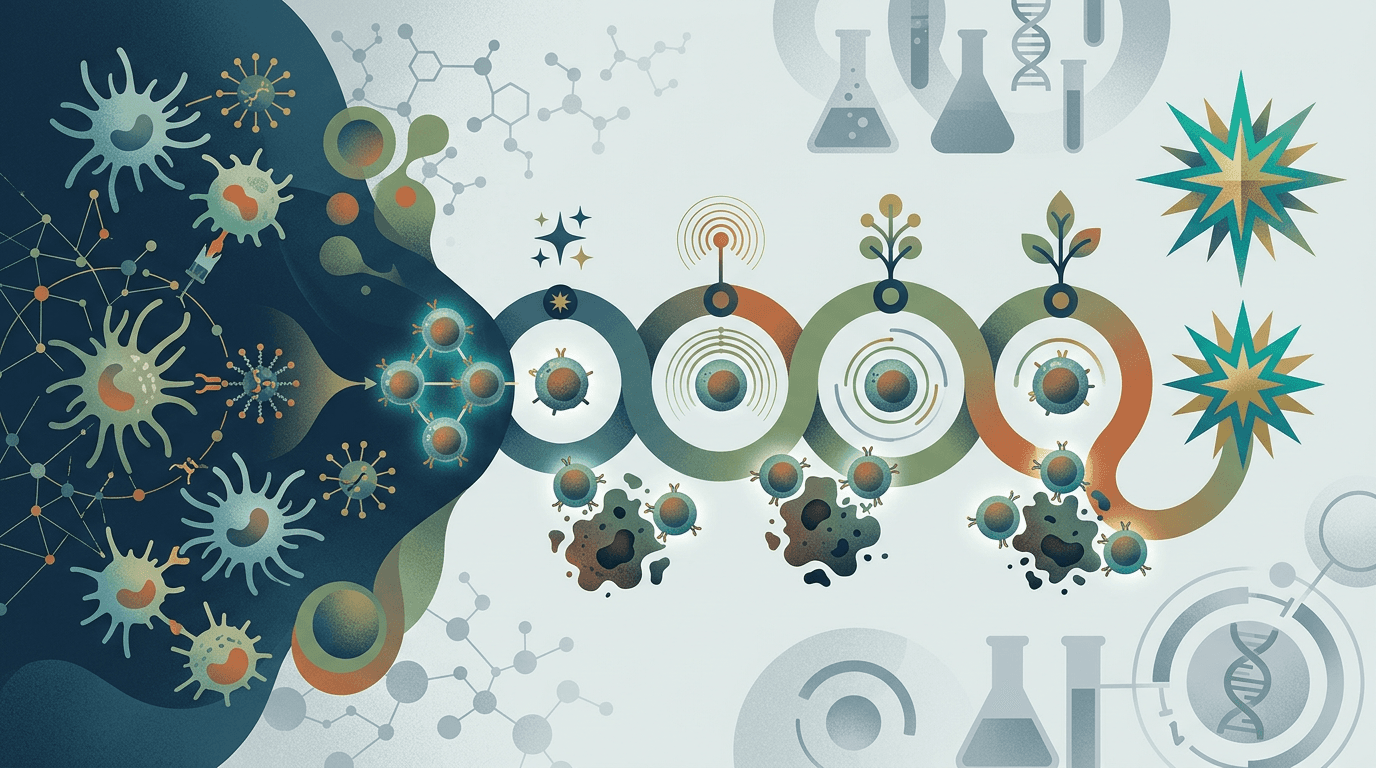
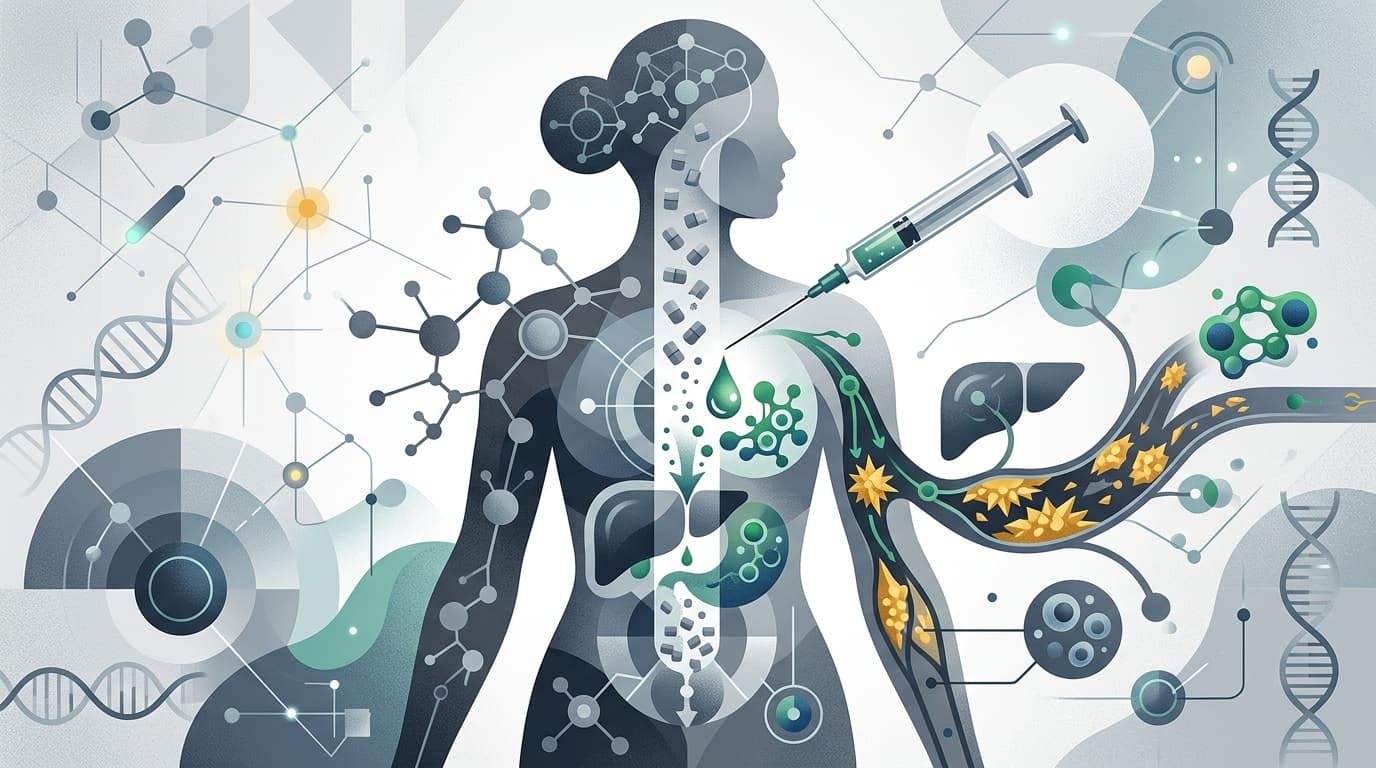
Think of it like a custom wanted poster for your immune system. When surgeons remove a patient's tumor, researchers sequence its DNA and identify the unique mutations (called neoantigens) that make that tumor different from healthy cells. Then Moderna's mRNA platform builds a vaccine encoding up to those specific targets, essentially handing the immune system a cheat sheet: "Here's exactly what to look for."
Get tomorrow's biotech intelligence before your competitors.
Join thousands of biotech professionals who start their day with our free, daily briefing.
Combined with Keytruda, which removes the brakes from immune cells, the vaccine gives the body both the target list and the freedom to attack. It's a one-two punch: Keytruda says "go," and the vaccine says "go there." Patients received nine doses of the vaccine over roughly a year, alongside standard Keytruda treatment.
The Numbers That Have Everyone Talking
At five years (median follow-up of 60.3 months), the data tell a compelling story. The vaccine-plus-Keytruda group saw a 49% reduction in the risk of recurrence or death compared to Keytruda alone (hazard ratio of 0.51).
But the distant metastasis numbers might be even more impressive. The vaccine reduced the risk of cancer spreading to distant organs by 59% (hazard ratio of 0.41). Distant metastases are the ones that kill; local recurrences are manageable by comparison. Keeping cancer from going on a road trip through the body is arguably the most important thing an adjuvant therapy can do.
And here's the kicker that has survival-watchers buzzing: the exploratory overall survival analysis showed a hazard ratio of 0.471 in favor of the combination arm, with median overall survival not yet reached in either group. That's an exploratory endpoint (meaning the trial wasn't specifically designed to prove an overall survival benefit), so it comes with caveats. But that magnitude of benefit is hard to ignore.
The Durability Question, Answered
One of the biggest knocks on cancer vaccines has always been staying power. Sure, you can goose the immune system for a few months, critics said, but does the effect last? KEYNOTE-942 provides a pretty satisfying answer.
The risk reduction was about 44% at two years and 49% at three years. At five years, it's still 49%. The Kaplan-Meier curves (the lines on a graph showing how many patients remain cancer-free over time) haven't converged. If anything, the benefit appears to be widening slightly for distant metastases. That kind of durability suggests the vaccine is training long-lasting immune memory, not just providing a temporary boost.
The safety profile stayed clean too. No major new toxicity signals emerged over the five-year follow-up, which matters enormously for a treatment given to patients who might already be cured by surgery alone.
The Race to Be First
Moderna and Merck aren't operating in a vacuum. BioNTech and Genentech are running their own personalized mRNA cancer vaccine (called autogene cevumeran, or BNT122) through phase 2 trials in pancreatic cancer, melanoma, and other tumors. Gritstone's GRANITE platform is being tested in a phase 2/3 colorectal cancer trial, with phase 2 enrollment completed in 2023.
But Moderna/Merck have the clear lead. Their phase 3 adjuvant melanoma trial, INTerpath-001, is already fully enrolled, and an interim readout is expected sometime in 2026. If those results echo the phase 2b data, the partners could pursue accelerated approval from the FDA as early as this year or next. No other personalized neoantigen vaccine is close to that milestone.
BioNTech's pancreatic cancer data have reportedly slipped toward 2027, and their colorectal cancer program crossed a futility boundary (meaning it wasn't working well enough to justify continuing). That stumble highlights an important reality: personalized cancer vaccines are incredibly promising, but success in one tumor type doesn't guarantee it in another.
The 50/50 Bet Worth Billions
The business side of this story is equally fascinating. Merck and Moderna structured their partnership as a true 50/50 deal: equal costs, equal profits, worldwide. Merck paid $200 million upfront in 2016 when the collaboration began, then dropped another $250 million in 2022 to exercise its option after the phase 2b results hit.
For Merck, the math is straightforward. Keytruda is already the world's best-selling drug, generating tens of billions annually. A personalized vaccine that makes Keytruda work significantly better in the adjuvant setting doesn't just create a new product; it deepens the moat around their franchise. For Moderna, it's a chance to prove that mRNA technology has a life far beyond COVID vaccines.
What Comes Next
Experts are excited but disciplined. The Science Media Centre described the findings as encouraging but still not practice-changing, emphasizing the need for Phase 3 confirmation. That's the right posture: 157 patients isn't a massive dataset, and oncology is littered with phase 2 heroes that flamed out in phase 3.
Still, five years of consistent benefit, a clean safety profile, and a fully enrolled phase 3 trial make this the most credible personalized cancer vaccine program in existence. Eight clinical trials across melanoma, lung, bladder, kidney cancer, and cutaneous squamous cell carcinoma are now underway with the platform.
The idea of a cancer vaccine custom-built for each patient used to sound like science fiction. Five years of data suggest it might just be the future of oncology.
5 min read
The Lung Cancer Drug Where Half the Patients Are Still Winning After 7 Years
Seven years into a clinical trial, more than half of metastatic lung cancer patients on Pfizer's lorlatinib still haven't progressed. Oncologists are starting to whisper the word "cure," and the data might actually justify it.