A $4.8M Verdict That Could Redraw the Single-Cell Sequencing Map
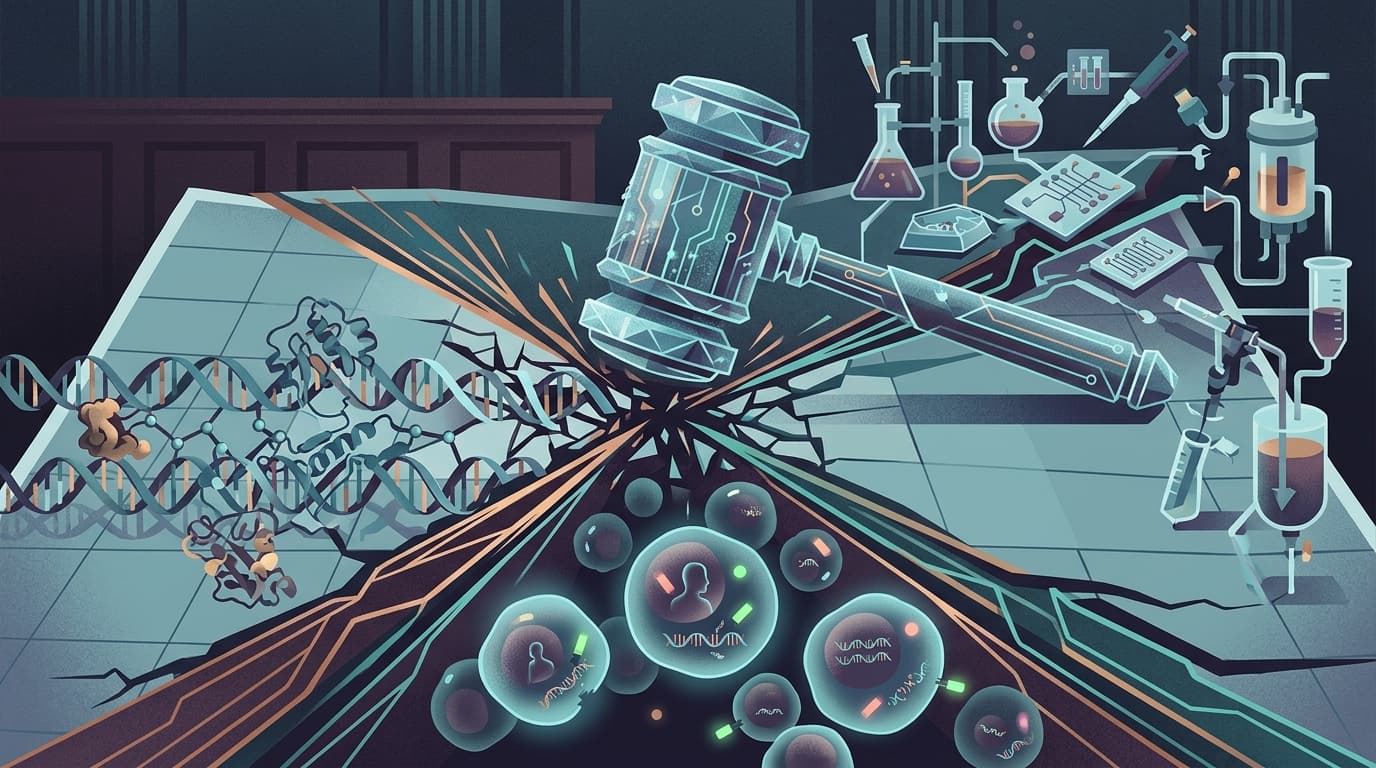
A Delaware jury just hit Parse Biosciences with a $4.8 million willful infringement verdict over single-cell sequencing patents, and the real pain hasn't even started yet. Enhanced damages, attorneys' fees, and a potential injunction could reshape the competitive landscape of a $1.9 billion market.
The Bill Just Came Due
Imagine building your house on land you were told was available, only to find out the deed belonged to someone else. Now multiply that by millions of dollars in revenue. That's roughly where Parse Biosciences finds itself after a Delaware federal jury ruled the company willfully infringed three genetic-sequencing patents licensed by Roche to Scale Biosciences, a unit of 10x Genomics.
The jury awarded over $4.8 million in damages, calculated at a 14% royalty rate on Parse's infringing product sales through June 2026. But the dollar figure might be the least of Parse's problems. The willful infringement finding opens the door to consequences that could hit much harder.
What the Fight Is Actually About
At the center of this lawsuit is a technology called single-cell sequencing: the ability to read the genetic activity of individual cells rather than blending thousands of them into a smoothie and analyzing the average. Think of it as the difference between interviewing every person in a stadium versus just listening to the crowd noise. It's a powerful tool for cancer research, immunology, and drug discovery.
Both Parse and Scale sell kits that help researchers do this. Both rely on a technique called combinatorial barcoding, where tiny molecular tags are attached to each cell's genetic material so scientists can tell which data came from which cell after sequencing. The three patents at issue (U.S. Patent Nos. 10,626,442; 10,982,256; and 11,512,341) cover core methods for this barcoding approach, originally developed under Roche Sequencing Solutions and exclusively licensed to Scale.
Parse's product, called Evercode, uses a "split-pool" workflow that skips the need for expensive instruments. Researchers fix their cells, run them through rounds of barcoding, and get sequencing-ready libraries. It's clever, it's popular, and it can handle up to a million cells in a single run. The problem? The jury decided that clever workflow steps on someone else's intellectual property.
Get tomorrow's biotech intelligence before your competitors.
Join thousands of biotech professionals who start their day with our free, daily briefing.
Why "Willful" Changes Everything
In patent law, there's a big difference between accidentally wandering onto someone's property and doing it with a map in your hand. A finding of willful infringement means the jury believed Parse knew about the patents and infringed them anyway.
That distinction matters for three reasons.
First, the judge now has discretion to triple the damages under 35 U.S.C. § 284. That $4.8 million could become $14.4 million. Enhanced damages aren't automatic; the court still needs to find the infringement was "egregious" under the Supreme Court's Halo standard. But the willfulness verdict gives the plaintiff a running start.
Second, 10x Genomics has already said it will pursue attorneys' fees on top of the damages. In a multi-year patent case with expert witnesses, discovery disputes, and a full jury trial, those fees can rival the damages themselves.
Third (and most threatening to Parse's business), 10x announced it will seek a permanent injunction. If granted, that would block Parse from selling the infringing Evercode Whole Transcriptome products entirely. An injunction isn't guaranteed; courts weigh traditional equitable factors like irreparable harm and public interest. But with a willfulness finding in hand, the argument gets considerably easier to make.
The jury also rejected Parse's invalidity defenses, confirming the patents are valid and enforceable. That shuts down a common escape route in patent litigation.
A $1.9 Billion Market With a New Fault Line
This verdict doesn't exist in a vacuum. The single-cell omics market is estimated at roughly $1.9 billion in 2025, with projections pushing it toward $3.45 billion by 2030. It's a fast-growing space where tools companies compete fiercely for share in research labs and pharma partnerships.
10x Genomics is the dominant player, spanning both single-cell and spatial genomics platforms. Parse has carved out a niche by offering an instrument-free alternative that appeals to labs wanting high throughput without a big capital equipment purchase. The company has raised over $100 million across multiple rounds, including a $50 million Series C plus debt financing in late 2023.
If an injunction forces Parse to pull or redesign its Evercode Whole Transcriptome kits, that creates a vacuum. Labs currently running Parse workflows would need alternatives, and the most obvious beneficiaries are 10x (through Scale's products) and other combinatorial barcoding vendors. For a company valued at an estimated $225 million, losing its flagship product line, even temporarily, would be a serious blow.
The Royalty Math Tells a Story
The 14% royalty rate is worth pausing on. In biotech tools, royalty rates typically range from low single digits for commodity components up to the mid-teens for core enabling technology. A 14% rate signals the jury viewed these patents as central to Parse's product, not some peripheral feature. It's the difference between paying a toll on a shortcut versus paying rent on the entire road you're driving on.
Applied to Parse's Evercode Whole Transcriptome sales through June 2026, that rate produced the $4.8 million figure. But the royalty framework matters beyond this case. If the verdict holds on appeal, it sets a benchmark for how courts value foundational single-cell barcoding IP. Any company building on similar technology will need to check its freedom to operate, or budget for licensing.
What Happens Next
The immediate next steps are procedural but consequential. 10x will file post-trial motions for enhanced damages, attorneys' fees, and injunctive relief. Parse will almost certainly appeal, challenging the infringement finding, the damages calculation, or both. Patent appeals go to the Federal Circuit, which can take a year or more to resolve.
In the meantime, the verdict sends a clear signal to the single-cell sequencing industry: the IP landscape has teeth. For years, multiple companies have built products around combinatorial barcoding approaches, sometimes with overlapping technical foundations. This case draws a line.
For Parse, the path forward likely involves either redesigning around the patents, negotiating a license (at what would presumably be an unfavorable rate, given the verdict), or winning on appeal. None of those options are quick or cheap.
For researchers who rely on Parse kits, the practical impact depends on whether an injunction materializes. If it does, lab managers across academia and pharma will be scrambling for alternatives. If it doesn't, life goes on, but with a royalty surcharge baked into the cost of doing business.
Either way, the message from this Delaware courtroom is unmistakable: in single-cell sequencing, the most important barcode might be the one on the patent filing.
Clinical & Regulatory
4 min read
GSK's Flu Shot Just Beat the Old Guard. Now Comes the Hard Part.
GSK's mRNA flu vaccine outperformed standard shots in Phase 2 and is heading to a pivotal Phase 3 trial. But history shows that better antibodies don't always mean better protection, and the road ahead is full of trap doors.