For 40 years, the most powerful class of antibiotics could only be given through an IV. The FDA just approved the first pill that changes that, and it could keep thousands of patients out of the hospital.
For decades, doctors treating the nastiest urinary tract infections have faced an annoying paradox. The best antibiotics in their arsenal, carbapenems, only work through an IV drip. That means a hospital bed, a needle in your arm, and days of staring at fluorescent lights, even if you otherwise feel well enough to go home.
On May 28, the FDA finally broke that logjam. The agency approved Utebzi (tebipenem pivoxil), the first oral carbapenem antibiotic ever cleared for use in the United States. It's indicated for adults with complicated urinary tract infections (cUTIs), including pyelonephritis (kidney infections), who have limited or no other oral treatment options.
This isn't just a new pill. It's the first member of an entire drug class to make the leap from IV bag to tablet. And for a growing population of patients battling drug-resistant bacteria, that distinction matters enormously.
Why Carbapenems Were Stuck in the Hospital
To understand why this approval took so long, you need a quick chemistry lesson. Don't worry; it's painless.
Carbapenems are the heavy artillery of antibiotics. They work by binding to proteins on bacterial cell walls and blocking the construction process, like removing the rivets from a bridge while traffic is still crossing. The wall weakens, the bacterium swells with water, and pop: it bursts.
The problem is that carbapenems are polar molecules, meaning they dissolve in water but can't easily cross the fatty lining of your intestines. Think of it like trying to push a magnet through a sheet of wax; the physics just don't cooperate. On top of that, many carbapenems break down in stomach acid before they even get a chance to be absorbed.
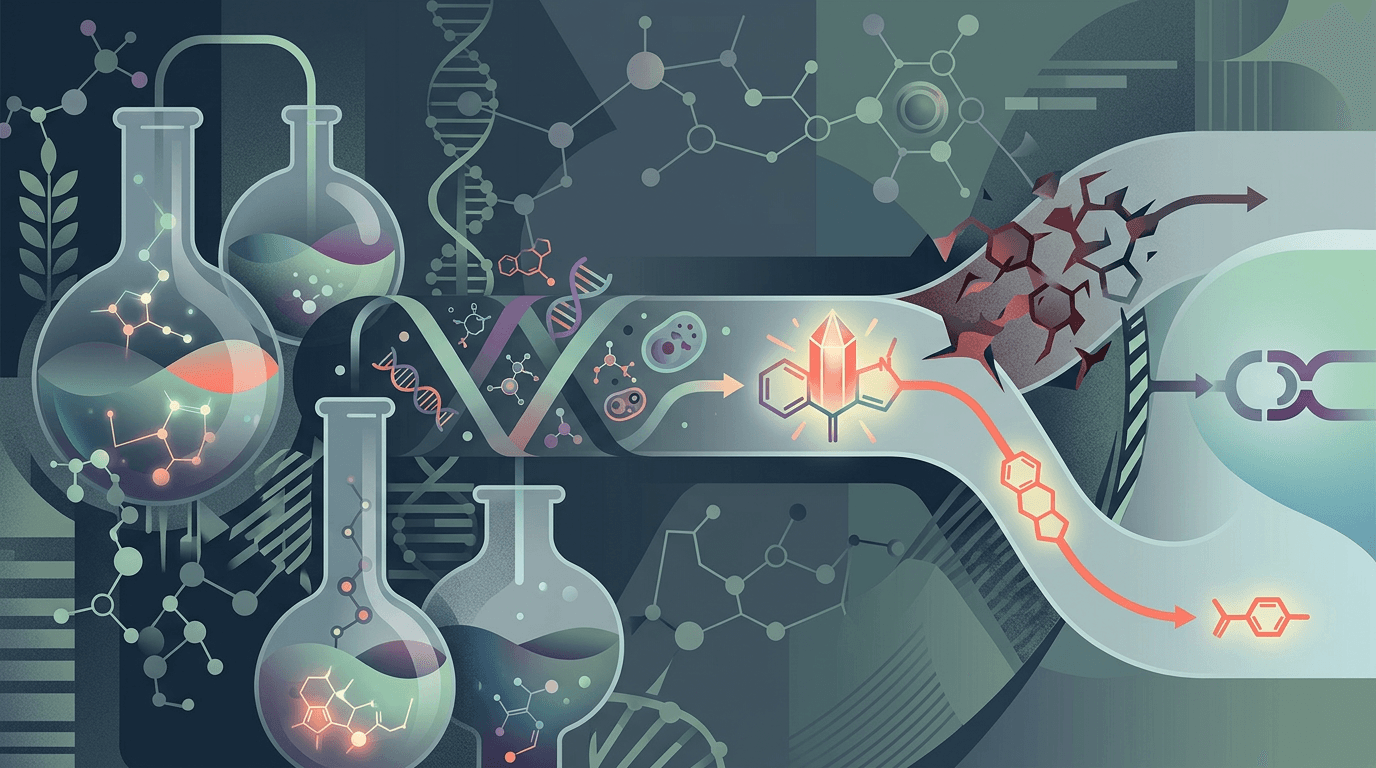
So for 40-plus years, doctors had no choice: carbapenems meant IV therapy, which meant hospitalization. Tebipenem pivoxil solves this with a clever disguise. The drug is wrapped in a fatty "prodrug" shell (a pivalyl ester) that tricks the intestines into absorbing it. Once inside, enzymes strip off the disguise, and the active carbapenem goes to work. It's essentially a Trojan horse for your gut.
Get tomorrow's biotech intelligence before your competitors.
Join thousands of biotech professionals who start their day with our free, daily briefing.
The Comeback Story Nobody Expected
Utebzi's path to approval reads less like a corporate press release and more like a sports redemption arc.
Spero Therapeutics, the small biotech behind the drug, first submitted its application to the FDA based on an earlier trial called ADAPT-PO. The FDA said no. The agency issued a Complete Response Letter (the regulatory equivalent of "nice try, but we need more") and told Spero to run another Phase 3 study.
For a small company, that kind of setback can be a death sentence. Running a global Phase 3 trial costs hundreds of millions of dollars. But in September 2022, GSK swooped in with a licensing deal: $66 million upfront, plus up to $525 million in milestone payments if the drug succeeded. GSK would handle broader development; Spero would run the new trial.
The FDA even laid out a roadmap. In a Type A meeting, the agency agreed that one additional positive Phase 3 trial, supported by nonclinical data, could be enough for approval under a limited-use label. Spero and the FDA aligned on the trial design, and the agency granted a Special Protocol Assessment (essentially a handshake agreement on what "success" would look like).
By December 2023, the first patient was enrolled in PIVOT-PO, the make-or-break study. The drug's entire future hinged on one question: could an oral pill match an IV infusion?
A Pill That Goes Toe-to-Toe With an IV
PIVOT-PO was a global, randomized, double-blind trial comparing oral tebipenem (600 mg) against IV imipenem-cilastatin (500 mg), the gold standard for serious UTIs. Both patient groups also received matching placebos so neither patients nor doctors knew who was getting the pill versus the drip.
The primary endpoint was "overall response" at a test-of-cure visit around day 17, combining two measures: clinical cure (symptoms resolved) and microbiological eradication (the bacteria gone from lab cultures).
Results were decisive. Tebipenem hit 58.5% overall response versus 60.2% for the IV, with an adjusted difference of just −1.3 percentage points. The confidence interval (−7.5% to 4.8%) stayed well within the non-inferiority margin, meaning the pill was statistically just as good as the IV.
The clinical cure rates were even more striking. A full 93.5% of tebipenem patients were clinically cured, compared with 95.2% on IV therapy. For a pill competing against a hospital infusion, those numbers are remarkably close.
The results were so convincing that an Independent Data Monitoring Committee told researchers to stop the trial early for efficacy. The study had originally planned to enroll about 2,648 patients, but the committee saw enough evidence before full enrollment to declare victory. That almost never happens in antibiotic trials.
Safety was clean. The most common side effects were diarrhea and headache, both mild to moderate. No new safety signals popped up compared to the well-known profile of IV carbapenems.
The Patients Who Need This Most
Complicated UTIs aren't the "drink cranberry juice" variety. We're talking about infections that have spread to the kidneys, infections in patients with urinary catheters or anatomical abnormalities, and increasingly, infections caused by bacteria that shrug off most antibiotics.
The culprits are often ESBL-producing Enterobacterales, bacteria armed with enzymes that chew through standard antibiotics like penicillins and cephalosporins. When a UTI is caused by one of these resistant bugs, doctors typically have no choice but to reach for IV carbapenems. That means admission, IV lines, and all the risks that come with hospital stays (including, ironically, picking up more resistant infections).
Here's where the economics get painful. Every day a patient stays in the hospital for IV antibiotics costs thousands of dollars. Delayed lab results identifying ESBL bacteria can extend admissions further. And for patients in rural areas or with limited mobility, a hospital stay for what could theoretically be managed at home creates real hardship.
Utebzi's label limits its use to patients with "limited or no alternative oral treatment options," which means it won't replace amoxicillin for garden-variety UTIs. But for the subset of patients stuck in the hospital solely because their infection is resistant to every pill in the medicine cabinet, an oral carbapenem is genuinely transformative.
What the Experts Are Saying
The approval has generated cautious optimism from both clinicians and analysts. GlobalData's Nancy Jaser said tebipenem could fill a "pressing need" for new oral antibiotics against multidrug-resistant infections and potentially allow some cUTI patients to be treated at home rather than hospitalized, where they face additional infection risk.
GSK has framed the drug's value around reducing reliance on hospital-based IV care. And urology specialists quoted in the company's materials have pointed to the outpatient treatment potential as a meaningful quality-of-life improvement.
But the commercial picture comes with caveats. The restricted label (limited to patients without good oral alternatives) narrows the addressable market compared to a broad-use antibiotic. Antimicrobial stewardship programs will likely gate access carefully, and payer coverage decisions will shape adoption speed. GSK has said it expects availability by the end of 2026, suggesting a gradual ramp rather than a blockbuster launch.
For Spero, which is eligible for tiered royalties on net sales, the approval validates years of persistence through a CRL, a partnership pivot, and a second Phase 3 trial. That's a long road for a small biotech.
The Bigger Picture: Why an Oral Carbapenem Matters Beyond UTIs
Approvals like this one tend to ripple outward. Once clinicians get comfortable using an oral carbapenem for UTIs, the natural question becomes: what else could it treat? Abdominal infections, pneumonia, and other complicated infections currently requiring IV carbapenems are all potential future targets, though each would require its own clinical trials.
More broadly, Utebzi's approval sends a signal to the antimicrobial development world. Antibiotics are notoriously unprofitable compared to oncology or rare disease drugs; companies have gone bankrupt even after winning FDA approval for new antibiotics. The GSK-Spero partnership model (big pharma bankrolling a small biotech's clinical program in exchange for commercial rights) could become a template for getting more antibiotics across the finish line.
The approval also arrives at a moment when antimicrobial resistance is accelerating globally. The World Health Organization has called drug-resistant infections one of the top ten threats to global health. Every new tool in the arsenal counts.
The Bottom Line
For 40 years, carbapenems could only reach patients through an IV. That era is over. Utebzi won't replace hospitalization for every serious infection, and its restricted label ensures it stays targeted at the patients who need it most. But the simple act of turning an IV-only drug class into a pill you can take at home? That's the kind of practical, patient-centered innovation that doesn't always make headlines but genuinely changes how medicine is practiced.
Sometimes the biggest breakthroughs aren't flashy new mechanisms. They're just finding a smarter way to deliver the medicine we already have.
Deals & M&A5 min read
Biogen Just Dropped $1 Billion on a Company Nobody's Heard Of
Biogen is paying up to $1 billion for RayThera, a stealth-mode startup with no drugs in clinical trials. It's the latest move in a dramatic pivot from neurology into immunology, and the deal says more about Biogen's identity crisis than any single molecule.