
Odyssey Therapeutics failed to IPO in 2025 when biotech markets froze. This week, the company raised $304 million in an upsized offering at the top of its price range. The resurrection says as much about investor appetite as it does about the company.
In January 2025, Odyssey Therapeutics filed for an IPO. Five months later, the company pulled the plug. The biotech IPO market had frozen solid, and Odyssey quietly walked away.
Fast forward to this morning: Odyssey just raised $304 million in an upsized IPO on Nasdaq. The stock began trading today under the ticker ODTX. That's not a comeback; that's a resurrection.
The offering landed at $18 per share (the top of its range), with 15.5 million shares sold plus a 30-day underwriter option for another 2.3 million. A concurrent private placement to a TPG affiliate sweetened the pot further. When investors are fighting to give you more money than you asked for, something interesting is happening.
The 2025 withdrawal wasn't really about Odyssey. It was about timing. The company's SEC filing used classic corporate diplomacy: conducting the offering was "not in the best interests of the company at this time." Translation: nobody's buying, so why humiliate ourselves?
Back then, market volatility and economic uncertainty had turned biotech IPOs into a graveyard. Only 11 U.S. biotech companies went public in all of 2025. That's like hosting a party and having eleven people show up across the entire year.
But Odyssey used the time wisely. Between the failed attempt and this week's triumph, the company raised a $213 million Series D (September 2025) and pushed its lead drug into Phase 2 trials. When they knocked on Wall Street's door again, they weren't the same company.
The company targets autoimmune and inflammatory diseases: ulcerative colitis, Crohn's, lupus, atopic dermatitis. Think of your immune system as a security team that sometimes gets confused and attacks your own body. Odyssey's drugs aim to calm down specific overreacting guards without shutting down the whole security force.
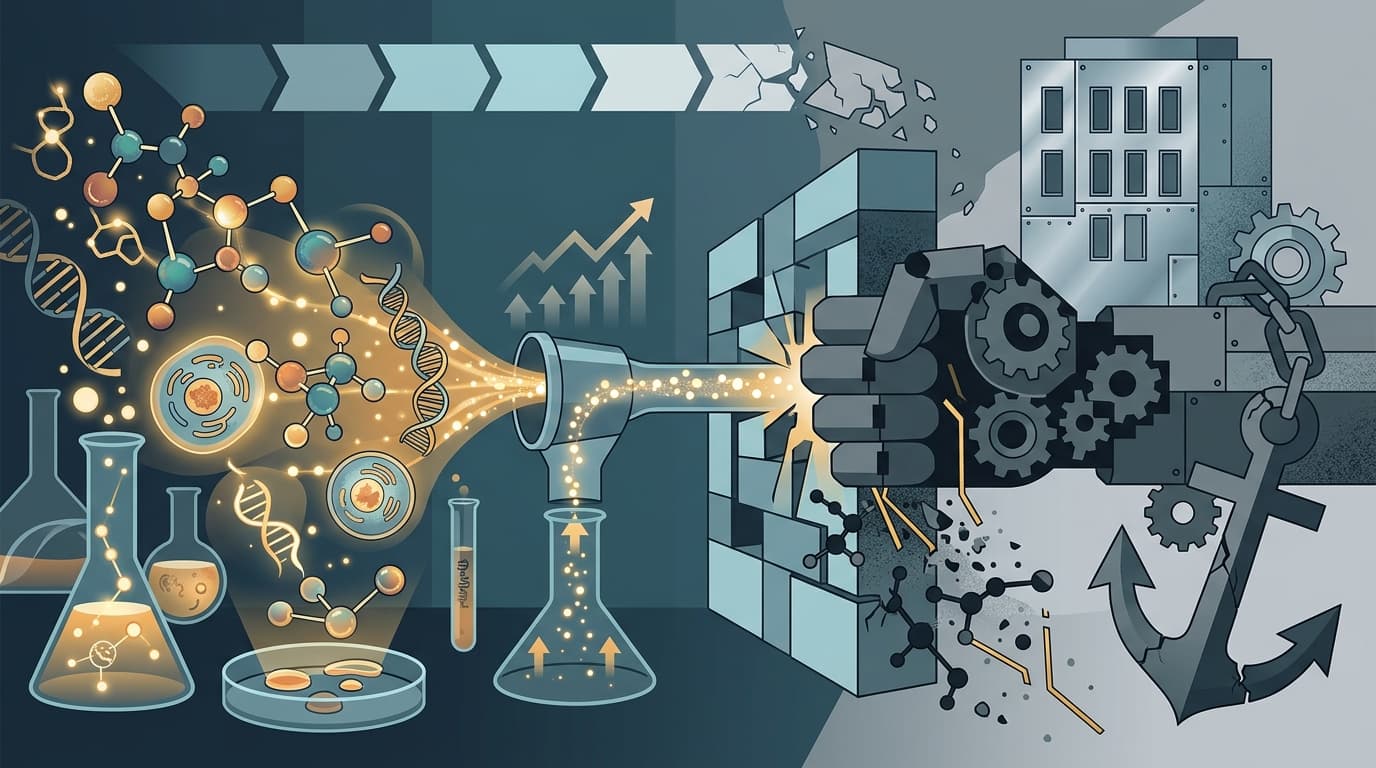
Their approach involves something called "scaffolding inhibition." Most drugs in this space try to block an enzyme's activity directly. Odyssey's molecules instead disrupt the physical structure that immune signaling proteins need to do their jobs. It's the difference between cutting someone's phone line versus demolishing the cell tower they rely on.

Five biotech acquisitions in a single week totaling over $7.6 billion, capped by Chiesi's $1.9 billion grab of oral HAE therapy maker KalVista. The M&A wave signals something bigger about where big pharma's money is headed.


Join thousands of biotech professionals who start their day with our free, daily briefing.
The lead candidate, OD-001, is an oral RIPK2 inhibitor (RIPK2 being one of those immune signaling nodes) currently in Phase 2 trials for ulcerative colitis. There's also a combination study running with Takeda's Entyvio. Behind that sits an SLC15A4 program targeting lupus, with about $50 million of IPO proceeds earmarked to push it into Phase 1/2a trials.
Odyssey's founder and CEO is Gary D. Glick, a serial biotech entrepreneur whose track record reads like someone playing the game on easy mode. He previously founded IFM Therapeutics (whose assets sold for over $4 billion), Lycera Corp. (partnered with Merck), and co-founded Scorpion Therapeutics (which raised $270 million). The guy knows how to build companies that bigger fish want to eat.
The board chair is Jeffrey M. Leiden, the former CEO of Vertex Pharmaceuticals. And the bench includes veterans from Novartis, Pfizer, and BMS. OrbiMed Advisors and SR One Capital Management led the early venture rounds, which totaled over $700 million before the IPO even happened.
When you stack that kind of pedigree together, it explains why investors came back with bigger checks the second time around.
Odyssey's success isn't happening in isolation. The 2026 biotech IPO market has been quietly roaring. Aktis Oncology raised $318 million in January (upsized from $181 million). Eikon Therapeutics grabbed $381 million shortly after. Seaport Therapeutics pulled in $255 million just last week. Analysts now project 30 to 35 biotech IPOs for the full year.
What's driving the thaw? A massive M&A wave is recycling capital back to investors. Twelve biopharma deals worth $1 billion or more were announced in just the first quarter of 2026. When Merck spends $6.7 billion on Terns and Eli Lilly drops $6.3 billion on Centessa, the funds that owned those companies suddenly have cash to deploy into fresh stories.
Michael Rachlin of FTI Consulting described it as a "more discerning IPO marketplace" that favors "drug innovators with proven, later-stage assets." Odyssey fits that profile: clinical data in hand, a clear path forward, and a management team that's done this before.
Let's not pretend this is a sure thing. Odyssey reported just $3 million in revenue over the twelve months ending December 2025. The company is burning cash to fund clinical trials that may or may not work. Phase 2 is still early; plenty of promising drugs crater in Phase 3 when tested in larger, more diverse patient populations.
The autoimmune space is also getting crowded. Every major pharma company wants a piece of it, which means Odyssey's drugs will eventually compete against deep-pocketed rivals even if they succeed clinically.
And there's the elephant in the room: scaffolding inhibition is a novel mechanism. Novel is exciting for investors. Novel is terrifying for regulators. The FDA will want robust safety data before blessing a fundamentally new approach to modulating immune signaling.
Odyssey's IPO is the biotech equivalent of showing up to your high school reunion in a better car. The company that couldn't get a deal done in 2025 just pulled off one of the largest biotech offerings of the year. It signals that investors are genuinely hungry for clinical-stage autoimmune stories, especially when the team has a track record.
Whether the science delivers is a question for 2027 and beyond. But today? Today belongs to the comeback kid.
A 107-year-old Italian pharma just dropped $4.1 billion on a Florida rare disease company. Angelini's acquisition of Catalyst Pharmaceuticals is its biggest bet ever, and it comes with a patent settlement that locks out generics until 2035.