Novo Nordisk Just Lost the Obesity Drug Fight It Couldn't Afford to Lose
Novo Nordisk's next-gen obesity shot CagriSema just lost a head-to-head trial against Lilly's Zepbound, wiping out billions in market cap and reshaping the GLP-1 landscape. Novo has a plan B, C, and D, but none of them are ready yet.
Novo Nordisk bet the farm on CagriSema. Wall Street just watched the harvest fail.
The Danish pharma giant's next-generation obesity shot was supposed to close the gap with Eli Lilly's Zepbound. Instead, a Phase 3 head-to-head trial showed CagriSema lost. Not by a mile, but by enough to matter. Lilly's shares, meanwhile, climbed about 4%.
This wasn't a minor stumble. It was the one fight Novo absolutely had to win.
The Trial That Broke the Narrative
The study in question, called REDEFINE 4, was an 84-week head-to-head showdown between CagriSema and Zepbound (tirzepatide) in adults with obesity. The goal was straightforward: prove CagriSema was at least as good as Zepbound at helping people lose weight. In clinical trial lingo, that's called "non-inferiority," and it's a bar most companies set when they believe their drug can hang with the competition.
CagriSema didn't clear the bar.
Patients on CagriSema lost about 23% of their body weight over 84 weeks, assuming full adherence. Patients on Zepbound lost roughly 25.5%. Under more real-world conditions (accounting for people who dropped out or missed doses), the gap held: 20.2% for CagriSema versus 23.6% for Zepbound.
Those numbers might look close. But in regulatory and commercial terms, "close" doesn't count. The confidence interval crossed the prespecified margin, which means CagriSema was statistically inferior, not just a little behind.
A Drug That Works, But Not Well Enough
To be fair, CagriSema is not a bad drug. Losing 20% of your body weight is genuinely life-changing for most patients. In earlier trials against placebo, CagriSema looked terrific. The REDEFINE 1 trial showed 22.7% weight loss at 68 weeks in people without diabetes, blowing past semaglutide alone (16.1%) and placebo (2.3%). Nearly 92% of patients hit the 5% weight-loss threshold.
The problem is context. Think of it like a college quarterback who puts up great stats against mid-tier opponents, then gets exposed in the championship game. CagriSema's stats were impressive until it faced the top-ranked defense.
Get tomorrow's biotech intelligence before your competitors.
Join thousands of biotech professionals who start their day with our free, daily briefing.
Zepbound, Lilly's dual-action GIP/GLP-1 drug, has consistently posted best-in-class numbers. And now there's head-to-head proof that it's the better drug for weight loss. In a market where efficacy is king, that distinction is worth tens of billions of dollars.
How CagriSema Was Supposed to Work
CagriSema combines two drugs in one weekly injection: semaglutide (the active ingredient in Wegovy and Ozempic) and cagrilintide, a long-acting amylin analogue.
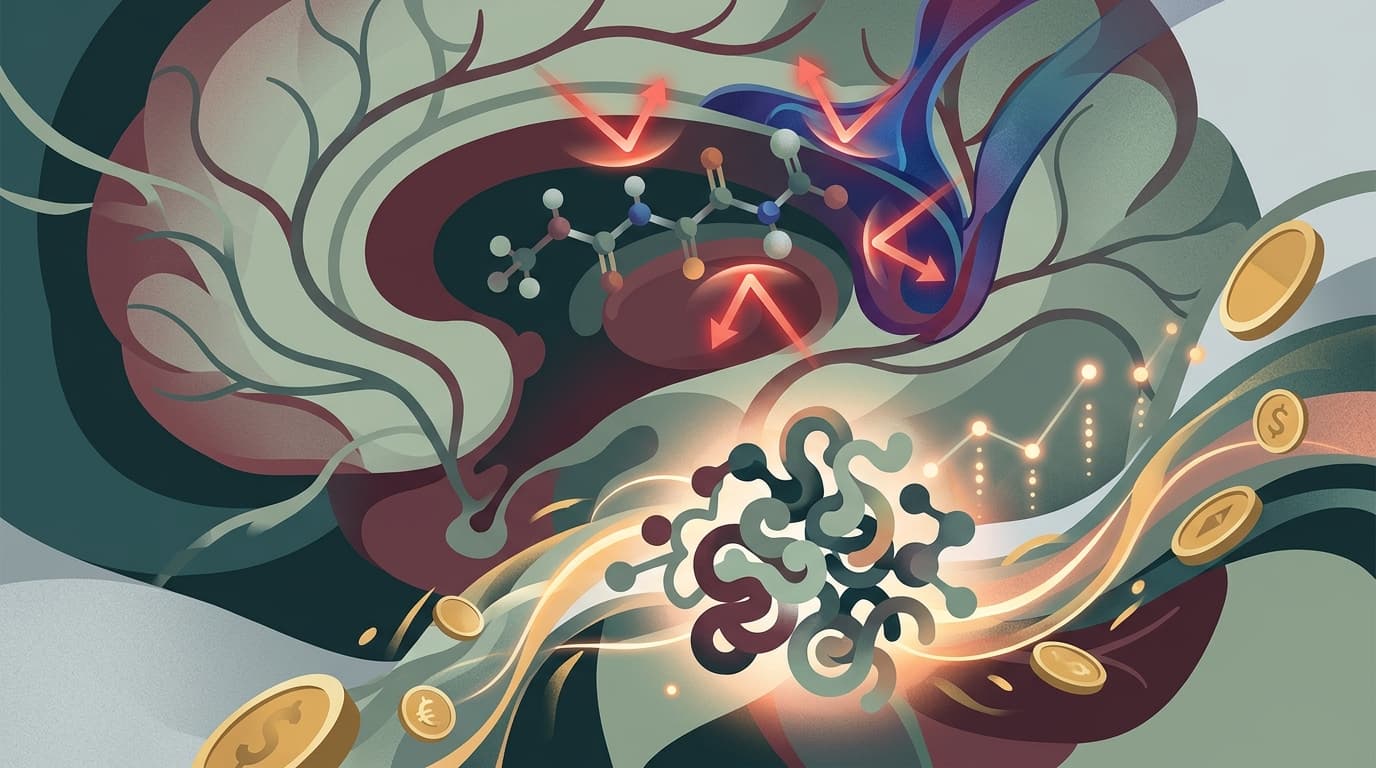
Semaglutide targets GLP-1 receptors in the brain to reduce appetite and slow digestion. Cagrilintide works through a different but overlapping pathway, hitting amylin receptors in brain regions that control fullness after meals. The theory: two appetite-suppressing signals are better than one, like attacking a castle from two sides instead of one.
It's elegant science. It just wasn't enough to beat Lilly's approach, which pairs GLP-1 with a different second pathway called GIP.
Wall Street Didn't Mince Words
Analyst reactions were brutal. William Blair called the result "the worst case scenario" for Novo. Deutsche Bank's Emmanuel Papadakis said CagriSema now "appears somewhat obsolete" as either an upgrade to semaglutide or an alternative to tirzepatide. Jefferies' Michael Leuchten questioned what role the drug would even play going forward, noting it's "difficult to command a premium positioning" for a drug that just lost a head-to-head fight.
One analyst, quoted across industry coverage, called it a "gigantic own goal."
The downgrades came fast. Deutsche Bank cut Novo from Buy to Hold, slashing its price target by about 31%. JPMorgan downgraded to Neutral and trimmed its target by roughly 29%. Multiple firms cut their CagriSema sales forecasts by 40 to 63% for 2027 through 2030.
Novo's stock has now fallen approximately 50 to 60% from its 2024 peak, erasing the entire valuation premium built during the Wegovy boom.
The Obesity Throne Now Belongs to Lilly
This result cements what had been gradually becoming obvious: Eli Lilly is the obesity drug king.
Lilly already holds about 60% of U.S. injectable GLP-1 prescriptions and has gained share for five straight quarters. Its 2026 revenue guidance sits at $80 to $83 billion. Zepbound alone is projected to hit about $18 billion in 2026 sales, outpacing Wegovy's estimated $13 to $14 billion.
The CagriSema data removes the last plausible argument that Novo had a near-term answer to Lilly's efficacy advantage. Investors are now reallocating obesity upside from Novo to Lilly, not abandoning the GLP-1 thesis entirely.
So What Does Novo Do Now?
Novo isn't waving a white flag. It's pivoting, and the playbook has several chapters.
First, CagriSema isn't dead. Novo still has an FDA filing pending, with a decision expected late 2026. The company also plans to test higher doses in a new Phase 3 program, hoping more aggressive dosing can close the gap.
Second, and more importantly, Novo is betting on next-generation molecules that go beyond CagriSema's approach. The headliner is amycretin, a single-molecule dual agonist (GLP-1 plus amylin) that showed up to roughly 22% weight loss in a Phase 1b/2a obesity study. Its Phase 3 obesity program, called AMAZE, launched in early 2026. Amycretin is being developed in both injectable and oral forms.
Third, Novo is making a massive push into pills. Its oral semaglutide for obesity (essentially a Wegovy pill) launched commercially in early 2026. The company has also inked deals worth over $4 billion combined with Septerna and Vivtex to build out oral small-molecule and oral biologic platforms for obesity.
Finally, there's a triple agonist called UBT251 in early development, aimed at competing with Lilly's retatrutide. It's years away, but it signals that Novo understands where the efficacy bar is headed.
The Bigger Picture
The GLP-1 obesity market is still projected to reach $100 billion or more by 2030, with some estimates as high as $200 billion. This isn't a shrinking pie. Both Novo and Lilly will sell enormous quantities of weight-loss drugs for years to come.
But the CagriSema result changes who gets the bigger slice. Novo entered this fight as the GLP-1 pioneer, the company that made Ozempic a household name and turned Wegovy into a cultural phenomenon. It now faces a reality where its best near-term challenger just lost to the competition on the biggest stage.
The obesity drug war isn't over. Novo has plenty of ammunition in the pipeline. But for the first time, it's fighting from behind with no clear timeline for catching up. And in a market that rewards winners this generously, second place is an expensive position to hold.
Clinical & Regulatory
5 min read
The FDA Just Declared War on Cheap Ozempic
The FDA just launched its largest-ever coordinated crackdown on compounding pharmacies selling cheap versions of Ozempic and Wegovy, explicitly targeting Hims & Hers in the process. A multibillion-dollar grey market is being dismantled, and the fallout is reshaping telehealth, Big Pharma, and patient access to the most popular drugs in America.