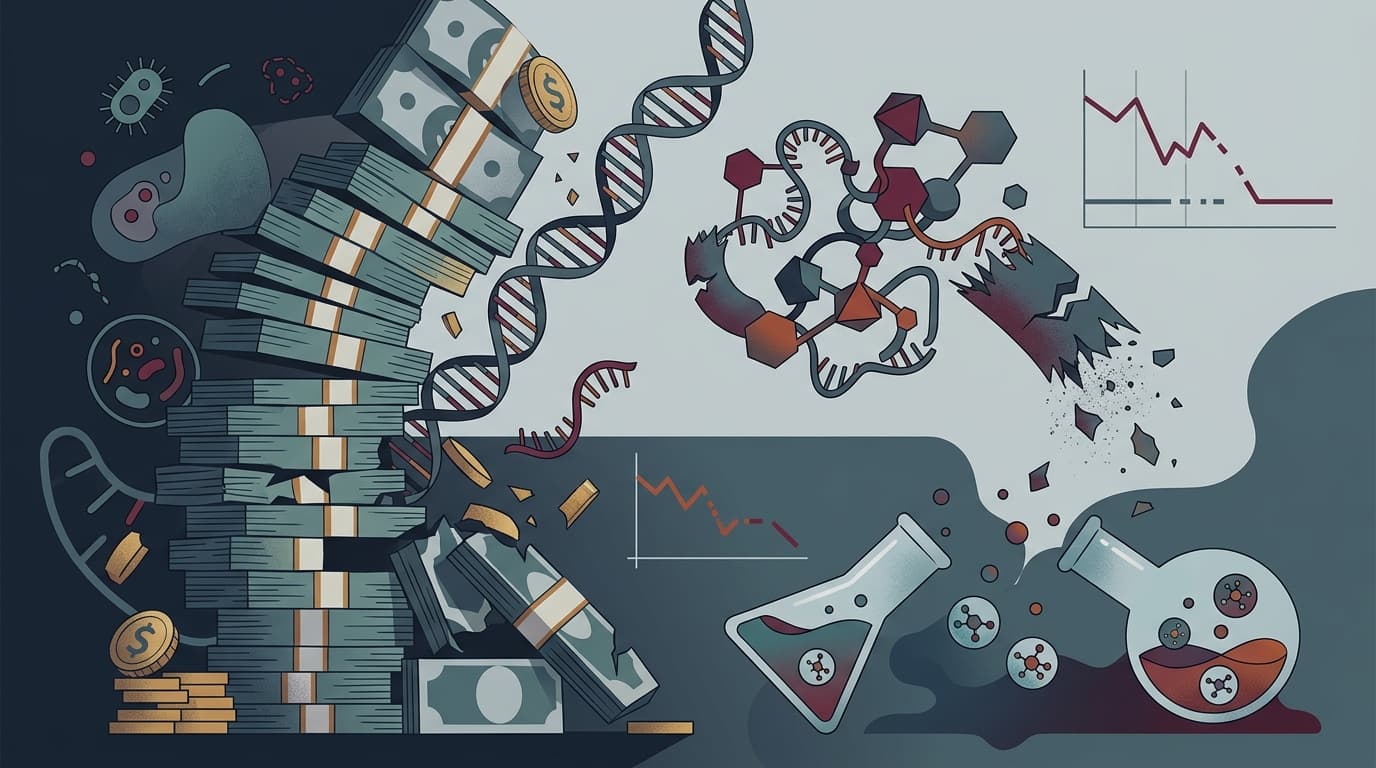

Novartis's $12 billion RNA therapy bet just failed its biggest clinical test in a rare muscle disease, dragging down an entire sector's stocks with it. The result exposes a stubborn problem: getting RNA drugs to actually reach muscle tissue remains one of biotech's hardest unsolved challenges.
Imagine buying a house for $12 billion, sight mostly unseen, because the neighborhood looked promising. Now imagine the roof caving in on move-in day. That's roughly what happened to Novartis this week.
The pharma giant's RNA therapy del-desiran failed its Phase III trial in myotonic dystrophy type 1 (DM1), a rare and progressive muscle disease with no approved treatments. The drug didn't meet its primary endpoint, which measured how quickly patients could relax and reopen their hand after squeezing it. In plain English: the drug was supposed to reduce muscle stiffness, and it didn't do that better than a placebo.
The trial, called HARBOR, enrolled about 150 patients and ran for 54 weeks. Novartis offered the obligatory "we saw signals in secondary endpoints" consolation language, but the headline result is clear. The main thing this drug was designed to prove? It couldn't prove it.
Del-desiran didn't originate inside Novartis. It came through the company's acquisition of Avidity Biosciences, a deal announced in 2025 for roughly $12 billion in cash (a 46% premium over Avidity's share price at the time). The acquisition was supposed to be a cornerstone of Novartis's ambitious push into RNA-based medicines, giving the company access to Avidity's muscle-directed delivery platform and several late-stage programs.
Novartis has been on an RNA shopping spree for years. They picked up The Medicines Company in 2019 for $9.7 billion (which gave them the cholesterol drug inclisiran). And they've made smaller deals along the way, including acquiring DTx Pharma.
The thesis behind all of this: RNA therapeutics represent the next frontier, and Novartis wants to own it. Analysts have generally called the strategy coherent but capital-intensive. This week's failure is a painful reminder of just how risky that second part can be.
Here's why this failure matters beyond just one drug and one company. Getting RNA-based therapies to work in muscle tissue is one of the hardest problems in drug development right now. Think of it like trying to deliver a fragile package to a house with no mailbox, a locked gate, and a guard dog.

ARPA-H just bet $62.7 million that an AI can manage heart failure patients around the clock, prescribing drugs and ordering tests without waiting for a doctor. If it works, it could reshape how we treat the fastest-growing heart condition in America.


Join thousands of biotech professionals who start their day with our free, daily briefing.
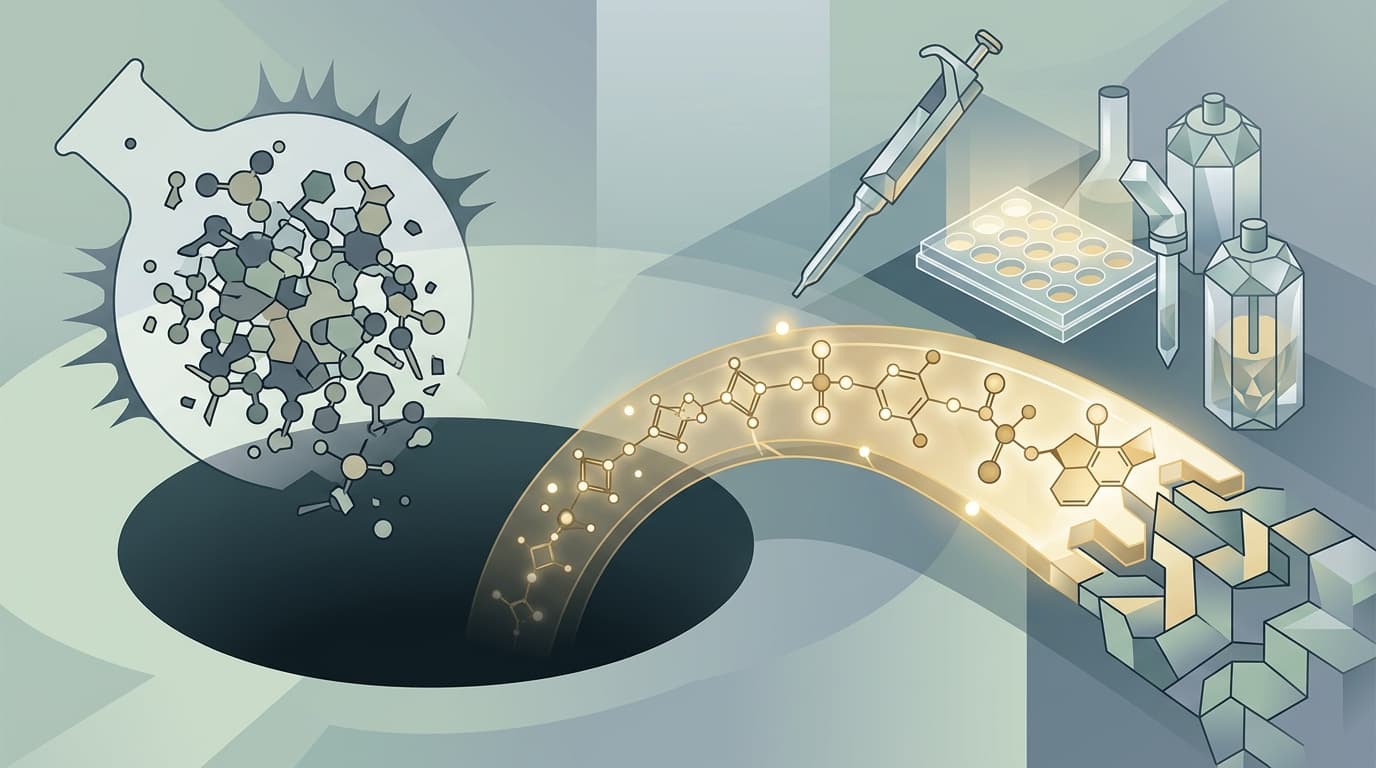
RNA drugs work beautifully in the liver, where biology cooperates. The liver basically vacuum-cleans the bloodstream, sucking up particles that happen to include RNA therapeutics. Muscle is a completely different story. The drug gets chewed up in the bloodstream, filtered out by the kidneys, hoarded by the liver, and even when some of it reaches muscle cells, it often gets trapped inside cellular compartments (called endosomes) where it's degraded before doing its job.
The pattern across the field is consistent: it's not that the biology of RNA silencing doesn't work. It's that too little drug actually reaches the muscle, and what does arrive is spread unevenly. Developers have tried cranking up doses to compensate, but that creates toxicity problems. It's a Goldilocks challenge where nobody has found "just right" yet.
When Novartis's results dropped, the blast radius extended well beyond one stock ticker. Dyne Therapeutics, which is developing its own DM1 treatments, saw its shares plunge roughly 31% in premarket trading, falling to around $16.76 on September 8. By the close, the stock was down about 6.4%.
This wasn't about anything specific to Dyne's programs. It was a class-risk repricing: investors collectively reassessing whether any RNA-based approach can work in muscle disease. When the biggest pharma company in the room spends $12 billion and still can't crack it, the market starts asking uncomfortable questions about everyone else.
Novartis says it's "evaluating the full dataset" and will "engage with health authorities" to figure out the next steps. That's corporate for "we're not sure yet." The safety data was reportedly consistent with earlier studies, so the drug doesn't appear dangerous; it just doesn't appear to work well enough on the measure that matters most.
The company pointed to signals in secondary and exploratory analyses, but they haven't released the actual numbers. Until they do, it's hard to know whether those signals represent a genuine glimmer of hope or the kind of post hoc data mining that makes statisticians cringe.
One failed trial doesn't sink a strategy, but it certainly puts pressure on everything else in the pipeline. Novartis has been deliberately rebuilding its portfolio around RNA-enabled platforms, betting that these technologies will drive growth and launch new products before 2030.
That bet now looks riskier. The Avidity acquisition gave Novartis three late-stage programs and a novel delivery platform. If the platform's first major Phase III readout is a miss, investors will naturally wonder about the others. And analysts who described the RNA strategy as a "large and risky bet on emerging biology" are probably feeling vindicated this morning.
For the many patients in the U.S. and Europe living with DM1, the failure stings in a different way. This is a disease with zero approved disease-modifying treatments. Patients rely on supportive care: managing symptoms without addressing the underlying cause. Del-desiran was one of the furthest-along experimental therapies, and its stumble leaves a painful gap.
Novartis's del-desiran failure is a three-layer story. Layer one: a $12 billion acquisition just lost a big chunk of its thesis. Layer two: the broader neuromuscular RNA field just got a reality check on its hardest unsolved problem (getting drugs into muscle). Layer three: patients with a devastating disease are still waiting.
RNA therapeutics remain one of the most exciting areas in medicine. But excitement and execution are two very different things, and right now, the gap between them is roughly $12 billion wide.
Roche just locked up exclusive global rights to a preclinical trispecific antibody from Chinese biotech Simcere Zaiming for up to $1.53 billion. The drug has never been tested in a human, but it targets B cells in a way Roche's legacy blockbusters can't.