Novartis Just Dropped $12B on an RNA Bet. The First Report Card Is In.
Novartis just released the first major clinical data from its $12 billion Avidity acquisition, and the results in muscular dystrophy are strong enough to start regulatory conversations. For a disease with zero approved treatments, this could be a game-changer.
A Disease With Zero Treatments and One Big Bet
Facioscapulohumeral muscular dystrophy (FSHD) is one of those diseases that sounds obscure until you realize what it does. It slowly eats away at your muscles, starting with your face and shoulders, then spreading outward. There's no cure. There's no approved treatment that slows it down. Patients get physical therapy and pain management, and that's about it.
Novartis thinks it can change that. And the early evidence suggests it might be right.
The pharma giant just released clinical data for del-brax, a drug it picked up when it acquired Avidity Biosciences for roughly $12 billion last year. The Phase 1/2 trial hit both its primary and key secondary endpoints, and Novartis says the results are strong enough to start talking to regulators about a path to approval. For a disease with nothing in the medicine cabinet, that's a big deal.
The Tech Behind the Drug
To understand why this matters, you need to understand what makes del-brax different from your typical pill or injection.
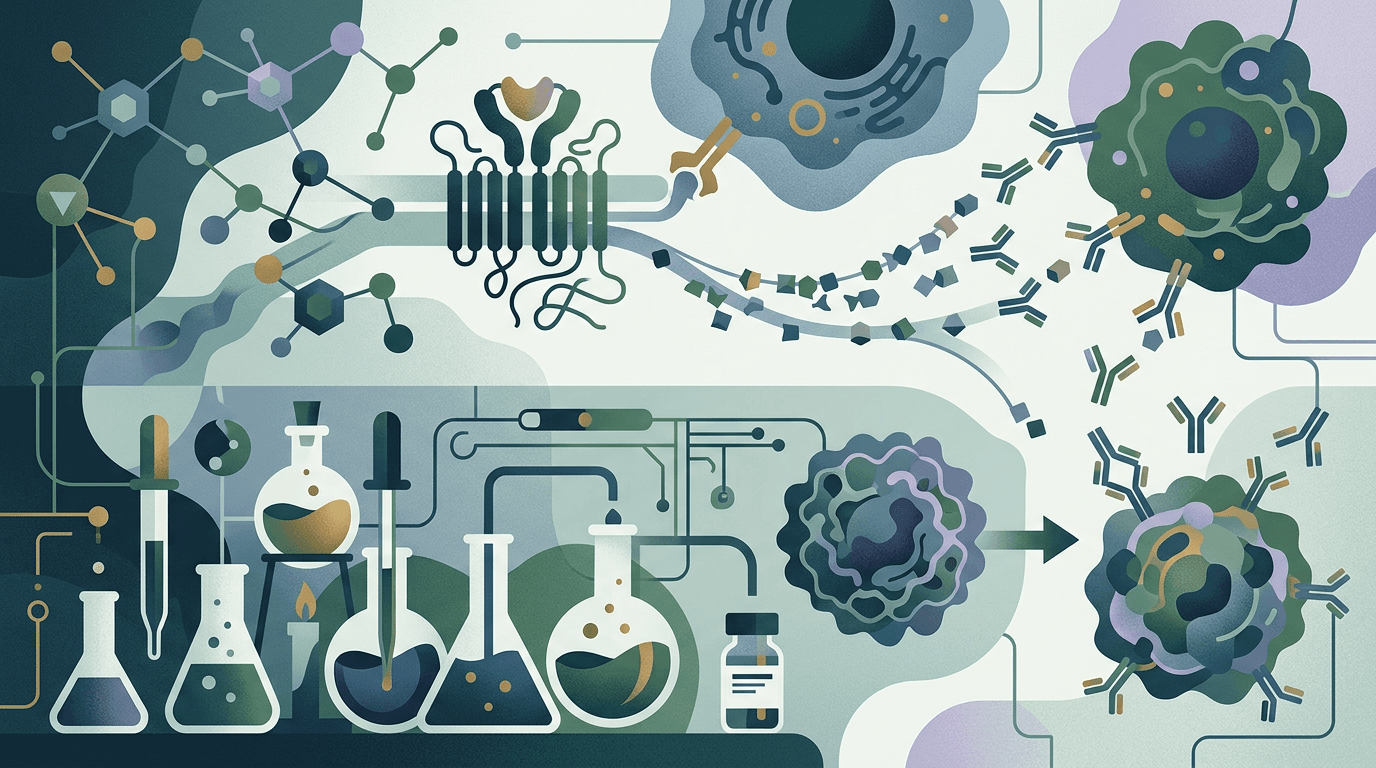
Del-brax is an antibody-oligonucleotide conjugate, or AOC. Think of it like a guided missile. The antibody portion acts as a GPS system, steering the drug specifically to muscle cells. The payload is an RNA molecule (specifically, a small interfering RNA, or siRNA) that silences a rogue gene called DUX4, the root cause of FSHD.
Here's why that's clever: getting RNA drugs into muscle has historically been really hard. RNA molecules are fragile, and the body breaks them down before they reach the right tissue. Avidity's whole platform was built to solve this delivery problem. The antibody wraps around the RNA payload, escorts it past the body's defenses, and drops it off exactly where it needs to go. Like a Trojan horse, but for your biceps.
What the Data Actually Showed
The trial, called FORTITUDE, enrolled 90 FSHD patients in a randomized, double-blind, placebo-controlled design (the gold standard for clinical evidence). The key biomarker cohort of 51 patients received either del-brax at 2 mg/kg every six weeks or placebo for 12 months.
Get tomorrow's biotech intelligence before your competitors.
Join thousands of biotech professionals who start their day with our free, daily briefing.
The primary endpoint measured changes in a circulating protein called KHDC1L, which reflects how active the DUX4 gene is in muscle. Think of it as a smoke detector for the fire that causes FSHD. Treated patients showed significant reductions in KHDC1L, confirming the drug was hitting its target.
The key secondary endpoint tracked creatine kinase, a well-known marker of muscle damage. That dropped too, suggesting the drug wasn't just engaging the target; it was actually reducing the downstream destruction. Earlier Avidity data had also shown improvements in mobility and muscle strength, hinting that biomarker changes translate into real functional benefits for patients.
Novartis said it's now "evaluating the totality of biomarker and clinical data" and plans to present the full package to global regulators. Translation: they're getting ready to file.
Why Wall Street Cares (and Why It's Not Losing Its Mind)
Jefferies analyst Michael Leuchten wrote that the data "at least partially validate Novartis' decision to acquire Avidity." That's analyst-speak for: "the $12 billion check doesn't look insane anymore."
Novartis stock ticked up in pre-market trading on the news, and the company has been outperforming its pharma peers year-to-date. But the reaction was more of a confident nod than a champagne-popping rally. The reason? Investors had already partially priced in success after Avidity's earlier readouts. This data confirmed the thesis rather than creating a new one.
The real fireworks are ahead. Del-brax has FDA Orphan Drug and Fast Track designations, plus EMA Orphan Drug status. The FDA has already signaled that an accelerated approval pathway is open, meaning Novartis could potentially get the drug approved based on biomarker data while a larger confirmatory trial runs in parallel. That Phase 3 study, called FORTITUDE-3, is already underway with roughly 200 patients. Its primary endpoints are functional measures: quantitative muscle testing in the U.S. and a 10-meter walk/run test in Europe.
If that Phase 3 delivers, del-brax could become the first disease-modifying treatment ever approved for FSHD.
Three Shots on Goal, Not Just One
Del-brax isn't a one-off. It's part of a three-drug neuromuscular franchise that Novartis inherited from Avidity, all built on the same AOC platform.
Del-desiran targets myotonic dystrophy type 1 (DM1), another rare muscle disease. Its Phase 1/2 results were published in The New England Journal of Medicine in February 2026, showing roughly 40% reduction in the toxic RNA that causes the disease, plus improvements in hand function, strength, and mobility. The pivotal Phase 3 trial (HARBOR) is fully enrolled, with top-line data expected in Q2 2026.
Del-zota goes after Duchenne muscular dystrophy (DMD), the most devastating of the three conditions. Phase 1/2 data showed significant exon skipping (a technique to restore a missing protein called dystrophin), substantial dystrophin production, and major reductions in creatine kinase. It earned Breakthrough Therapy designation from the FDA in July 2025.
Novartis has said it expects all three programs to launch before 2030, with multi-billion-dollar potential across the portfolio. That's ambitious, but having three late-stage assets sharing the same delivery platform, manufacturing infrastructure, and commercial teams creates real efficiency.
The Competitive Picture
Novartis isn't the only company chasing muscle-targeted RNA therapies, but it has the most advanced portfolio.
Dyne Therapeutics is the closest competitor in DM1, where its drug DYNE-101 has both Fast Track and Breakthrough Therapy designations. Dyne has explicitly aligned with the FDA on an accelerated approval strategy, making it a serious contender. In DMD, Dyne's exon-51 program (DYNE-251) is still in Phase 1/2, putting it behind del-zota.
Sarepta Therapeutics dominates the current DMD landscape with three approved exon-skipping drugs and the Elevidys gene therapy. But Sarepta's newer RNA programs, including a peptide-conjugated siRNA for DM1, are still in early clinical testing.
In FSHD specifically, del-brax stands alone. No other disease-modifying candidate is anywhere close to this stage of development. If FSHD were a race, del-brax would be rounding the final turn while everyone else is still lacing up their shoes.
The Bottom Line
Novartis paid $12 billion for a technology platform and three clinical programs. Six months later, the first meaningful report card is in, and it's a strong one. The biomarker data in FSHD are exactly what regulators asked for, the accelerated approval pathway is open, and the confirmatory Phase 3 is already running.
But this story is far from over. Biomarker hits are necessary but not sufficient; functional improvements in Phase 3 are what will ultimately determine whether del-brax transforms patient lives (and justifies that price tag). The HARBOR readout for DM1 later this year and continued DMD data will test whether the AOC platform truly works across multiple diseases.
For a field that has promised RNA therapeutics for decades, this is one of the clearest signs yet that the technology is finally delivering. Not in theory. Not in mice. In patients, with data good enough to show regulators.
Clinical & Regulatory
5 min read
Prostate Cancer Just Got Its HER2 Moment
The FDA just approved the first targeted therapy for a specific genetic subtype of prostate cancer, turning PTEN loss from a bad prognosis into an actionable target. It's the same precision oncology playbook that transformed breast cancer, and it could reshape how we treat the most common male cancer.