
Nearly 8,000 clinical trial sites across the Middle East have been knocked offline by the escalating conflict, threatening thousands of active studies and the patients enrolled in them. The fallout could delay drug approvals worldwide, and every major pharma company is exposed.
Somewhere in Turkey right now, a cancer patient enrolled in a Phase 3 trial is waiting for a drug shipment that may not arrive. In Israel, a research coordinator is trying to figure out how to keep a years-long heart failure study alive while airstrikes reshape daily life. In Egypt, clinical investigators are making impossible choices between safety and science.
Nearly 8,000 clinical trial sites across the Middle East have been disrupted by the escalating conflict involving U.S.-Israel strikes on Iran and subsequent retaliation. That's not a typo. Eight thousand. And the consequences won't stay in the Middle East; they're going to ripple through drug development pipelines worldwide.
Clinical data science firm Phesi crunched numbers from over 65,000 global trials spread across 350,000 sites in 186 countries. What they found is alarming: 4,361 active studies (roughly 6.7% of all global trials they analyzed) have been affected.
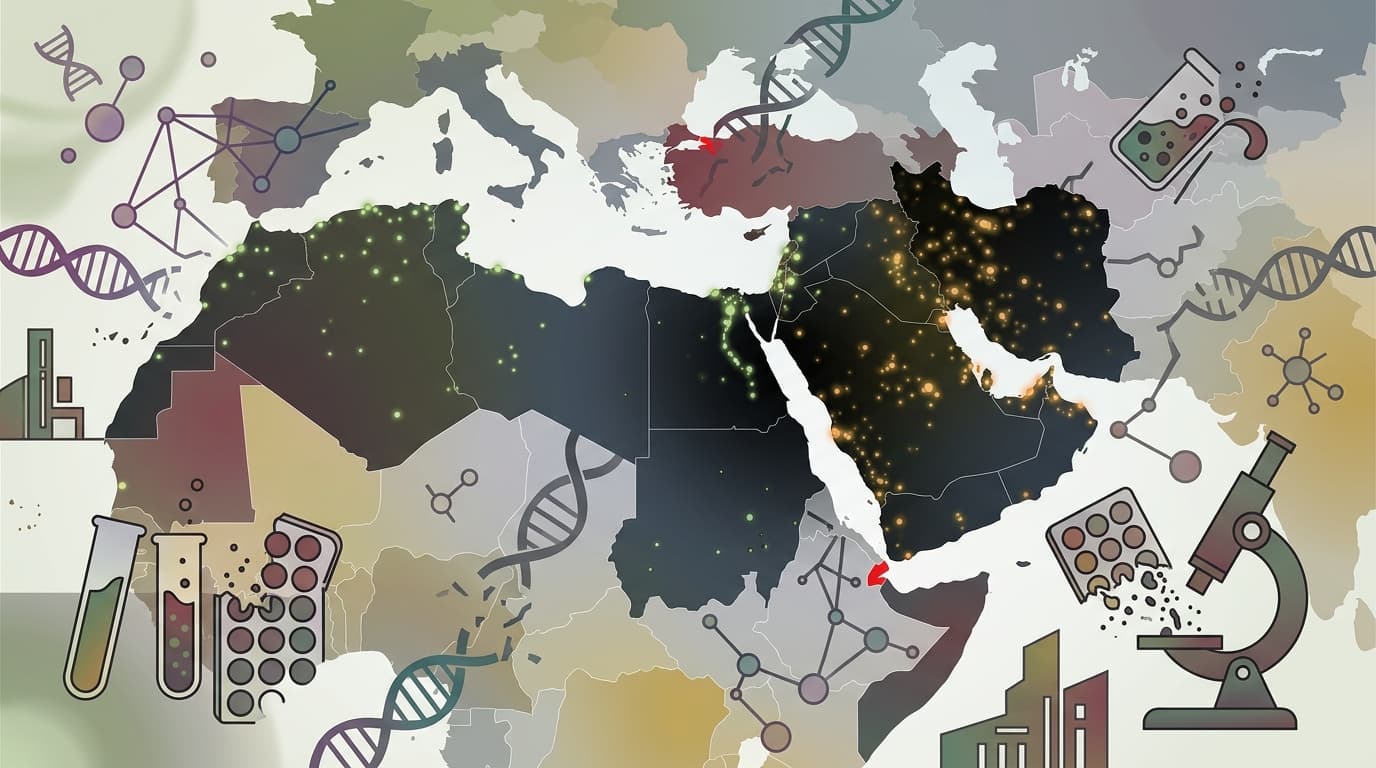
The hardest-hit countries tell the story. Turkey leads with 3,746 disrupted sites, followed by Israel at 2,204 and Egypt at 1,508. Iran, despite being at the epicenter of the strikes, has a comparatively small footprint of 69 trial sites.
To put this in perspective, imagine you're building a house and 6.7% of your materials suddenly become unavailable. You might finish the house eventually, but the timeline? The budget? The structural integrity? All compromised.
Not all trials are created equal. A Phase 1 safety study with 30 patients is very different from a Phase 3 trial (the final, massive stage before a drug can seek approval) involving thousands of patients tracked over several years.
Phase 3 trials are the most severely affected, with 2,732 sites disrupted at that critical late stage. These are trials where companies have invested years of work and hundreds of millions of dollars. The therapeutic areas getting hammered hardest? Oncology leads the list, particularly non-small cell lung cancer and breast cancer studies. Heart failure, multiple myeloma, and Crohn's disease trials are also caught in the crossfire.

Immunovant's FcRn inhibitor batoclimab just struck out in two Phase 3 trials for thyroid eye disease, sending shares tumbling and raising hard questions about whether this entire drug class can crack TED. The company is betting its future on a next-gen molecule, but the clock is ticking.

Join thousands of biotech professionals who start their day with our free, daily briefing.
This matters because cancer patients in these trials often have no other treatment options. They enrolled specifically to access experimental therapies. When a trial site goes dark, those patients don't just lose access to a study; they may lose access to their best shot at survival.
If you're thinking this only affects smaller companies with limited geographic reach, think again. All ten of the world's largest pharmaceutical companies have trial sites in the affected region. Some operate between 400 and 500 sites there. That's not a side project; it's a significant chunk of their global clinical infrastructure.
Phesi Founder and President Gen Li, Ph.D., has urged sponsors to rapidly assess their exposure and adapt strategies while keeping patient and investigator safety as the top priority. His firm has suggested alternatives like external control arms (using data from patients outside the trial as a comparison group) and digital twins (computer-simulated patient models) to maintain data integrity when physical sites become unreachable.
Those are clever workarounds, but let's be honest: they're band-aids on a bullet wound. Regulators like the FDA have historically been cautious about accepting non-traditional data sources. Sponsors will face tough conversations about whether salvaged data meets approval standards.
Disrupted sites are only half the problem. The conflict has effectively shut down critical logistics corridors that the pharmaceutical industry depends on. Sea traffic through the Strait of Hormuz has dropped 90% below pre-war levels. Air cargo through Gulf hubs has also been severely disrupted.
Temperature-sensitive drugs, including monoclonal antibodies used in cancer treatment, need cold-chain storage the entire journey from factory to patient. Companies are now rerouting shipments overland through Saudi Arabia or via Istanbul, which adds time, cost, and risk of temperature excursions that could ruin the drugs entirely.
The timeline is tight. Gulf hospital stocks of certain oncology drugs could deplete within four to six weeks if disruptions persist. And here's a curveball most people wouldn't expect: Qatar's helium exports have been disrupted too. Helium is essential for MRI machines. No helium, no MRIs. No MRIs, no diagnostic imaging for trial patients who need it.
The Russia-Ukraine conflict that began in 2022 offers a sobering preview. When that war started, clinical trial work in Ukraine essentially stopped overnight. Shipping depots closed. Drug supplies (Ukraine only held one to two months of inventory) ran dry. Aviation services for biological samples collapsed.
Trial starts in Ukraine dropped to fewer than 30 in 2022, and disruptions hit at least 40 multinational trials by early 2023. Over 2,235 healthcare structures across 715 institutions were damaged or destroyed by late 2024. Sponsors scrambled to relocate sites globally, but the operational chaos extended timelines by months, sometimes years.
The Middle East situation could be worse. The sheer number of affected sites (nearly 8,000 versus roughly 2,911 disrupted sites in the Ukraine conflict) and the disruption to global logistics corridors make this a different beast entirely.
The Gulf region had been on a growth trajectory for clinical research. Countries like the UAE, Saudi Arabia, and Qatar were investing heavily in trial infrastructure. That momentum is now in jeopardy.
For drug developers, the immediate priority is patient safety. But right behind it comes a cascade of painful decisions: amend protocols, relocate patients, find replacement sites, renegotiate timelines with regulators, and explain to investors why that pivotal readout just got pushed back six months.
The broader lesson is one the industry keeps learning the hard way. Concentrating trial sites in geopolitically unstable regions creates systemic risk. Cheaper patient recruitment costs and large treatment-naive populations make these regions attractive. But when conflict erupts, those savings evaporate overnight, replaced by costs that are orders of magnitude higher.
For the 4,361 trials caught in this disruption, the clock is ticking. Every week of delay means patients waiting longer for potential treatments, sponsors burning cash without generating data, and the global drug development timeline stretching further into the future. The conflict may be thousands of miles away from FDA headquarters in Silver Spring, Maryland. Its consequences are not.
United Therapeutics' lung drug Tyvaso just posted blockbuster results in a disease it was never originally designed to treat. The IPF data could double the drug's market, and Wall Street is already doing the math.