
The FDA approved the first-ever combo pairing a HIF-2α inhibitor with a kinase inhibitor for kidney cancer, and the data suggest it outperforms the current go-to option. Merck's belzutifan empire now has five FDA approvals in five years, and Wall Street is paying attention.
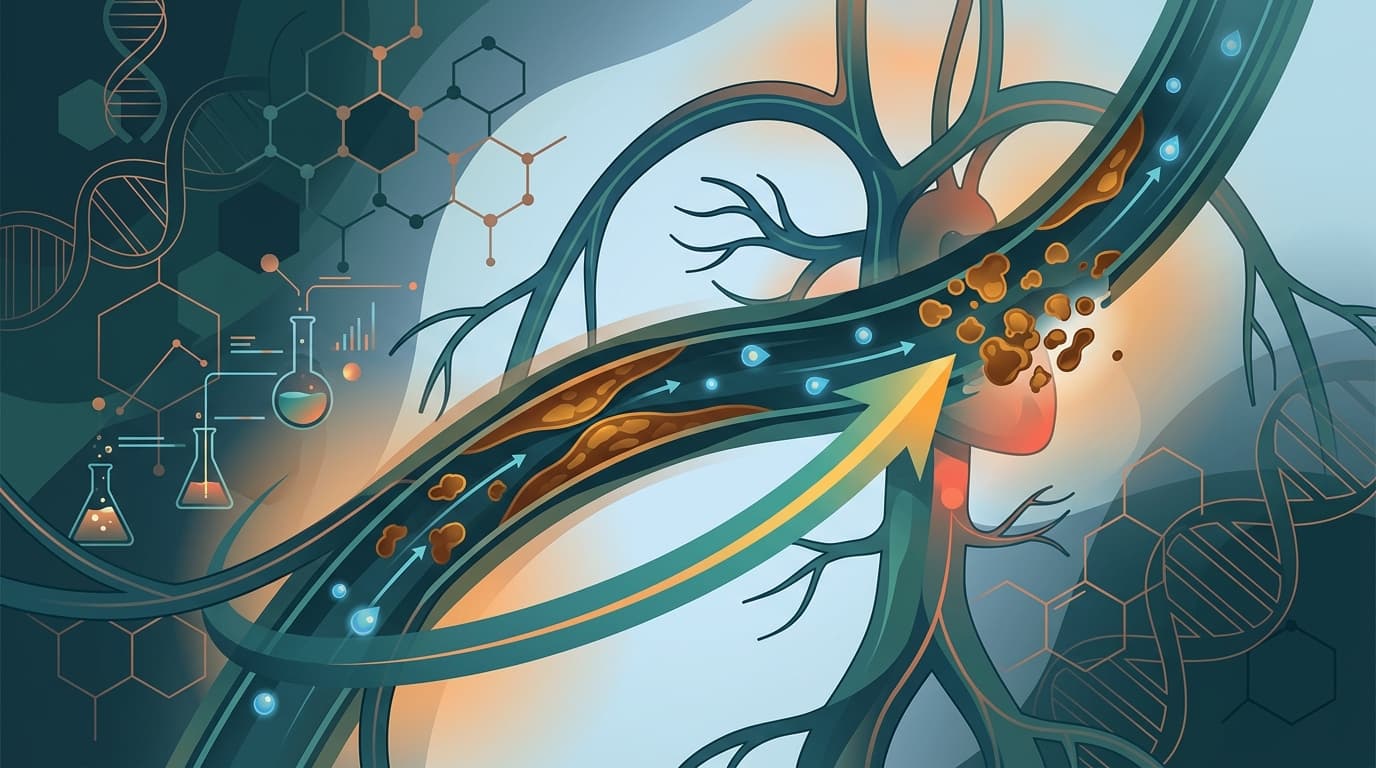
Imagine your tumor has two water faucets running full blast, flooding your body with signals that help it grow. Most cancer drugs try to shut off one faucet. The FDA just approved a combo that shuts off both.
On September 24, 2026, the FDA greenlit belzutifan (Welireg) plus lenvatinib (Lenvima) for adults with advanced clear-cell kidney cancer who've already been treated with immunotherapy. It's a Merck and Eisai tag team, and it creates a treatment option that didn't exist before: the first approved regimen pairing a HIF-2α inhibitor with a kinase inhibitor.
That's a mouthful, so let's translate.
Clear-cell renal cell carcinoma (ccRCC) is the most common type of kidney cancer. In these tumors, a gene called VHL is usually broken. When VHL stops working, a protein called HIF-2α piles up inside the cell like unanswered emails in a neglected inbox. That protein then screams at the cell to build new blood vessels and grow, grow, grow.
Belzutifan is the inbox manager. It grabs HIF-2α directly and stops it from sending those growth signals. Think of it as cutting the message at the source.
Lenvatinib works downstream. Even if some growth signals sneak through, lenvatinib blocks the receptors (especially VEGFR) that would receive them. It's the equivalent of unplugging the phone so the call can't connect.
Together, they create what scientists call vertical pathway blockade: one drug reduces the signal, the other blocks the response. Two faucets, two wrenches.
The approval was based on LITESPARK-011, a phase 3 trial that enrolled 747 patients with advanced ccRCC who had already progressed on a PD-1 or PD-L1 inhibitor (the checkpoint immunotherapy drugs that have become standard first-line treatment). The combo went head-to-head against cabozantinib, one of the go-to options in this setting.
The headline result: patients on belzutifan plus lenvatinib went a median of without their cancer worsening, compared to about on cabozantinib. That's roughly a 30% reduction in the risk of disease progression, with a hazard ratio hovering around 0.70 to 0.74.

Half of relapsed multiple myeloma patients stayed cancer-free for five years after a single CAR-T infusion, with no maintenance therapy. Legend Biotech's latest CARVYKTI data is fueling talk of something oncologists rarely dare to whisper: a potential cure.


Join thousands of biotech professionals who start their day with our free, daily briefing.

The response rate told a similar story. Over half the patients (53%) on the combo saw their tumors shrink meaningfully, versus 40% on cabozantinib. And at the two-year mark, 35.6% of combo patients were still progression-free, compared to just 19.1% on cabozantinib.
Overall survival leaned in the combo's favor too: 34.9 months versus 27.6 months. But that difference didn't reach statistical significance, so it's a promising trend rather than a proven survival benefit. The FDA clearly felt the progression-free survival and response data were convincing enough on their own.
The post-immunotherapy kidney cancer landscape has been, frankly, a mess. Most patients with advanced ccRCC now receive PD-1/PD-L1-based combos as their first treatment. That's great news upfront, but it creates a bottleneck: what do you do when those drugs stop working?
Until recently, the honest answer was "pick from a handful of options, none of which have great data." Cabozantinib and lenvatinib plus everolimus have been the most common choices, but neither had been validated in a proper head-to-head phase 3 trial designed specifically for the post-immunotherapy population.
LITESPARK-011 changed that. It gave oncologists the first randomized phase 3 evidence showing a combo can meaningfully outperform a standard TKI (a type of targeted cancer drug) in this exact patient group.
This isn't belzutifan's first rodeo. The drug has been steadily accumulating FDA approvals since 2021, when it was first greenlit for von Hippel-Lindau disease, a rare genetic condition that causes tumors throughout the body. In 2023, it expanded into advanced RCC after both immunotherapy and a VEGF-targeting drug. In 2025, it picked up an approval for a rare adrenal tumor called pheochromocytoma/paraganglioma. And earlier in 2026, it was approved alongside pembrolizumab for patients at high risk of kidney cancer recurrence after surgery.
The September approval with lenvatinib adds to belzutifan's growing list of FDA nods, and it reflects Merck's broader strategy of building Welireg into a franchise drug across multiple kidney cancer settings.
Analysts have been ratcheting up their expectations. Bernstein has modeled $1 billion to $1.5 billion in annual sales for Welireg with expanded kidney cancer approvals, a massive jump from EvaluatePharma's earlier forecast of $386 million by 2026. Some estimates peg peak sales around $2.6 billion, with roughly $1.6 billion coming from the U.S. alone.
Leerink raised its Merck price target and signaled expectations of rapid adoption for the belzutifan/lenvatinib combo.
But there's a catch. Merck and Eisai hit a setback in a first-line kidney cancer trial, which dented plans to move belzutifan into the frontline setting. One analysis argued that failure trimmed belzutifan's long-term sales ceiling from $5.8 billion to about $2.2 billion. It also potentially opened the door for rival HIF-2α inhibitors to compete.
Still, Welireg sales more than doubled in 2024, and the post-immunotherapy combo approval addresses one of the largest and fastest-growing segments in kidney cancer. The drug is building commercial momentum even without the frontline win.
This approval matters beyond one drug or one company. It validates a new therapeutic concept: targeting the hypoxia pathway (the cell's response to low oxygen) alongside traditional anti-angiogenic therapy in kidney cancer. If vertical pathway blockade works here, expect more combos built on the same logic across other tumor types.
For post-immunotherapy kidney cancer patients who aren't responding well to current options, a combo that shrinks tumors in over half of cases and delays progression by several months is a meaningful step forward. It's not a cure. But it's a new playbook, and in oncology, new playbooks save lives.
Merck just turned both wrenches. The faucets are closing.
A single IV dose silenced the cholesterol gene PCSK9 for nearly a year in monkeys, slashing LDL by up to 70%. If it works in humans, it could replace daily statins with a one-and-done treatment.