Lilly Just Made the Obesity Pill You Don't Need a Needle For
The FDA approved Eli Lilly's Foundayo, an oral obesity pill you can take any time without food restrictions, at just $25/month with insurance. It's cheaper, easier, and could reshape the entire GLP-1 market that Novo Nordisk has dominated.
For years, millions of people who wanted GLP-1 weight loss drugs faced an uncomfortable truth: you had to inject yourself. Weekly. In the stomach or thigh. With a needle.
Not anymore.
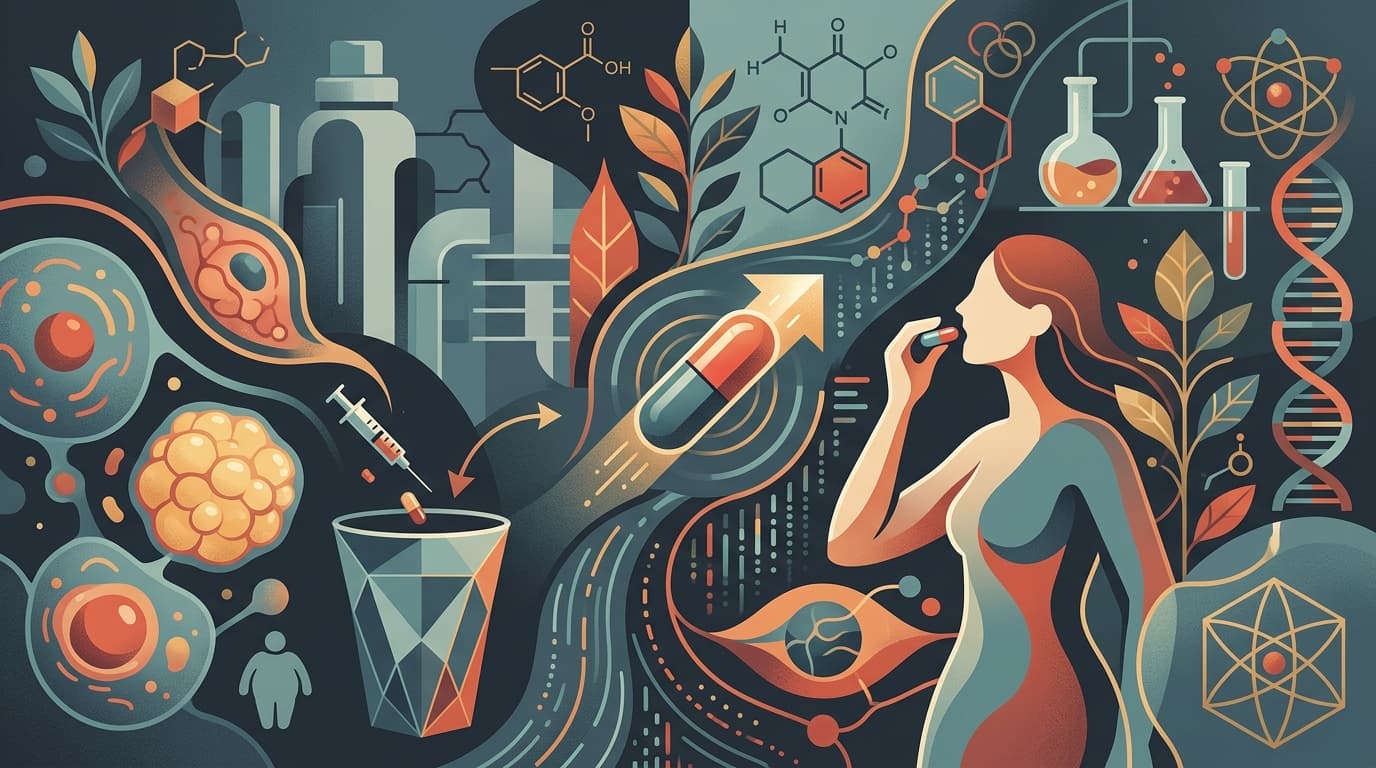
The FDA just approved Foundayo (orforglipron), Eli Lilly's once-daily oral obesity pill, and it might be the most consequential approval in the weight loss market since Wegovy hit the scene. It's a tiny tablet you pop any time of day, no needles involved, no fasting required, no waiting 30 minutes before breakfast. Think of it as the GLP-1 revolution finally getting its iPhone moment: same core technology, radically more convenient packaging.
Why This Is a Bigger Deal Than It Sounds
Let's zoom out for a second. The anti-obesity drug market is projected to hit $30.58 billion this year and could balloon to nearly $100 billion by 2033. Until now, that market has been dominated by injectables like Lilly's Zepbound and Novo Nordisk's Wegovy. Both work incredibly well. Both require patients to stick themselves with a needle on a regular schedule.
That's a real barrier. Needle phobia affects roughly 1 in 4 adults, and even people who aren't afraid of needles generally prefer not using them. An effective pill changes the math entirely. It opens the door to millions of patients who would never have picked up a syringe.
Novo Nordisk actually beat Lilly to the oral punch, launching a pill version of Wegovy in early January 2026. But Foundayo has a critical edge: no food restrictions. Novo's oral Wegovy requires patients to take it on an empty stomach, with limited water, then wait at least 30 minutes before eating or drinking anything else. Foundayo? Take it whenever you want, with or without food. That difference sounds minor on paper, but in real life, convenience is king.
The Numbers: Good, Not Perfect
In the Phase 3 ATTAIN-1 trial, adults on the highest dose of Foundayo lost an average of about 11.2% of their body weight over 72 weeks, compared to 2.1% for the placebo group. More than half of patients (54.6%) lost at least 10% of their body weight.
Get tomorrow's biotech intelligence before your competitors.
Join thousands of biotech professionals who start their day with our free, daily briefing.
Now, let's be honest: those results are solid but not spectacular. Oral Wegovy posted weight loss of 13.6% to 16.6% in its trials. And the injectable versions of these drugs still outperform both pills by a wide margin (Lilly's own retatrutide has shown 28.7% weight loss in trials).
So Foundayo isn't winning the weight loss Olympics. It's winning the convenience Olympics. And for most patients, that trade-off will be worth it.
The side effects are what you'd expect from any GLP-1 drug: nausea, vomiting, and diarrhea, mostly mild to moderate. Discontinuation rates ranged from 5.3% to 10.3% depending on dose, compared to 2.7% for placebo. Importantly, there were no liver safety red flags, which was a legitimate concern since orforglipron is a small molecule processed by the liver.
The Manufacturing Secret Weapon
This is where things get really interesting from a business perspective. Foundayo is a small molecule, meaning it's made through traditional chemical synthesis. Novo's oral Wegovy is a peptide, which is biologically complex and notoriously harder to manufacture at scale.
Think of it like the difference between baking cookies and making soufflés. Both are delicious, but one is a lot easier to mass-produce without things going wrong. Lilly reportedly stockpiled $1.5 billion worth of inventory before launch specifically to avoid the supply shortages that plagued earlier GLP-1 rollouts. That's not a typo. They built a mountain of pills before opening the doors.
The Price Tag: Surprisingly Aggressive
Lilly came out swinging on price. Foundayo is available through LillyDirect (the company's direct-to-consumer platform) at $25 per month for patients with eligible commercial insurance and $149 per month for self-pay patients. Starting July 1, Medicare Part D patients will pay $50 per month.
For context, Zepbound's list price exceeds $1,000 per month, and even with discounts, employer pricing sits around $449. Oral Wegovy launched at up to $299 per month for cash-paying patients. Lilly clearly decided that winning on access matters more than maximizing per-patient revenue right now.
Analysts are paying attention. Truist Securities projects Lilly's combined obesity and diabetes franchise (Mounjaro, Zepbound, Foundayo) could eventually reach a staggering $101 billion in peak worldwide revenue.
Lilly vs. Novo: The Rivalry Gets Personal
This approval sets up one of the most compelling commercial battles in pharma history. Novo Nordisk has dominated the GLP-1 landscape with semaglutide, generating approximately $33 billion in sales in 2025. But Novo is dealing with headwinds: pricing pressure, competition from compounding pharmacies, and now a direct oral rival with easier dosing.
Novo's oral Wegovy got a head start, attracting about 18,400 prescriptions by mid-January 2026, with about 3,100 patients in its first week alone. That's strong early momentum. But Lilly's no-food-restriction dosing, lower price point, and small-molecule manufacturing advantage could erode that lead quickly.
The battlefield isn't just about which pill works better. It's about which company can get more patients covered, more quickly, through more channels. Lilly is betting heavily on direct-to-consumer sales and employer partnerships that bypass traditional pharmacy benefit managers. Novo is leaning on its first-mover advantage and the enormous brand recognition of the Wegovy name.
What This Means for Patients (and Everyone Else)
The bigger picture here goes beyond corporate rivalry. An effective, affordable, easy-to-take obesity pill expands access to a population that has historically been underserved. For decades, the medical system treated obesity as a willpower problem rather than a chronic disease. GLP-1 drugs changed that narrative; an oral version makes it real for far more people.
That share will only grow as patients and doctors get comfortable with pills over injections.
Of course, challenges remain. Insurance coverage is still rolling out. The weight loss results trail injectable options. And the GI side effects, while manageable, will turn some patients off. But the trajectory is clear: the era of injectable-only GLP-1 treatment is ending.
Lilly just made sure of that with a single pill.
Clinical & Regulatory
5 min read
The UK Just Got a Hall Pass From America's Pharma Tariff Apocalypse
The UK just became the only country with tariff-free pharmaceutical access to the U.S. market, dodging 100% duties that everyone else still faces. The price? A 25% hike in what the NHS pays for new drugs, and a template that could reshape global pharma negotiations.