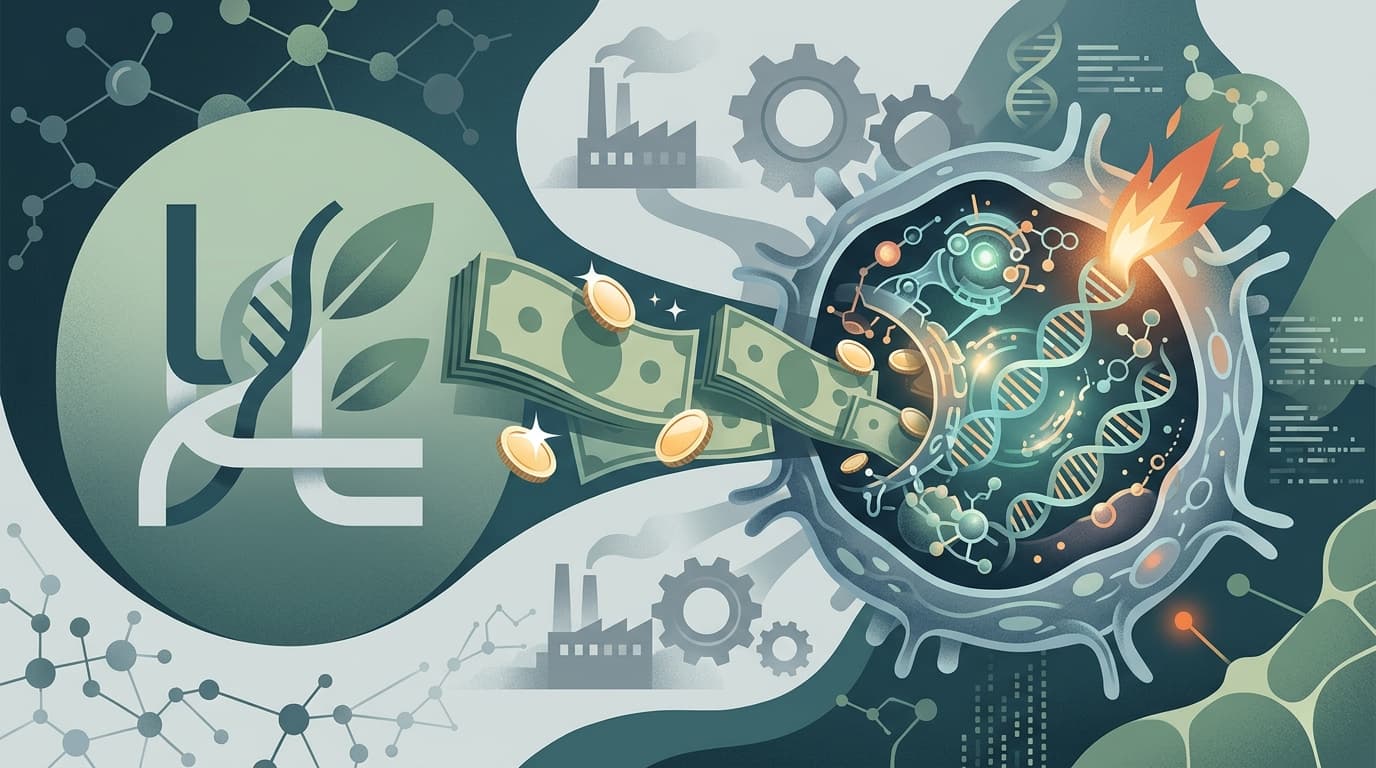

Eli Lilly just agreed to pay up to $7 billion for Kelonia Therapeutics, a startup that wants to turn a patient's own body into a CAR-T factory. It's the biggest bet yet on in vivo cell therapy, and it's part of a pharma arms race that's moving faster than anyone expected.
Traditional CAR-T therapy works like this: doctors pull a patient's blood, ship the immune cells to a specialized factory, genetically engineer them over several weeks, then send them back to be infused into the patient. It's brilliant science. It's also slow, wildly expensive, and available at only a handful of centers worldwide.
Now imagine skipping all of that. Just inject the patient with something that reprograms their immune cells inside their body. No factory. No weeks of waiting. One infusion.
That's the promise Eli Lilly just bet up to $7 billion on.
The pharma giant signed a definitive agreement to acquire Kelonia Therapeutics, a clinical-stage biotech building what's called in vivo CAR-T therapy. The deal structure: $3.25 billion in cash upfront, with up to $3.75 billion more tied to clinical, regulatory, and commercial milestones.
Kelonia's secret weapon is a platform called iGPS (in vivo Gene Placement System). It uses engineered lentiviral particles, essentially tiny biological delivery vehicles, to find T cells circulating in a patient's bloodstream and reprogram them into cancer-fighting CAR-T cells. No leukapheresis. No clean rooms. No four-to-six-week manufacturing window.
The company's lead program is KLN-1010, a Phase 1 in vivo CAR-T therapy targeting BCMA in patients with relapsed or refractory multiple myeloma. Early clinical data presented at the 2025 ASH Annual Meeting were described as encouraging, though the program is still very early stage.
Beyond KLN-1010, Kelonia's disclosed pipeline is thin. The rest appears to be preclinical or undisclosed, which makes the price tag all the more striking. Lilly isn't really buying a pipeline here. It's buying a platform and a bet on the future.
Zoom out, and you can see Lilly assembling something bigger. The Kelonia acquisition isn't a one-off; it's the latest in a 2026 shopping spree focused on genetic medicines and cell therapy.

Join thousands of biotech professionals who start their day with our free, daily briefing.

Earlier this year, Lilly agreed to acquire Orna Therapeutics for up to $2.4 billion, specifically to develop in vivo cell therapies for autoimmune conditions. The company also reportedly struck deals with Seamless Therapeutics (gene therapy for hearing loss), Ventyx (inflammatory disease), MeiraGTx (ophthalmology gene therapy), and SanegeneBio (RNAi therapies).
The pattern is unmistakable. Lilly, historically known for diabetes drugs and obesity blockbusters, is building a genetic medicines empire. Kelonia gives them an oncology anchor; Orna covers autoimmune disease. Together, these platforms could give Lilly a presence across two of the largest therapeutic markets in medicine.
Think of it like a studio acquiring both Marvel and Star Wars. Different audiences, different stories, but the same distribution infrastructure powering everything.
RBC Capital Markets analyst Trung Huynh called in vivo CAR-T the "holy grail" of cell therapy. And he's not wrong about the aspiration. If you could turn CAR-T from a bespoke, factory-dependent product into something that ships in a vial, it would transform who can access these treatments and how much they cost.
But holy grails have a way of staying just out of reach.
The challenges are real. Safety is the big one: when you're reprogramming immune cells inside a living person, you need to be very sure the genetic cargo lands in the right cells and only the right cells. Off-target delivery, where the therapy accidentally modifies cells it wasn't supposed to touch, remains an open concern. So do questions about how long the engineered CAR-T cells persist and whether doctors can control the immune response once it's been triggered.
Then there's the regulatory puzzle. The FDA has well-established frameworks for ex vivo CAR-T products. In vivo delivery is a fundamentally different manufacturing paradigm, and regulators will need new approaches to evaluate consistency, targeting accuracy, and safety. None of that has been fully worked out yet.
Bryan Roberts of Venrock noted that Lilly's willingness to commit this much capital signals real confidence in Kelonia's data, but also acknowledged the therapy's true potential won't be clear for another five years.
The in vivo CAR-T race is heating up fast. In June 2025, AbbVie agreed to acquire Capstan Therapeutics for up to $2.1 billion. Capstan takes a different technical approach, using targeted lipid nanoparticles instead of lentiviral vectors, but the goal is the same: reprogram immune cells inside the body.
Capstan's lead program, CPTX2309, is in Phase 1 for B-cell-mediated autoimmune disease. Umoja Biopharma and Interius BioTherapeutics round out the competitive landscape, though they're earlier in their development arcs.
The fact that two separate Big Pharma companies have now committed a combined $9.1 billion (in total deal value) to in vivo CAR-T startups within months of each other tells you something important: this isn't speculative fringe science anymore. The industry's biggest players believe this technology will work. They're just arguing over which delivery system wins.
Is Kelonia worth it? The honest answer: nobody knows yet.
The upfront payment of $3.25 billion is real money leaving Lilly's balance sheet today, for a company with one Phase 1 program and a preclinical pipeline. The remaining $3.75 billion only triggers if the science delivers on its promise, which builds in some protection. But Lilly is clearly paying a premium for the platform itself, not just the drug attached to it.
The bull case is compelling. If in vivo CAR-T works as hoped, it could make cell therapy as simple as an IV infusion. Manufacturing costs could plummet. Thousands of treatment centers, not just a few dozen, could offer these therapies. The addressable market would expand dramatically.
The bear case is equally straightforward. This is a Phase 1 platform. Most Phase 1 assets don't make it to approval. And the unique safety questions around in vivo gene delivery (off-target effects, durability, immunogenicity) haven't been answered at scale.
Lilly is betting that the potential payoff justifies the risk. At $7 billion, they're not buying a drug. They're buying a future where the CAR-T factory is the human body itself. Whether that future arrives on schedule, or at all, is the most expensive open question in cell therapy right now.
Tarsus Pharmaceuticals is spending up to $800 million to acquire Alkeus and its late-stage Stargardt disease therapy, a rare eye condition with zero approved treatments. It's a bold bet on rare disease pricing in a market where nobody has planted a flag yet.