
Eli Lilly just committed up to $3 billion to partner with a Chinese drugmaker most Western investors have never heard of. The deal covers five undisclosed drug programs, and the secrecy is almost as interesting as the price tag.
Eli Lilly doesn't do subtle anymore.
The company that turned obesity drugs into a printing press just inked a $3 billion collaboration with Haisco Pharmaceutical Group, a mid-sized Chinese drugmaker most Western investors couldn't pick out of a lineup. The deal covers up to five drug programs across undisclosed therapeutic areas, with Haisco handling early discovery and Lilly taking the baton for everything from clinical trials to commercialization.
The kicker? We barely know what these drugs are supposed to treat.
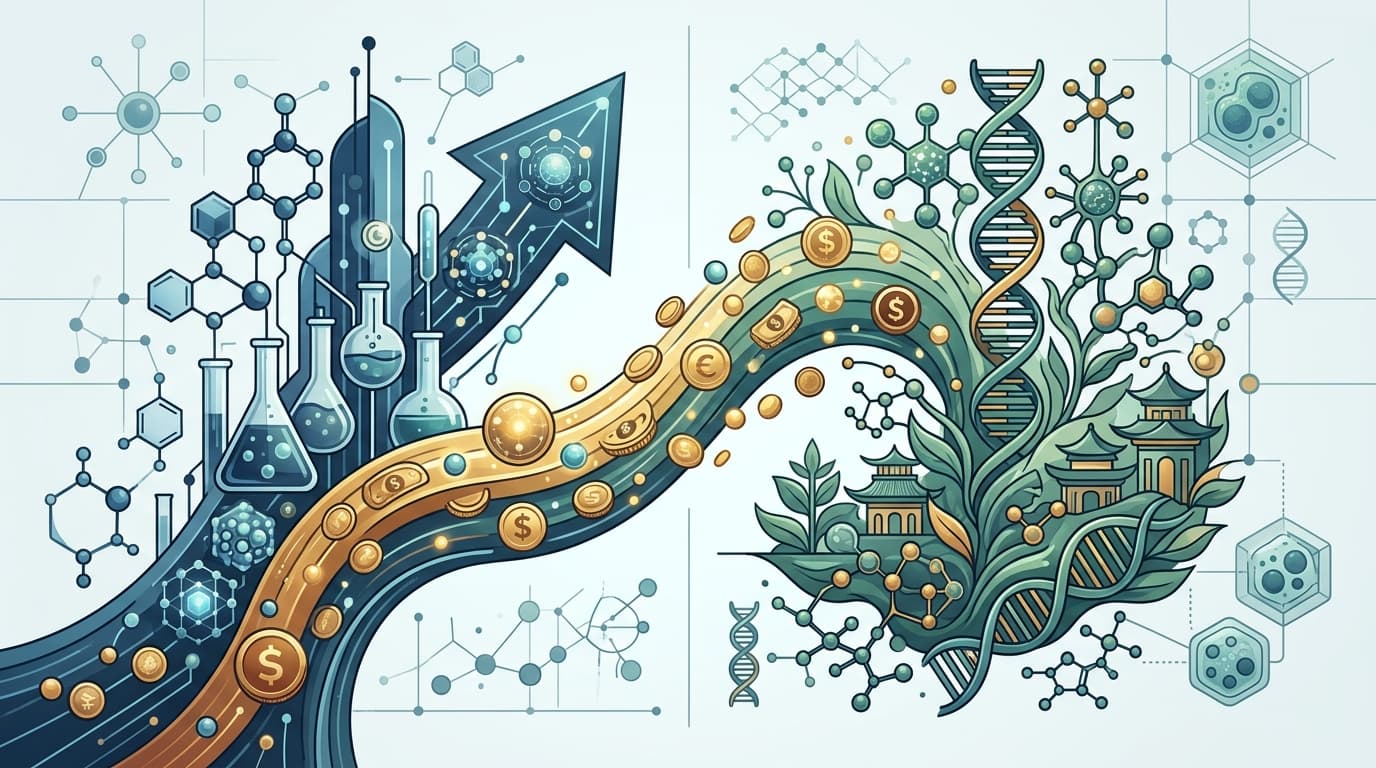
The structure is classic Big Pharma optionality. Haisco gets $87 million in upfront and near-term payments, which for Lilly is roughly what falls between the couch cushions. The real money sits in the back end: up to $2.97 billion in clinical, regulatory, and commercial milestones, plus single-digit tiered royalties on any future sales.
Think of it like buying options on five lottery tickets, where you only pay full price if one of them actually hits.
For some programs, Lilly gets exclusive worldwide rights. For others, Lilly takes everything outside Greater China (mainland China, Hong Kong, Macau, and Taiwan), while Haisco keeps the home turf. Neither company has disclosed which targets, which diseases, or which programs fall into which bucket. That level of vagueness at this dollar amount is… notable.
Haisco Pharmaceutical Group (ticker: 002653 on the Shenzhen exchange) is a specialty pharma company headquartered in Tibet. It's not a scrappy startup; the company has 45 products on the market and manufacturing bases across two Chinese provinces — Liaoning and Sichuan. Its sweet spots include anesthesia, pain management, diabetes drugs, parenteral nutrition (IV feeding solutions), and CNS therapies.
On the innovation side, Haisco has roughly 40 small-molecule drugs in development, with four assets in Phase 3. The company built its reputation on technically complex chemical drugs, particularly injectable formulations for hospital use. It launched China's with its own intellectual property, which earned it serious credibility at home.

ASCO 2026 kicked off with Bristol Myers Squibb unveiling pivotal myeloma data for its next-gen CELMoD drug and Pfizer flexing seven years of stunning lung cancer results. Opening day also delivered brain radiation breakthroughs and the first randomized multicancer blood test data.


Join thousands of biotech professionals who start their day with our free, daily briefing.
This is the first time Haisco and Lilly have worked together. For Haisco, landing a collaboration of this size with a top-five global pharma is a major credibility upgrade.
The Haisco deal didn't happen in a vacuum. Lilly has been on an absolute tear with external deals, and the strategy has a clear playbook: use Zepbound and Mounjaro cash to buy into promising science everywhere, especially in China.
Consider the recent scorecard. In February 2026, Lilly signed a $8.8 billion headline collaboration with Innovent Biologics (their seventh partnership) covering oncology and immunology. That same month, they locked in a peptide discovery deal with Zonsen PepLib Biotech. Earlier, they committed $115 million upfront to Insilico Medicine for AI-driven drug discovery, with milestones stretching to $2.75 billion.
And it's not just China. Lilly scooped up Scorpion Therapeutics' breast cancer program for up to $2.5 billion, grabbed SiteOne Therapeutics' non-opioid pain drug for up to $1 billion, and signed a $1.26 billion GLP-2 deal with South Korea's Hanmi for short bowel syndrome. In 2024 alone, internal R&D spending hit $11 billion.
The message is unmistakable: Lilly is building a pipeline empire, and it doesn't care which country the science comes from.
Of course, "China" and "$3 billion deal" in the same sentence raises eyebrows in Washington. The BIOSECURE Act, now folded into U.S. defense legislation, gives the government tools to restrict federal contracts with companies that rely on designated Chinese biotech firms. It targets mainly CDMO and CRO relationships (contract manufacturers and research organizations), and while a reworked version is less aggressive than the original proposal, it still casts a long shadow.
But the numbers tell a different story from the rhetoric. China-related licensing and M&A accounted for roughly 21% of total global industry deal value by late 2025, more than double the 9% share in 2022. Western pharma isn't decoupling from Chinese biotech; it's restructuring the relationship with more compliance paperwork.
Lilly appears to be navigating this carefully. The Haisco deal is structured so that Lilly leads all clinical development and commercialization outside China. Haisco does the early discovery work and, for certain programs, retains Chinese market rights. That territorial split keeps the most sensitive activities (late-stage trials, regulatory submissions, commercial launches in Western markets) firmly under Lilly's control.
From a financial perspective, this deal is a rounding error for Lilly in the near term. The $87 million upfront is tiny relative to a company generating tens of billions in revenue. The billions in milestones are contingent on programs advancing through clinical trials and reaching commercialization, a process that takes years.
Analysts are treating it as strategic optionality: low risk today, potentially high reward down the road. Five programs across multiple therapeutic areas create a portfolio effect. Even if three or four fizzle, one blockbuster could justify the entire investment.
The problem? Nobody outside Lilly and Haisco knows what these five targets actually are. No therapeutic areas disclosed. No timelines for first human studies. No mechanism of action details. For a deal with a $3 billion headline, that's an unusual amount of fog.
Some of that secrecy is competitive strategy (you don't broadcast your shopping list to rivals). Some of it is just the reality of discovery-stage science, where programs are still being defined. Either way, it means Wall Street can't model the deal's contribution with any precision, so it lands in the "unmodeled upside" drawer alongside a dozen other early-stage bets.
Lilly is playing a game that only a handful of companies can afford. It's spending $11 billion a year on internal R&D while simultaneously writing checks to partners across China, South Korea, the UK, and the U.S. The Haisco collaboration is one node in a sprawling network designed to ensure that no matter where the next breakthrough emerges, Lilly has a seat at the table.
For Haisco, the deal validates years of investment in small-molecule innovation. For Chinese biotech broadly, it signals that Western appetite for Chinese science isn't fading; it's just getting more lawyered up.
And for Lilly shareholders? It's another bet placed with house money from the obesity franchise. The real question isn't whether $87 million was worth spending. It's whether any of these five mystery programs will be worth the billions that come after.
Merck's antibody-drug conjugate sac-TMT just became the first ADC to beat chemotherapy on both overall survival and progression-free survival in advanced endometrial cancer. For patients who'd exhausted chemo and immunotherapy, this Phase 3 win could rewrite the treatment playbook.