
The FDA just approved a take-home autoinjector version of LEQEMBI, the Alzheimer's antibody that's been stuck in infusion centers. It could be the unlock Biogen and Eisai have been waiting for, but there's a catch.
Imagine you're diagnosed with early Alzheimer's disease. Your doctor prescribes a treatment that might slow the decline. There's just one catch: you need to show up at an infusion center every two weeks, sit in a chair for an hour, and do it all over again, indefinitely. For a disease that already makes logistics harder by the day.
That's been the reality for patients on LEQEMBI (lecanemab), the anti-amyloid antibody from Biogen and Eisai. It works by clearing sticky amyloid plaques from the brain, the protein clumps most associated with Alzheimer's progression. But the IV infusion requirement has been a massive speed bump for adoption.
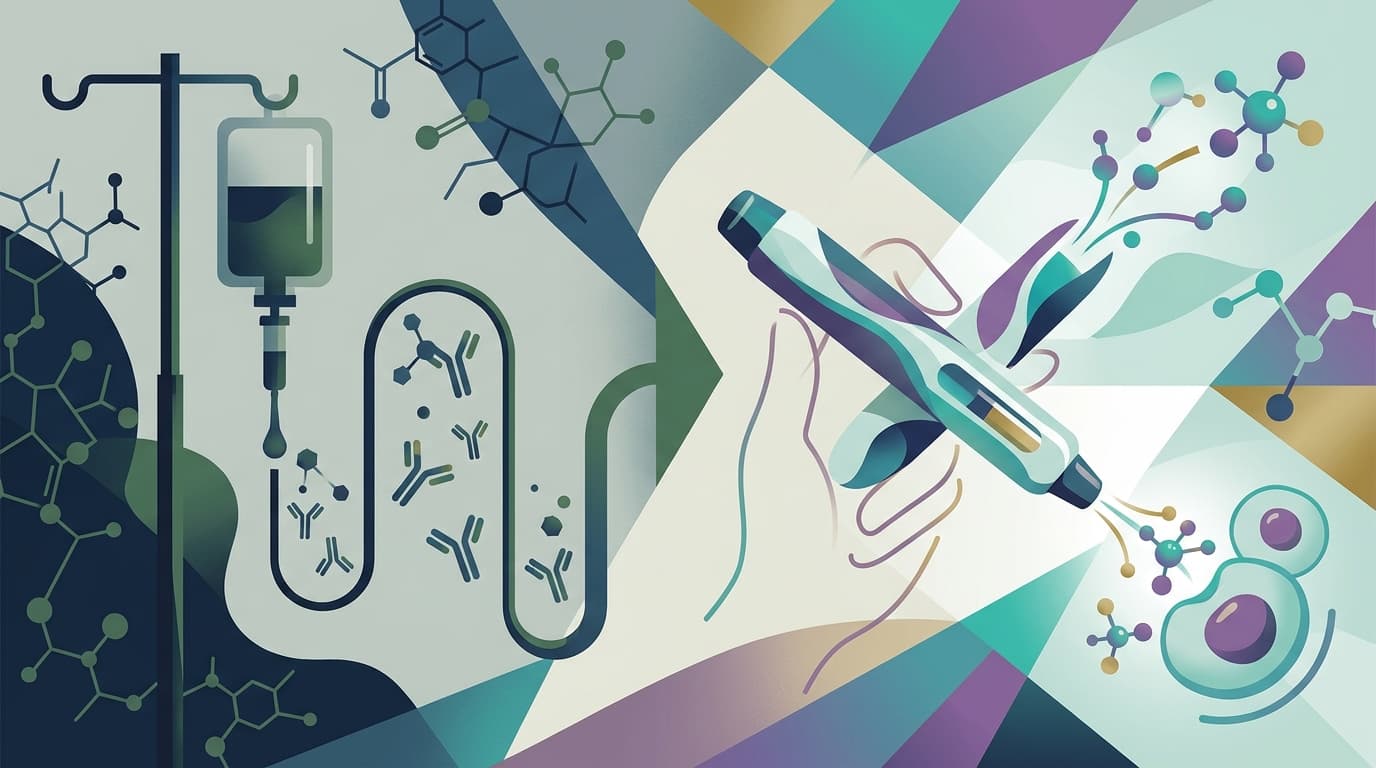
On July 13, 2026, the FDA approved a subcutaneous version called LEQEMBI IQLIK: a prefilled autoinjector that patients can use at home, once a week. Think of it as the difference between going to a restaurant every time you want coffee versus owning a Keurig. Same product, radically different experience.
This wasn't a simple rubber stamp. Eisai began a rolling submission in 2025 after receiving Fast Track status. The FDA initially granted a priority review, which typically means a faster decision. Then things got complicated.
The agency asked for additional information, classified it as a major amendment, and pushed the review deadline back by three months to August 24, 2026. Major amendments are the FDA's way of saying, "We need more before we can say yes." Eisai submitted the extra data on April 27 and April 30 of this year.
In the end, the FDA approved the product more than a month ahead of its extended deadline. The approved device is a 250 mg/1.25 mL single-dose prefilled autoinjector, with the starting regimen being 500 mg once weekly (two injections). Eisai expects U.S. availability through specialty pharmacies by late August 2026.
Switching from IV to subcutaneous only works if the drug gets into the body at roughly the same levels. This is where pharmacokinetic data comes in: basically, does the new delivery method put the same amount of drug in the bloodstream?

For patients with a rare liver disorder, life means waking up every few hours to eat raw cornstarch or risk a medical emergency. Ultragenyx's gene therapy DTX401 cut that dependence by 61% in trials, and the FDA's decision could open the floodgates for a whole new class of metabolic gene therapies.


Join thousands of biotech professionals who start their day with our free, daily briefing.
The answer, according to Eisai and Biogen's 2026 data: yes. The once-weekly 500 mg subcutaneous autoinjector produced a drug exposure ratio of 104% compared to the IV regimen (10 mg/kg every two weeks). The 90% confidence interval landed at 99.1% to 109%, comfortably inside the standard 80% to 125% bioequivalence window.
That exposure was also consistent across different body weights, which matters because a one-size-fits-all dose needs to work whether you're 130 or 230 pounds. Earlier data from 2023 had been encouraging, showing the subcutaneous version actually removed 14% more amyloid plaque than IV at six months. But the 2026 results sealed the deal for regulators.
Let's be honest: LEQEMBI's commercial performance has been a slow burn. Global quarterly revenue climbed from about ¥2.8 billion in Q1 2024 to ¥14.7 billion in Q4 2024. That's real growth, quarter over quarter. But Eisai kept cutting its sales forecasts. The company slashed its FY2024 projection from ¥56.5 billion to ¥42.5 billion by November 2024. It even lowered its FY2027 outlook to ¥250–280 billion, citing delayed U.S. uptake.
The bottlenecks weren't about the science. They were about the plumbing. IV infusion logistics, limited infusion-center capacity, physician hesitation about benefit-risk tradeoffs, and the sheer difficulty of identifying eligible patients early enough: all of these conspired to keep adoption below expectations. Broader Medicare coverage helped, but it didn't eliminate the friction.
A subcutaneous autoinjector attacks the biggest practical barrier head-on. No more scheduling infusion appointments. No more driving to treatment centers. The companies see this as a genuine inflection point, not just a nice-to-have.
Before you picture patients casually injecting LEQEMBI like insulin, there's an important asterisk. Anti-amyloid antibodies carry a real risk of ARIA (amyloid-related imaging abnormalities), which includes brain swelling and microbleeds. These side effects are often invisible without an MRI scan, and they can occasionally be serious or even life-threatening.
The risk is higher in people who carry the APOE ε4 gene variant, especially those with two copies. Symptoms can include headaches, confusion, dizziness, vision changes, and seizures. Regular MRI surveillance remains essential, particularly in the early months of treatment.
So while the autoinjector removes the infusion-center visit, it doesn't eliminate the need for brain imaging. Patients will still need periodic MRI scans, and that monitoring infrastructure remains a logistical consideration for doctors and health systems alike.
Lilly's rival Alzheimer's drug, Kisunla (donanemab), is still IV-only with monthly infusions. There's no publicly disclosed late-stage program for a subcutaneous Kisunla. Instead, Lilly appears to be betting on a different horse: remternetug, a next-generation anti-amyloid antibody in Phase 3 trials that includes both IV and subcutaneous arms.
That means LEQEMBI now has a first-mover advantage in the "treat Alzheimer's from your couch" category. How long that advantage lasts depends on how quickly Lilly's pipeline delivers, but for now, Biogen and Eisai have the only fully subcutaneous anti-amyloid treatment on the market.
Subcutaneous LEQEMBI is a commercial enabler, not a miracle cure for the drug's adoption challenges. Physician skepticism, early diagnosis rates, and MRI monitoring requirements aren't going away. But removing the IV burden is like taking the biggest rock out of a clogged pipe; everything behind it starts flowing faster.
For the more than 7 million Americans living with Alzheimer's, convenience isn't a luxury. It's the difference between starting treatment and never picking up the phone. Biogen and Eisai just made that call a lot easier to make.
A cardiac drug startup that didn't exist two years ago just raised $440 million in its Nasdaq debut. Braveheart Bio's blockbuster IPO headlined a billion-dollar week for biotech, and it all rides on a single heart drug.