Legend Biotech Just Went 6 for 6 With a CAR-T That Builds Itself
Legend Biotech's experimental in vivo CAR-T therapy hit a 100% response rate in six lymphoma patients, with no serious side effects and no factory required. Oppenheimer called it best-in-class and flagged Legend as a takeover target in biotech's hottest M&A space.
The Factory Is the Patient
Imagine ordering a custom car. You ship your engine to a factory overseas, wait weeks for it to be rebuilt, then hope it still fits when it comes back. That's basically how CAR-T therapy works today. Legend Biotech just showed there might be a radically simpler way.
The company reported that all six non-Hodgkin lymphoma patients treated at the higher dose of its experimental therapy, LB2501, responded. Five of those six had their cancer vanish entirely on imaging. No serious side effects. No neurotoxicity. And here's the kicker: the treatment required zero manufacturing outside the patient's body.
Oppenheimer analysts called it "potentially best-in-class" and "best-in-disease." They also said something that should make every pharma CEO's ears perk up: these results strengthen the case for Legend as an acquisition target.
How CAR-T Works (and Why It's a Pain)
Traditional CAR-T therapy is one of oncology's greatest innovations, but also one of its biggest logistical headaches. Doctors extract a patient's immune cells, ship them to a specialized facility, genetically reprogram them to hunt cancer, grow millions of copies, then ship them back and infuse them. The whole process takes weeks.
During that waiting period, patients with aggressive lymphoma can deteriorate fast. Some never make it to infusion day. And even when everything goes right, each batch is a unique product with its own quirks; potency, cell quality, and effectiveness vary from patient to patient.
Three CD19 CAR-T products are already approved for non-Hodgkin lymphoma: Yescarta, Kymriah, and Breyanzi. They work well for many patients. Yescarta and Breyanzi have both beaten standard chemotherapy plus transplant in head-to-head trials. But even the best of them only cures roughly 35 to 40% of patients with relapsed aggressive B-cell lymphoma, according to NCI expert estimates. Severe side effects like cytokine release syndrome (a dangerous inflammatory reaction) and neurotoxicity remain common.
Get tomorrow's biotech intelligence before your competitors.
Join thousands of biotech professionals who start their day with our free, daily briefing.
The field has long wondered: what if you could skip the factory entirely?
A Single Infusion, No Assembly Required
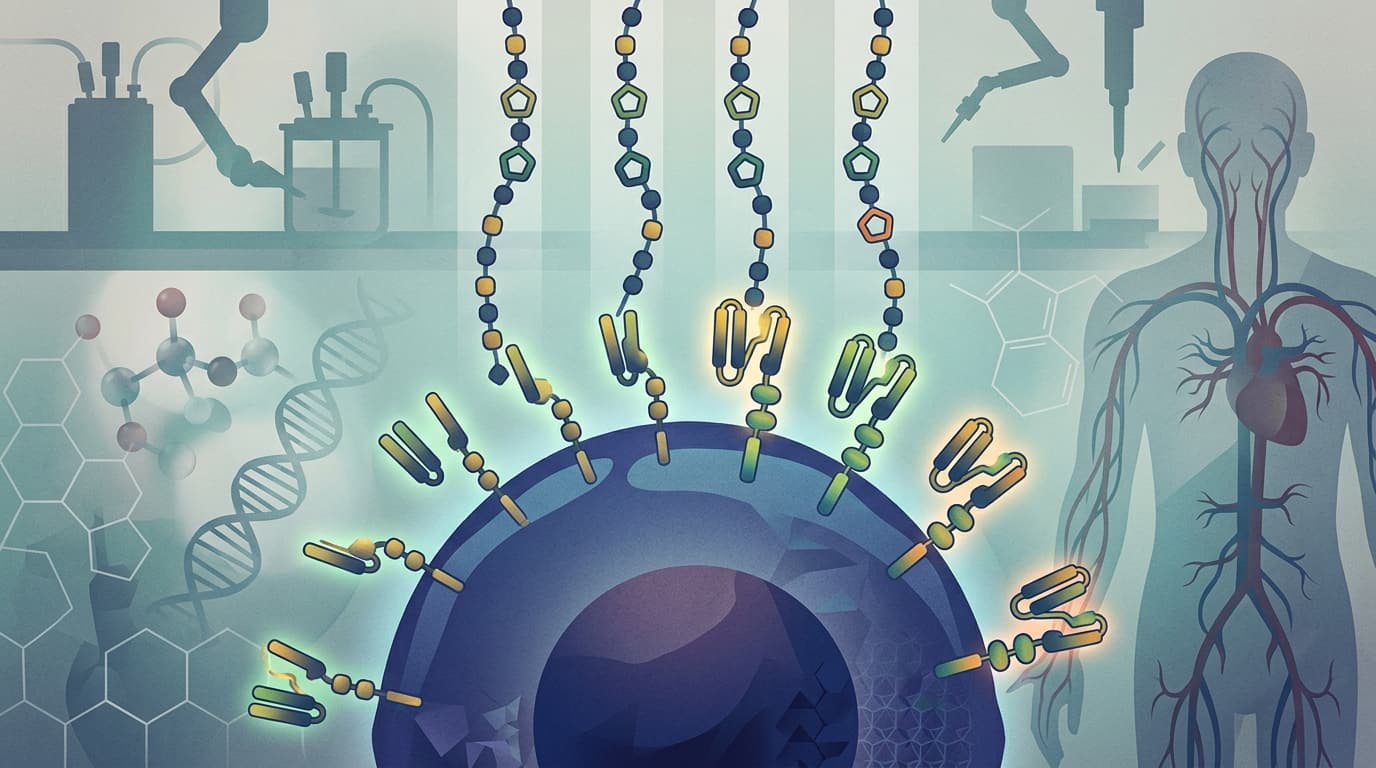
That's exactly what LB2501 attempts. Instead of removing cells, engineering them, and putting them back, Legend designed a lentiviral vector (think of it as a microscopic delivery truck carrying genetic instructions) that reprograms the patient's own T cells after a single IV infusion. The CAR-T cells build themselves inside the patient.
No leukapheresis. No shipping to a manufacturing site. No weeks of waiting. And in this trial, no lymphodepletion chemotherapy either, which is the harsh pre-treatment that traditional CAR-T requires to make room for the engineered cells.
The vector itself clears fast. Viral copies in the blood peaked right after infusion and dropped to undetectable levels within 24 hours. But the CAR-T cells it created? They stuck around for up to 116 days and counting.
The Numbers That Turned Heads
Legend tested LB2501 at two dose levels in 12 patients with relapsed or refractory B-cell non-Hodgkin lymphoma. The lower dose showed biological activity in five of six patients but no formal responses. At the higher dose, the story changed completely.
Every single patient responded. The overall response rate was 100%. The complete response rate (meaning no detectable cancer on scans) hit 83.3%, with five of six patients achieving that milestone. All responses were still ongoing at the April 2026 data cutoff.
On the safety side, the profile looked remarkably clean across all 12 patients. No dose-limiting toxicities. No serious adverse events. No neurotoxicity. Cytokine release syndrome showed up in about two-thirds of patients, but every case was mild (Grade 2 or lower). For context, traditional CAR-T therapies routinely send patients to the ICU with these same side effects.
The obvious caveat: six patients is a tiny number, and the median follow-up at the higher dose was just 2.2 months. Nobody knows yet whether these responses will last. Phase 1 trials are designed to test safety and find the right dose, not prove a drug works. But as proof-of-concept data goes, this is about as clean as it gets.
Why Big Pharma Is Circling
The in vivo CAR-T space has become one of biotech's hottest M&A arenas. Approximately $5 billion in in vivo CAR-T acquisition deals closed in 2025: AbbVie bought Capstan Therapeutics for $2.1 billion, AstraZeneca grabbed EsoBiotec for $1 billion, Gilead's Kite unit acquired Interius for $350 million, and BMS scooped up Orbital Therapeutics for $1.5 billion. Eli Lilly's Kelonia deal reportedly reached up to $7 billion.
Every major pharma player wants an in vivo CAR-T platform. And Legend just produced the splashiest clinical data any of these platforms have generated.
Oppenheimer explicitly connected the dots, noting that "positive in vivo CART data strengthens chances of LEGN acquisition." RBC Capital Markets separately noted that a successful in vivo product could achieve blockbuster sales while ex vivo products remain constrained by logistics.
The J&J Elephant in the Room
Legend isn't some pre-revenue startup. It already co-markets Carvykti, a blockbuster multiple myeloma CAR-T therapy, with Johnson & Johnson. Q1 2026 Carvykti revenue hit $597 million, putting it on an annualized pace well above $2 billion. J&J has guided to $5 billion or more in peak annual sales.
The two companies split profits 50/50 outside China, which makes J&J the most logical acquirer. Reports have surfaced that Legend received at least one takeover bid and hired Centerview Partners to advise its board. Analyst price targets range from $50 to $86 per share, while the stock recently traded around $25.
That said, not everyone thinks a deal is imminent. TD Cowen analyst Yaron Werber argued in 2025 that the economics didn't yet favor a J&J buyout, since Legend wasn't profitable at the time. By early 2026, that calculus is shifting: Legend's adjusted earnings per share in Q1 came in at negative $0.03, missing a consensus estimate of negative $0.02. The company is knocking on profitability's door.
What Comes Next
LB2501's Phase 1 trial is expected to complete around mid-2027, which means longer follow-up data and expanded cohorts are still months away. The big questions remain unanswered: Will these responses last? Can this approach scale to hundreds or thousands of patients? Will regulators view an in vivo vector differently than a manufactured cell product?
But the early signal is hard to ignore. A 100% response rate, a clean safety profile, and a delivery method that could turn CAR-T from a bespoke luxury into something closer to an off-the-shelf infusion. If the durability data holds up, LB2501 won't just be a new drug. It'll be a new paradigm.
And in biotech M&A, paradigms don't stay independent for long.
Clinical & Regulatory
4 min read
The First Toddlers Eligible for CRISPR Are Two Years Old
The FDA just approved a CRISPR gene therapy for kids as young as two, making Casgevy the first gene-editing treatment cleared for toddlers with sickle cell disease or beta thalassemia. The approval took just 53 days, and the implications stretch far beyond the 5,500 newly eligible children.