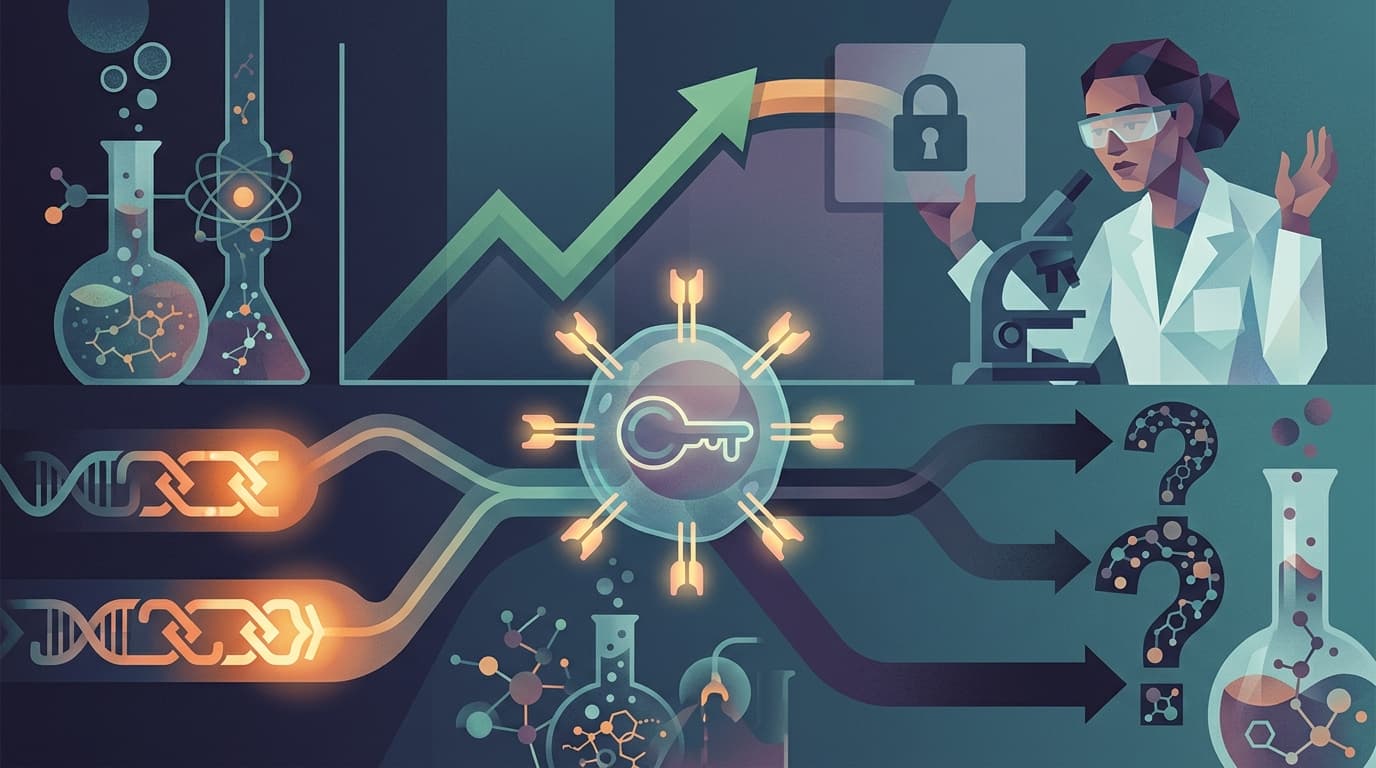

An oncology company just spun out a diabetes startup with $50 million and Eli Lilly's backing. Kura Oncology's creation of Caspian Therapeutics is one of the most creative dealmaking moves of the year, and the science behind it is surprisingly logical.
Imagine you're a pizza shop that's been perfecting its New York slice for a decade. One day, you announce you're spinning off a taco stand. With $50 million in funding. And Taco Bell's parent company is investing.
That's roughly what just happened in biotech.
Kura Oncology, a company built entirely around precision cancer drugs, just created a standalone diabetes company called Caspian Therapeutics. Caspian launched on September 8 with a $50 million Series A round that included Eli Lilly, the world's biggest player in diabetes and obesity. BVF Partners led the round, with the T1D Fund, Invus, and Montanova also chipping in.
Kura kept nearly half the new company, retaining about 49.2% ownership after putting in $4.3 million of its own cash. It also handed Caspian a drug candidate called KO-7246, plus all the related intellectual property and know-how it had been quietly developing on the side.
An oncology company birthing a diabetes startup sounds like a plot twist nobody saw coming. But the science actually makes it logical.
Kura's bread and butter is a class of drugs called menin inhibitors. In cancer, these drugs work by blocking a protein interaction that lets leukemia cells grow out of control. Kura's flagship drug, ziftomenib (branded KOMZIFTI), became its first commercial product in 2025 for certain types of acute myeloid leukemia.
But scientists noticed something interesting: the same protein, menin, also acts like a brake on the pancreas. Specifically, it holds back beta cells, the tiny factories in your pancreas that produce insulin. Block menin in the right way, and you could theoretically "take the brakes off" those beta cells, helping them multiply and pump out more insulin.
Think of it like discovering that the same wrench you've been using to fix engines also happens to be perfect for fixing plumbing. Different problem, same tool.

BMS's new GPRC5D-targeting CAR-T therapy met all its pivotal trial endpoints in multiple myeloma. But in an unusual move, the company refused to share the actual response rates. In a crowded CAR-T race, what you don't say can be louder than what you do.


Join thousands of biotech professionals who start their day with our free, daily briefing.

Kura's preclinical work showed that its next-generation menin inhibitor improved glucose control, boosted insulin production, reduced insulin resistance, and triggered selective beta-cell growth in models of Type 2 diabetes. That's a compelling set of results for a company that wasn't even trying to be in the diabetes business.
So if the science is promising, why didn't Kura just develop it internally? Because focus is a finite resource, especially in biotech.
Kura spent years building its identity around precision oncology. It partnered with Kyowa Kirin in 2024 to expand ziftomenib globally. Its entire commercial infrastructure, regulatory expertise, and investor story are built around cancer. Pivoting resources toward diabetes would have confused Wall Street and diluted the company's core mission.
The spinout structure solves this neatly. Kura gets to keep 49.2% of whatever Caspian becomes, without spending the hundreds of millions it would take to run diabetes clinical trials. Caspian gets a clean slate, dedicated funding, and the freedom to build a team focused entirely on cardiometabolic disease. And Kura even signed a services agreement to keep providing R&D and administrative support, plus it granted Caspian royalty-free licenses to the relevant patents.
It's the biotech equivalent of a band member going solo while the original group keeps touring. Everyone benefits; nobody has to break up.
The most interesting line on Caspian's cap table might be Eli Lilly's name. Lilly has been on a $27 billion manufacturing spending spree to meet demand for its weight-loss and diabetes injections. It's also been actively acquiring companies to fill pipeline gaps.
Lilly investing in a menin-inhibitor diabetes startup signals that the pharma giant sees something real in the science. It's not a huge financial commitment for a company of Lilly's size, but it's a strategic stamp of approval. When the biggest diabetes company on earth puts money behind your approach, people notice.
The T1D Fund's involvement is worth flagging too. That's a fund specifically focused on Type 1 diabetes therapies, suggesting Caspian's beta-cell regeneration story could have applications beyond Type 2.
Kura's move fits neatly into a broader pattern reshaping biotech dealmaking in 2025 and 2026. In a capital-constrained environment, companies are getting creative about monetizing non-core assets rather than letting them collect dust on the shelf.
The old playbook was simple: if you had a promising asset that didn't fit your strategy, you'd either license it out or let it die. The new playbook involves spinning assets into standalone companies, retaining meaningful equity, and letting outside investors foot the development bill. It's portfolio pruning meets venture creation.
We've seen this play out across the industry. GSK spent $10.6 billion to acquire Nuvalent's oncology assets. Merck, Gilead, and Biogen have all been buying late-stage, strategically relevant programs. Structured deal terms like milestones and earnouts are everywhere, helping buyers manage risk while sellers capture upside.
Kura's spinout is a variation on the theme: instead of selling to big pharma at a discount, create a new entity, attract strategic investors, and hold onto a chunk of the future value.
Wall Street's reaction was a collective shrug, at least on day one. Kura's stock dipped slightly on the announcement, closing at about $11.57 on September 10 (down 4.3%). Not exactly fireworks.
But the analyst community has been more constructive. TD Cowen's Phil Nadeau said the spinout could "offer shareholders opportunity for upside while reducing the downside risk.
BridgeBio Oncology pulled its lead KRAS drug out of the lucrative first-line lung cancer race, shrinking from a 200,000-patient opportunity to roughly 50,000. The stock dropped 24% in a single session, and the competitive fallout is just getting started.