The $32 Billion Drug Just Got a Rival From an Unlikely Tag Team
An Indian pharma company just licensed a Chinese-developed Keytruda copycat for the U.S. market, creating an unlikely supply chain aimed at the world's bestselling drug. With $32 billion in annual sales and patents starting to crack, the race to disrupt oncology's biggest cash cow is heating up.
A Route Nobody Saw Coming
Imagine ordering a package that ships from a factory in China, gets routed through India, and lands on your doorstep in the United States. That's basically what just happened in oncology.
Indian pharma giant Cipla, through its U.S. subsidiary InvaGen Pharmaceuticals, just locked up exclusive American commercialization rights for a copycat version of Keytruda, the world's top-selling cancer drug. The twist? The biosimilar, called QL2107, was developed by Qilu Pharmaceutical, a Chinese company. A China-to-India-to-U.S. pipeline for the crown jewel of immuno-oncology is not something anyone had on their bingo card.
The deal's financial terms weren't disclosed. But the strategic implications are loud.
Why Keytruda Is the Prize Everyone Wants
To understand why this matters, you need to understand Keytruda's gravity. Merck's pembrolizumab (the generic name for Keytruda) is the bestselling drug on the planet. Not the bestselling cancer drug. The bestselling drug, period.
In 2025, Keytruda pulled in roughly $31.7 billion in sales. That's nearly half of Merck's entire revenue. It treats dozens of cancer types, from lung to melanoma to bladder, and oncologists prescribe it like coffee at a Monday morning meeting.
A single three-week course costs about $12,000 at list price in the U.S. Multiply that across hundreds of thousands of patients, and you start to see why biosimilar makers are circling like sharks.
The Clock Is Ticking on Merck's Fortress
Keytruda's core U.S. patent is expected to expire around December 2028. That's when the floodgates could start to open, though "could" is doing a lot of heavy lifting in that sentence.
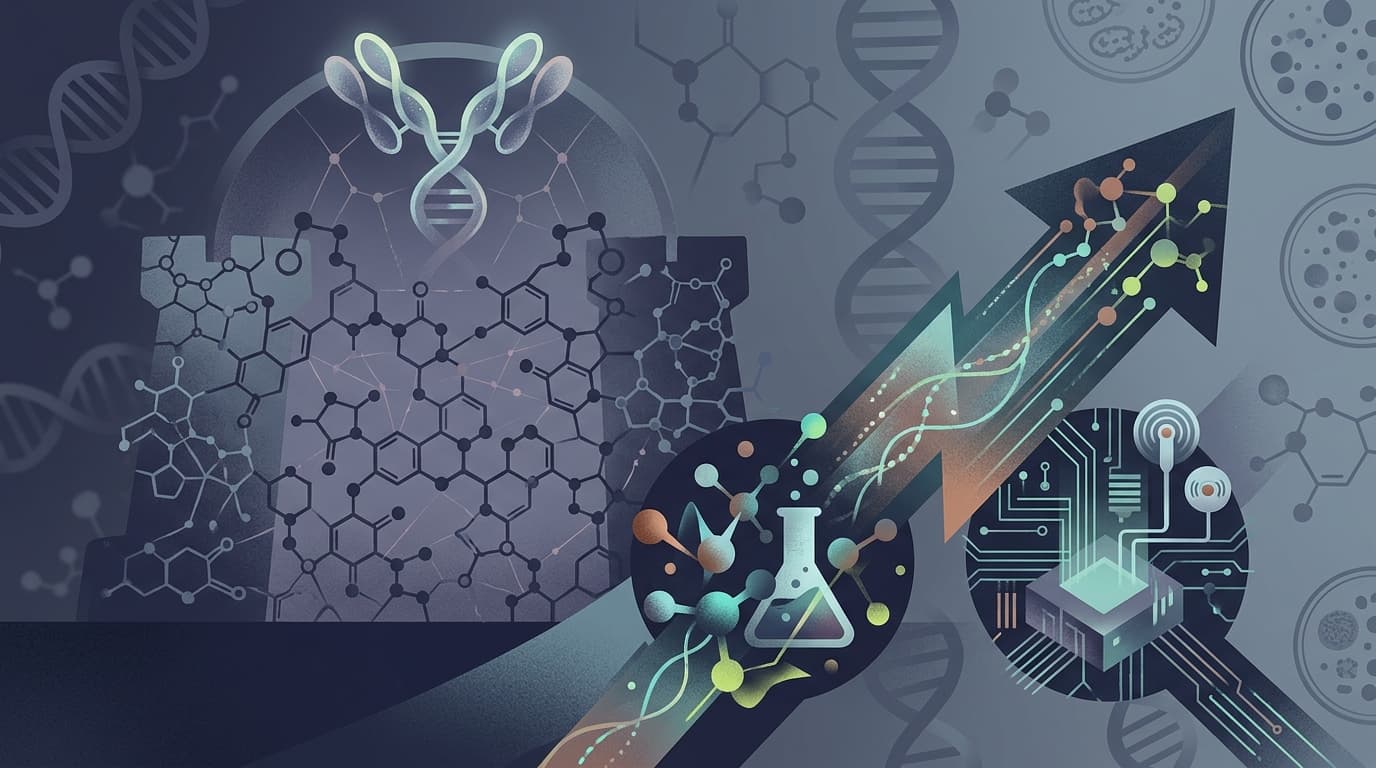
Merck hasn't been sitting idle. The company has built a sprawling patent wall around Keytruda, with method-of-making patents extending to May 2029, method-of-use patents stretching to November 2029, and additional claims that could push protection for certain aspects well into the 2030s. Think of it like a medieval castle: even after the front gate falls, there are moats, archers, and boiling oil to deal with.
Get tomorrow's biotech intelligence before your competitors.
Join thousands of biotech professionals who start their day with our free, daily briefing.
Still, the consensus view is that late 2028 or 2029 represents the most likely window for biosimilar entry. Cipla and Qilu are positioning for exactly that moment.
What a Biosimilar Actually Means Here
A biosimilar is essentially a near-identical copy of an existing biologic drug. Unlike generic pills (which are chemically identical to their brand-name counterparts), biologics are made from living cells and are inherently complex. So a biosimilar doesn't need to be a perfect clone; it needs to prove it's close enough in structure, function, and clinical performance that doctors and regulators consider it interchangeable.
The FDA reviews biosimilars through an abbreviated pathway (known as 351(k)) that requires analytical similarity and, in most cases, clinical studies confirming comparable results. It's a lower bar than proving a drug works from scratch, but it's still a real bar.
QL2107 is currently in Phase III trials, with a randomized, double-blind study in metastatic non-squamous non-small cell lung cancer. Primary completion is estimated around December 2026. No FDA filing has been publicly confirmed yet, which means this is still a pre-approval play.
The Odd Couple: Cipla and Qilu
The division of labor is clean. Qilu handles everything technical: development, regulatory filings, manufacturing, and supply. Cipla handles everything commercial: sales, marketing, and distribution in the U.S. market.
This structure makes more sense than it first appears. Qilu has the scientific chops and manufacturing capacity. Cipla, through InvaGen, already has a growing U.S. presence and knows how to navigate the American healthcare system. Neither company could easily do what the other brings to the table.
Cipla has been quietly building a U.S. biosimilar playbook. The company recently signed a deal with Tanvex BioPharma for NYPOZI, a filgrastim biosimilar (a drug that boosts white blood cell counts), with a U.S. launch expected soon. Management has said the plan is to add one to two biosimilars per year over the next five to six years, building a portfolio of around 10 products. QL2107 fits neatly into that escalation.
Can a Chinese Biosimilar Actually Clear the FDA?
This is the question skeptics will ask, and it's fair. Historically, Chinese-developed biologics haven't had a big presence in the U.S. market. But that's changing faster than most people realize.
In 2026, a Chinese drugmaker received FDA approval for an insulin glargine product that earned interchangeable biosimilar status, a first for a Chinese-developed insulin in the U.S. Separately, Henlius (another Chinese biotech) had its BLA for a bevacizumab biosimilar accepted by the FDA in January 2026. The pattern is clear: Chinese sponsors are moving from domestic-only development into real FDA participation.
The FDA doesn't grade on a curve based on where a drug was developed. If QL2107 meets analytical similarity standards, passes clinical comparability tests, and clears manufacturing inspections, its Chinese origin won't matter. The data is the data.
The Bigger Picture: Pricing Pressure Is Coming
Biosimilars aren't just about copying drugs. They're about breaking pricing power. When Keytruda's exclusivity starts to crack, the companies ready with approved biosimilars will be in position to offer oncologists and payers a cheaper alternative. Even a 20% to 30% discount on a $32 billion franchise would redirect billions in healthcare spending.
And it's not just biosimilars. The Inflation Reduction Act requires Medicare to negotiate Keytruda's price starting in 2029. Stack biosimilar competition on top of that, and Merck is facing a one-two punch.
The company isn't defenseless: its newer subcutaneous formulation, Keytruda Qlex, may carry its own patent protection and could serve as a lifecycle extension strategy. But the original IV product, which is the target for biosimilar developers, is the one generating most of today's revenue.
So What Does This All Mean?
Cipla and Qilu haven't won anything yet. QL2107 is still in Phase III, an FDA filing hasn't been announced, and Merck's patent wall remains formidable. The competitive field includes heavy hitters like Celltrion, Samsung Bioepis, Amgen, and Bio-Thera, all working on their own Keytruda biosimilars.
But the signal here is unmistakable. A China-developed, India-commercialized biosimilar targeting the world's biggest drug in the world's biggest market is no longer a hypothetical. It's a signed deal with a clinical program attached. The supply chain may be unconventional, but the destination is clear: the heart of U.S. oncology, where the real money is.
Merck's moat is still wide. But the boats are in the water.
6 min read
The Cancer Therapy That Killed Three People Who Didn't Have Cancer
Three patients with autoimmune diseases died in Novartis CAR-T trials, forcing the company to pause eight studies and the entire field to confront an uncomfortable question: can cancer's most powerful therapy ever be safe enough for diseases that aren't trying to kill you?