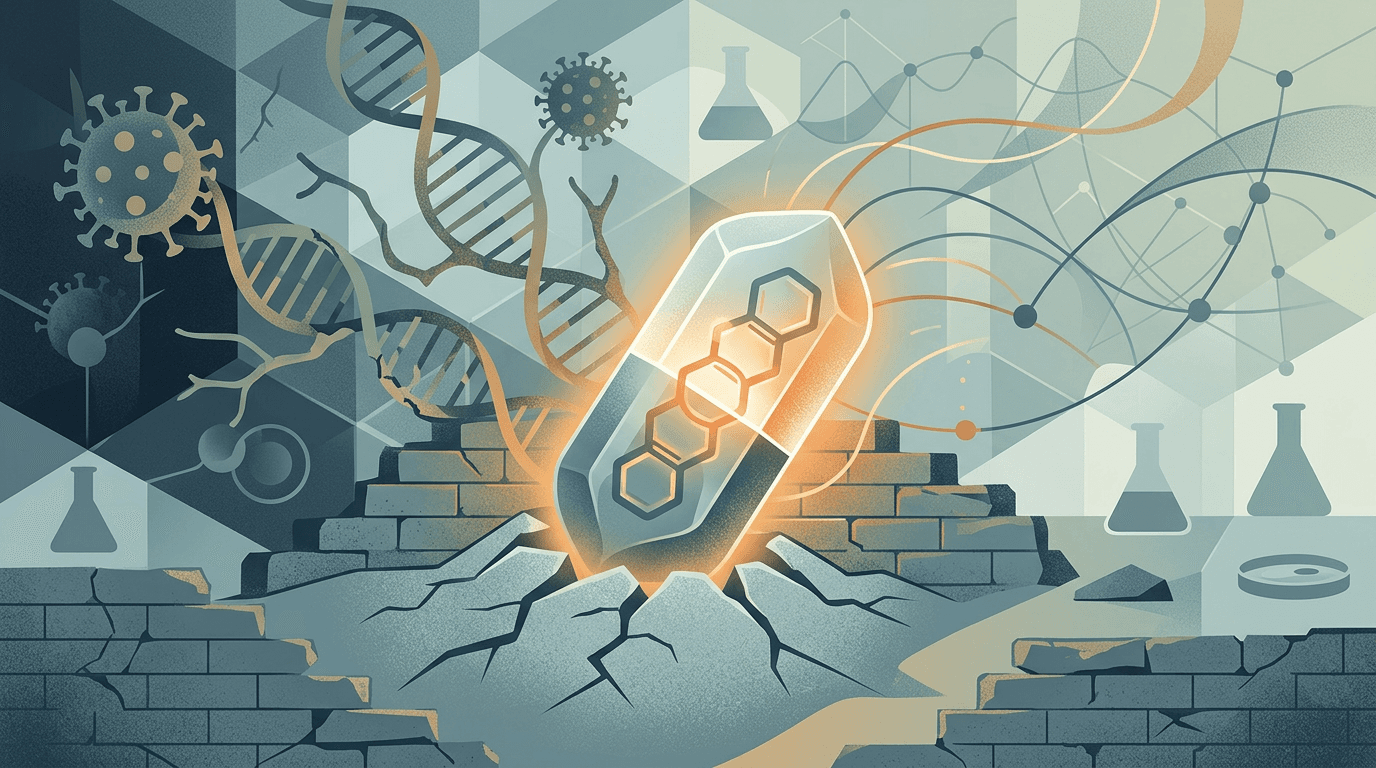

Johnson & Johnson is spending $1 billion on Firefly Bio, a biotech with zero drugs in clinical trials. The bet: a new hybrid drug class called degrader antibody conjugates that could finally crack KRAS-driven cancers. Bold move or expensive gamble?
Imagine buying a restaurant that hasn't opened yet, has no menu, and hasn't served a single customer. Now imagine paying $1 billion for it. That's essentially what Johnson & Johnson just did.
On June 8, J&J announced it would acquire Firefly Bio, a privately held biotech, for $1 billion in all cash. No milestones. No earn-outs. No contingent payments tied to future success. Just a clean, upfront billion-dollar check for a company whose entire pipeline is still in preclinical development. Not a single drug candidate has been tested in a human being.
So what exactly is J&J buying? A new type of weapon for one of oncology's oldest wars.
To understand this deal, you need to understand KRAS. It's a protein that acts like a broken light switch inside cancer cells, stuck permanently in the "on" position. It drives tumor growth in some of the deadliest cancers: pancreatic, colorectal, and lung. For decades, scientists called KRAS "undruggable" because they couldn't find a way to shut it off.
That started to change in 2021, when the first KRAS inhibitor, sotorasib, hit the market, followed by adagrasib in late 2022. They were genuine breakthroughs, but they came with serious limitations. They only work on one specific KRAS mutation called G12C, which represents a minority of KRAS-driven cancers. And even when they do work, responses are modest and resistance develops fast. Patients buy months, not years.
The bigger problem? Over 90% of pancreatic cancers carry KRAS mutations, but mostly the G12D and G12V varieties. Current approved drugs can't touch those. Yet most patients with KRAS-mutant tumors still lack a good targeted option.
J&J is betting that Firefly Bio has a fundamentally different approach.
Firefly's technology is called Firelink, and it belongs to a new class of drugs called degrader antibody conjugates, or DACs. Think of it as a mashup of two existing drug types, combined into something neither could be alone.

A drug that was nearly killed by its own toxicity just posted Phase 3 results for the first-ever once-weekly oral HIV pill. Merck and Gilead's comeback story could reshape how millions of people manage the virus.

Join thousands of biotech professionals who start their day with our free, daily briefing.
The first parent: antibody-drug conjugates (ADCs). These are antibodies (proteins that find specific cells) carrying a toxic payload. The antibody finds the tumor cell, latches on, gets pulled inside, and releases its poison. ADCs have become one of oncology's hottest drug classes. The catch? Their payloads are indiscriminate cell-killers. If even a little bit leaks into healthy tissue, bad things happen.
The second parent: PROTACs and other protein degraders. Instead of blocking a disease-causing protein, these molecules tag it for destruction. They recruit the cell's own garbage disposal system (the proteasome) to chew up the target. The beauty is that they work catalytically: one degrader molecule can destroy many copies of the target protein, like a key that opens the same lock over and over. The problem? As standalone pills, they're hard to deliver precisely to tumors and tend to degrade the target everywhere in the body.
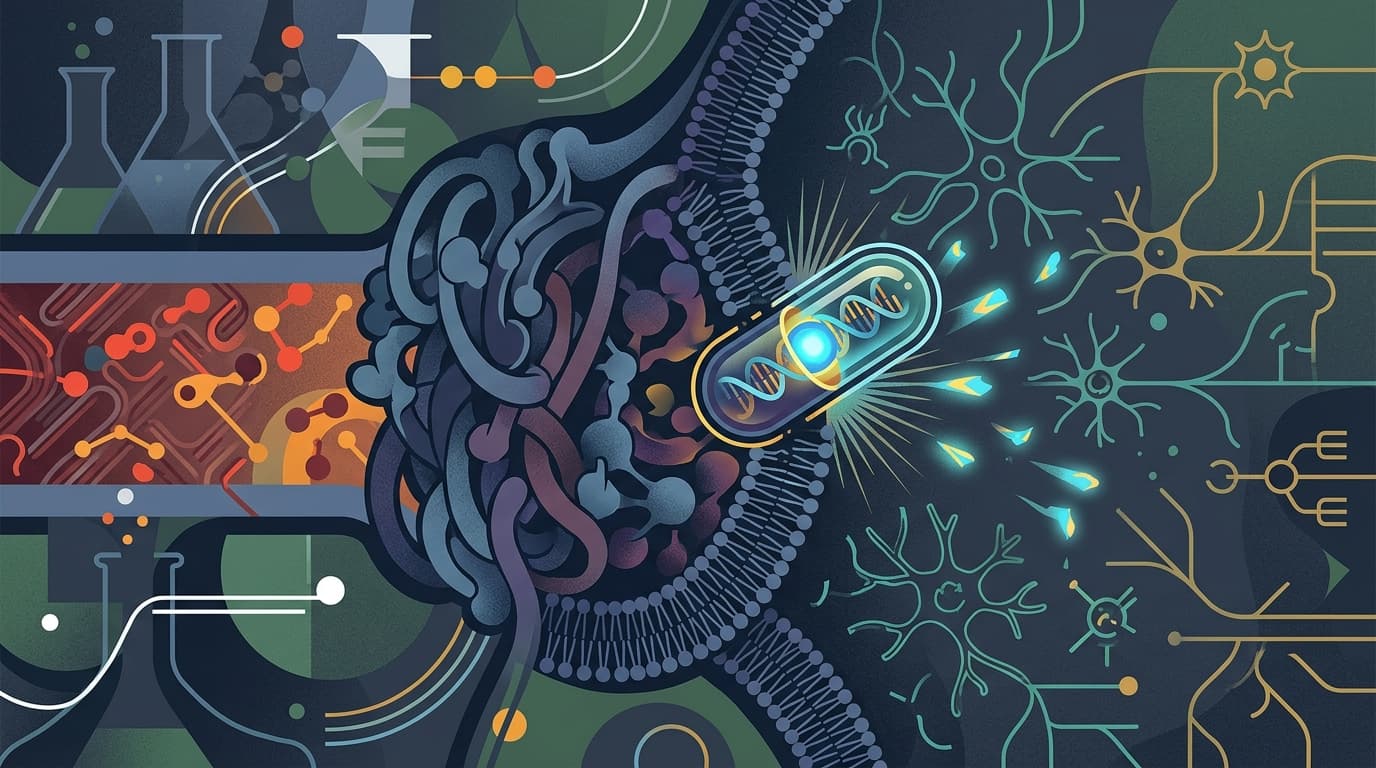
A DAC takes the best of both. It uses an antibody to deliver a protein degrader specifically to tumor cells. The antibody provides the GPS coordinates; the degrader does the demolition. You get cell-type selectivity and protein-level selectivity, a double layer of precision that neither ADCs nor PROTACs offer alone.
Firefly claims its preclinical data show tumor shrinkage at very low doses after a single administration in animal models. That's encouraging, but let's be clear: mice are not people.
This isn't J&J buying one cool thing on impulse. It's the third major oncology acquisition in roughly 18 months, and the pattern is unmistakable.
In early 2024, J&J agreed to buy Ambrx Biopharma for about $2 billion, picking up a next-generation ADC platform built on synthetic biology. Then in late 2025, it closed the $3.05 billion acquisition of Halda Therapeutics, gaining an oral cancer-killing platform called RIPTAC that uses proximity-based mechanisms to selectively destroy tumor cells. Halda's lead drug, HLD-0915, is already in clinical testing for prostate cancer.
Now Firefly adds the DAC piece. Together, these three deals represent over $6 billion spent building a toolkit of complementary approaches: next-gen ADCs, oral proximity-based killers, and antibody-delivered degraders. All aimed at hard-to-treat solid tumors. All acquired from outside rather than built internally.
J&J is essentially assembling a modular weapons system for oncology, buying each component from specialists rather than trying to invent everything in-house.
Is this a genius move or an expensive science experiment?
Analysts are calling the deal a strong industrial validation of DACs as a modality. One billion dollars from a pharma giant sends a clear signal that this isn't fringe science. Some commentators compare it to the early ADC deals of a decade ago, when big pharma started placing bets on antibody-drug conjugates before the technology was fully proven. Those early bets eventually produced blockbusters.
But the risks are real and unavoidable. No Firelink candidate has entered a clinical trial. The leap from preclinical models to human patients is littered with failures. Fundamental questions remain unanswered: Will the degrader payload release properly inside human tumors? Will catalytic degradation translate into meaningful, durable tumor responses? Will there be unexpected toxicity, given that KRAS plays roles in healthy tissues too?
Firefly Bio was originally incubated by Versant Ventures and raised a $94 million Series A in 2024 with backing from Eli Lilly, among others. Going from a $94 million fundraise to a $1 billion exit in roughly two years, with no clinical data, is a remarkable return for early investors. It also tells you how much heat the DAC space is generating.
The broader significance is what this deal says about where oncology drug development is heading. The industry is moving past "one drug, one target" toward platform-based strategies that combine delivery mechanisms with novel biological payloads.
DACs sit at the intersection of two mega-trends: the ADC explosion and the protein degradation revolution. If they work, they could unlock targets that have resisted every other approach. If they don't, J&J will have spent a billion dollars on a very expensive lesson.
The deal is expected to close later in 2026, pending regulatory approvals. When it does, the real work begins: turning preclinical promise into clinical proof, one patient at a time. J&J has placed its chips on a technology the world has never seen work in humans.
Sometimes that's how billion-dollar drug classes are born. Sometimes it's just a billion dollars.
Inhaled insulin flopped spectacularly with adults. Now MannKind's Afrezza just became the first needle-free mealtime insulin approved for kids, targeting a population where needle fear isn't just annoying — it's clinically dangerous.