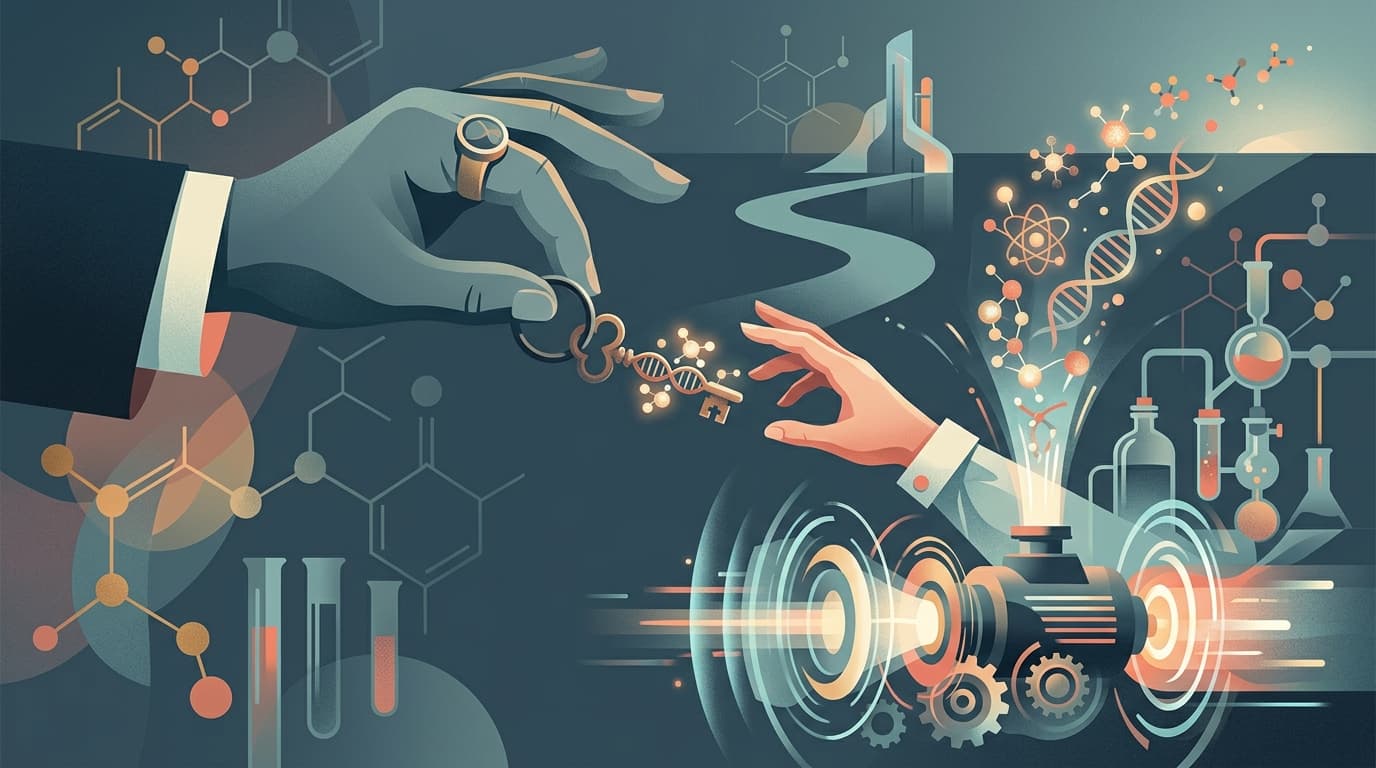
J&J Handed Back the Keys. This Tiny Biotech Just Started the Engine.
J&J paid $245 million for rights to a CAR-T therapy, then quietly handed them back. Now the tiny biotech that made it just got FDA clearance to start U.S. trials, armed with early data that might make you do a double-take.
The Breakup That Turned Into a Glow-Up
Imagine getting dumped by the biggest player in town, then immediately landing your dream job. That's basically what just happened to AbelZeta.
In July 2026, Johnson & Johnson returned global rights to a promising CAR-T therapy called prizlon-cel (also known as C-CAR039) back to the small biotech that created it. Weeks later, AbelZeta announced something that flipped the narrative entirely: the FDA cleared its IND application to start U.S. clinical trials for the very same drug. IND clearance is the FDA's green light to begin testing a therapy in human patients on American soil.
One door closed. A bigger one opened.
A $245 Million Handshake That Didn't Last
The backstory matters here. Back in May 2023, J&J paid $245 million upfront for exclusive rights to prizlon-cel (and another CAR-T asset) outside of Greater China. That's serious money, the kind of check that signals a pharma giant sees blockbuster potential. By December 2023, J&J even amended the deal to grab an option on China rights too.
So what changed? J&J decided to clean house.
The company has been pulling back from autologous CAR-T programs in lymphoma throughout 2026, discontinuing both its CD20 mono CAR-T and a CD19/CD20 bispecific CAR-T candidate. The reasoning, according to J&J: portfolio priorities and an "evolving lymphoma treatment landscape." Translation: the company wants to concentrate its firepower on fewer, higher-conviction bets.
J&J still has Carvykti, its commercial CAR-T therapy for multiple myeloma, firmly in the lineup. And it signed a 2025 collaboration with Kelonia Therapeutics on in vivo CAR-T approaches (a newer, potentially more scalable format). The signal is clear: J&J isn't leaving cell therapy. It's just being pickier about which horses to ride.
AbelZeta's Ace in the Hole
For AbelZeta, this isn't a consolation prize. It's the whole trophy.
The Rockville, Maryland and Shanghai-based company now controls for prizlon-cel worldwide. No partner dependencies. No committee approvals from a pharma behemoth. Full autonomy.
Get tomorrow's biotech intelligence before your competitors.
Join thousands of biotech professionals who start their day with our free, daily briefing.
all development, regulatory, manufacturing, commercialization, and out-licensing rights
And the early data backing up their confidence? It's genuinely eye-catching. In a China-based study of 48 patients, prizlon-cel delivered an overall response rate of 91.5% and a complete response rate of 85.1%. For context, a complete response means the cancer became undetectable. That's not incremental improvement; that's the kind of number that makes oncologists sit up in their chairs.
Perhaps even more striking: the median progression-free survival hit 60.1 months. That's more than five years before the cancer came back (on average). In relapsed or refractory large B-cell lymphoma (LBCL), where patients have already failed prior treatments, five years of disease control is remarkable.
Two Shots on Goal
AbelZeta isn't aiming at just one patient population. The company is working with the FDA to finalize protocols for two distinct groups: third-line-or-later LBCL patients who've already been treated with CAR-T, and second-line LBCL patients who've never received CAR-T before.
That dual-track approach is smart for a couple of reasons. The post-CAR-T population represents one of the hardest clinical challenges in oncology: patients whose cancer came back even after receiving the most advanced therapy available. If prizlon-cel works there, it would carve out a niche that existing products haven't conquered.
The CAR-T-naïve second-line population, meanwhile, is a much bigger commercial market. It's the difference between opening a restaurant in an alley versus on Main Street. AbelZeta wants both addresses.
Walking Into a Crowded Room
Let's be honest about what AbelZeta is up against. The U.S. lymphoma CAR-T market already has established players, and they aren't sleeping.
Yescarta (from Gilead/Kite) is the dominant force in aggressive lymphoma, and a February 2026 label expansion into primary CNS lymphoma gave it a unique foothold. Breyanzi (Bristol Myers Squibb) has the broadest approved indication set of any CD19 CAR-T, covering everything from large B-cell lymphoma to CLL/SLL and marginal zone lymphoma. Kymriah (Novartis), the original FDA-approved CAR-T, still holds its ground on long-term durability data, though its competitive position has narrowed.
Pricing adds another layer of complexity. Wholesale costs for these therapies range from roughly $503,000 to $594,000 per treatment, and total costs climb higher once you factor in hospital stays, monitoring, and side-effect management. That's a market where reimbursement logistics can matter as much as clinical results.
For prizlon-cel to carve out meaningful share, it'll need more than good data from 48 Chinese patients. It'll need a large, well-designed U.S. trial that shows it can compete head-to-head (or at least hold its own) against therapies that have years of real-world evidence behind them.
The Little Company That Could (Maybe)
AbelZeta is not a household name. Founded around 2009 and led by Bizuo (Tony) Liu as Chairman and CEO, the company rebranded from CBMG Holdings in late 2023 after spinning off its stem-cell business. It raised $120 million in a Series A round back in 2021, with investors including Alumni Ventures and EastBridge Investment Group. The company says it had 13 ongoing clinical studies at the time of its rebrand.
This is a small biotech going up against entrenched giants with billion-dollar commercial machines. That's a David-and-Goliath story, and we all know how the crowd wants that to end.
But let's temper the fairy tale with some realism. Running U.S. CAR-T trials is extraordinarily expensive. Manufacturing autologous cell therapies (where each patient's own cells are collected, engineered, and infused back) is logistically brutal. AbelZeta will need significant capital, operational expertise, and probably a commercialization partner before this therapy ever reaches an American patient outside a clinical trial.
What This Really Tells Us
The bigger story isn't about one drug or one company. It's about a pattern.
Big pharma is getting more selective with its CAR-T bets, trimming programs that don't fit neatly into streamlined portfolios. Meanwhile, smaller biotechs are picking up those assets and betting they can do more with less. AbelZeta now owns a therapy that J&J once paid $245 million to access, and it has FDA clearance to start proving its worth in the U.S.
Whether this turns into a Cinderella story or a cautionary tale depends entirely on what happens in the clinic. The data from China is a promising opening chapter, but American regulators will want their own evidence. AbelZeta has the keys now. The question is whether they can actually drive.
Clinical & Regulatory
4 min read
An LSD Pill Just Aced a Late-Stage Anxiety Trial. Yes, Really.
An LSD-derived pill just posted the first positive Phase 3 result for any psychedelic-derived anxiety therapy, beating Wall Street expectations with a 5.4-point improvement over placebo. With a second pivotal trial reading out in weeks, the most stigmatized molecule in psychiatry is suddenly knocking on the FDA's door.