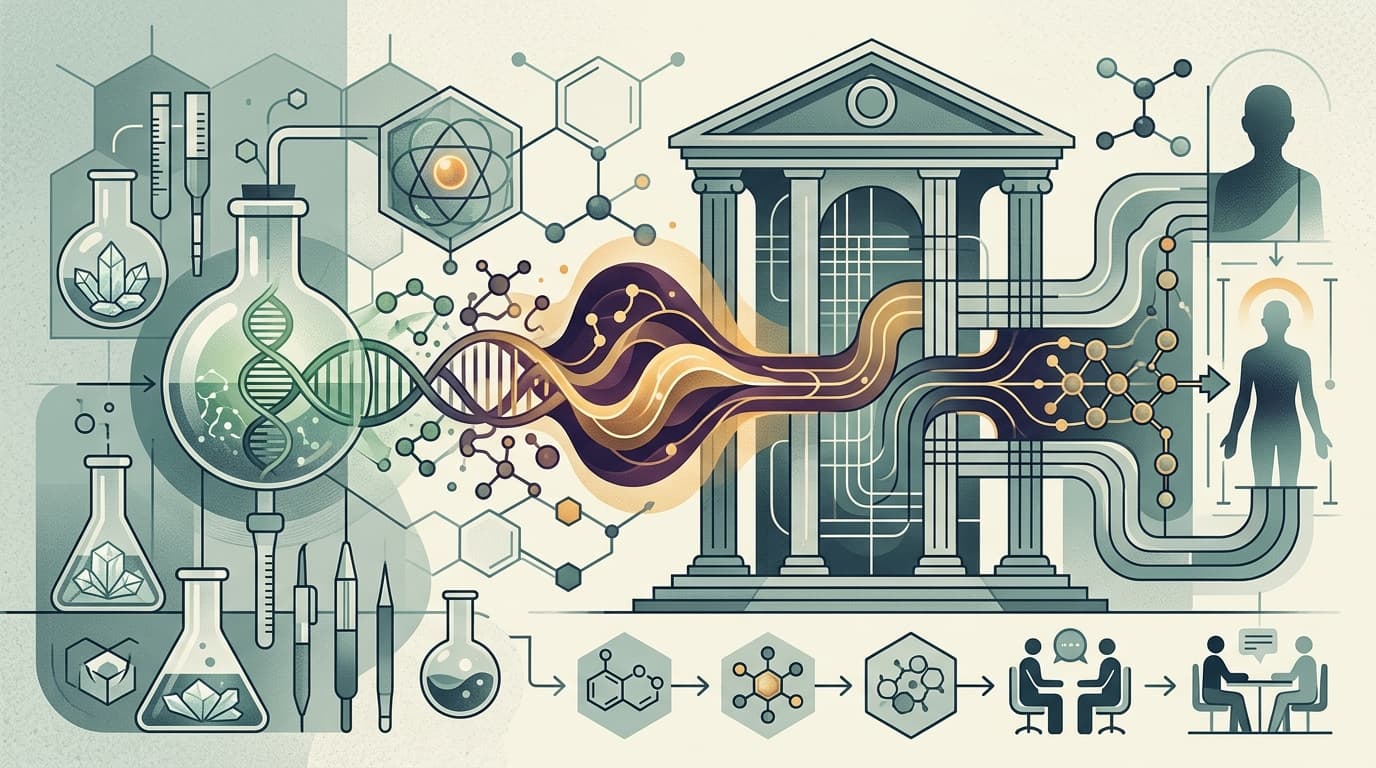

Insilico Medicine and Bora Pharmaceuticals just announced a potential $2.5 billion AI alliance, but it's not about discovering drugs. It's about completely rethinking how they're manufactured. Welcome to AI's next frontier in pharma.
Most AI-pharma deals follow the same script. An AI company discovers a molecule, licenses it to a big pharma partner, and collects milestone checks along the way. Discovery in, royalties out. Rinse and repeat.
Insilico Medicine just flipped that script entirely.
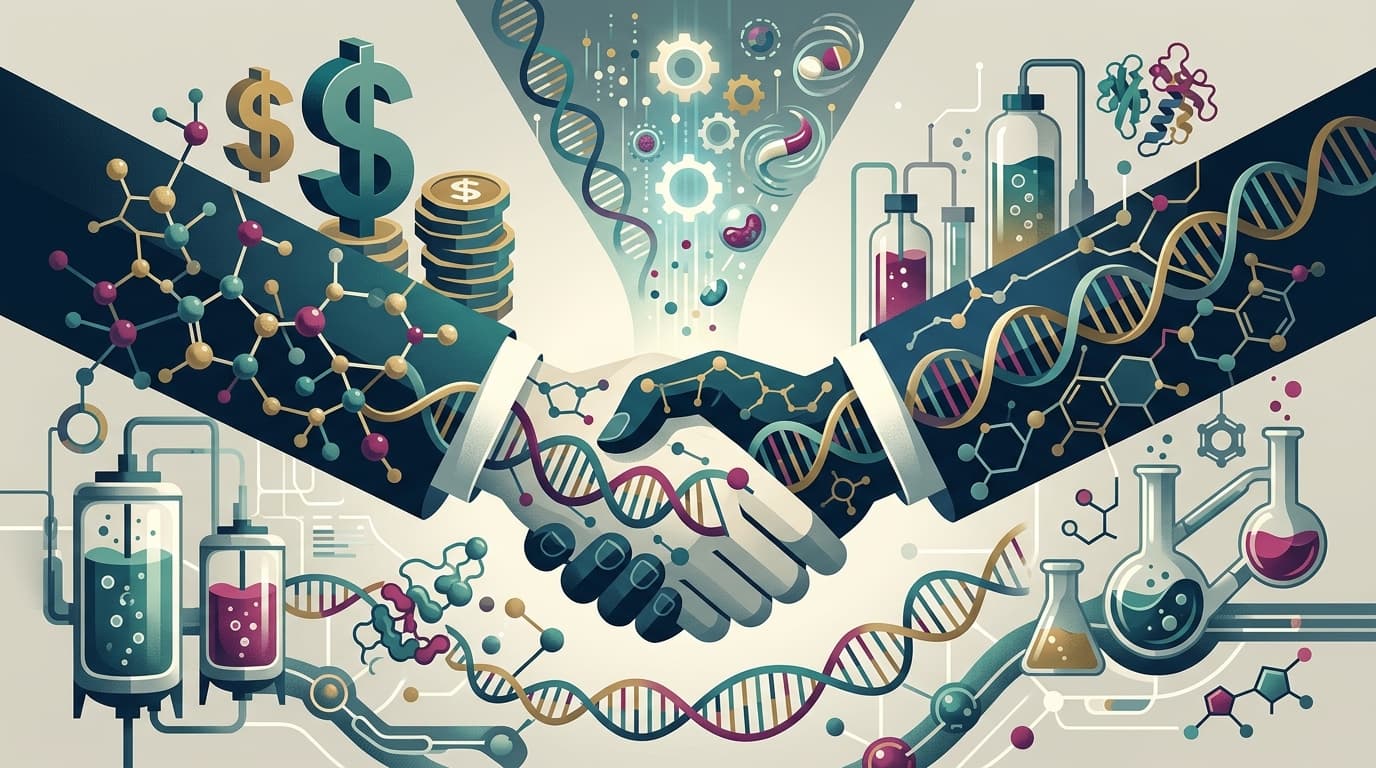
The Hong Kong-listed AI drug discovery company announced a strategic alliance with Bora Pharmaceuticals, a Taiwan-based contract manufacturer, in a collaboration that could be worth more than $2.5 billion if fully implemented. But this isn't about finding new drugs. It's about making them better, faster, and cheaper.
Think of it this way: if most AI-pharma deals are about writing the recipe, this one is about redesigning the kitchen.
Let's be precise here, because the headline number deserves some context.
The $2.5 billion figure is a theoretical ceiling, not an upfront check. The collaboration is described as a "proposed multi-target strategic alliance," and the two companies haven't even finalized their definitive agreements yet. No upfront payment has been disclosed. No milestone schedule. No royalty rates. The companies themselves say the scope and operating framework will be "refined over time."
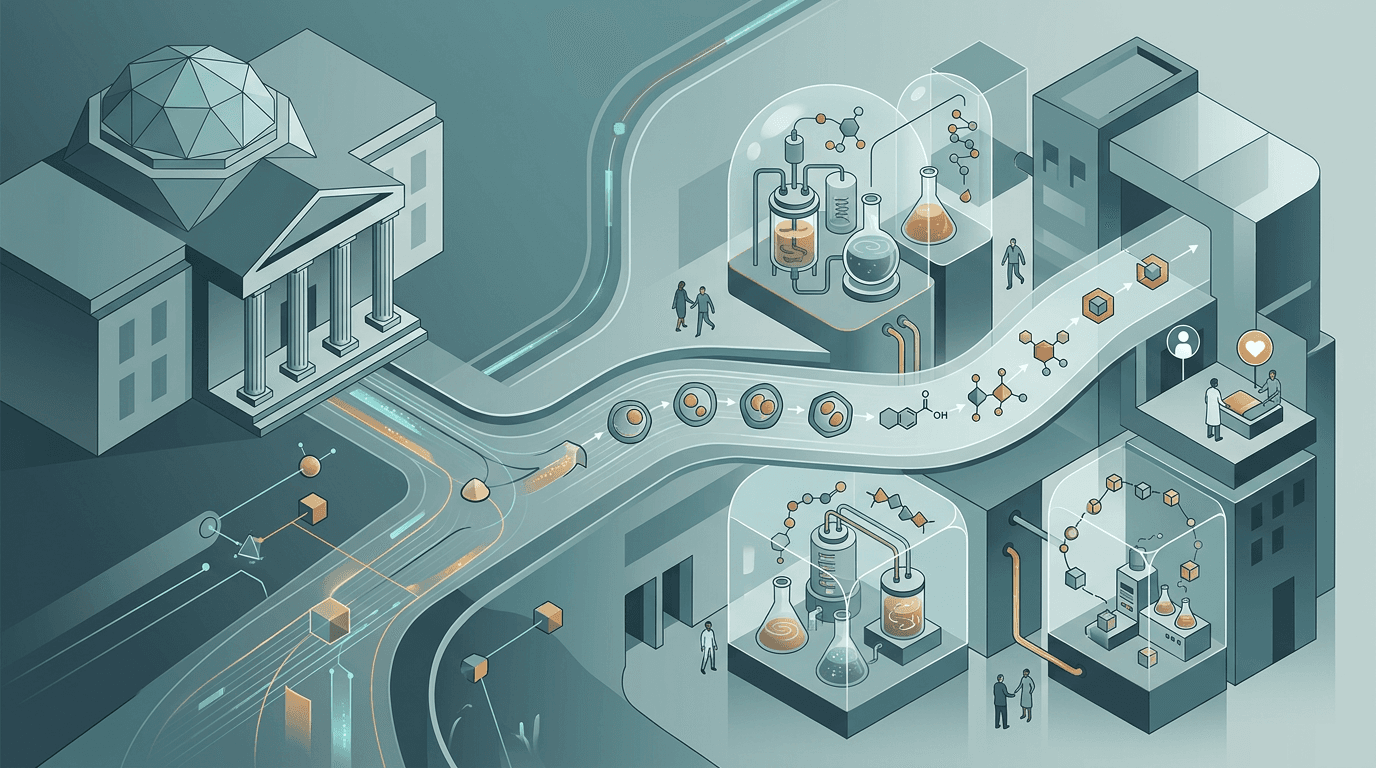
So what is on the table? Insilico will plug its Pharma.AI platform (the same system it uses to discover drug targets, design molecules, and optimize candidates) into Bora's global manufacturing and development operations. The goal: apply AI and automation to everything from process optimization and quality control to supply chain logistics and workforce training.
Bora, for its part, brings serious infrastructure. The company operates nine to ten cGMP manufacturing facilities across Taiwan, the United States, and Canada. It's the largest pharmaceutical manufacturer in Taiwan by volume, exporting to more than 100 countries. It handles everything from complex oral tablets to biologics, with regulatory approvals from the FDA, MHRA, Health Canada, and a dozen other agencies.

The FDA just finalized its guidance for psychedelic clinical trials, covering everything from psilocybin study design to how many monitors need to be in the room during a dosing session. It's the clearest regulatory roadmap the field has ever had, and it could put the first approved psychedelic on the market by early 2027.


Join thousands of biotech professionals who start their day with our free, daily briefing.
Bora CEO Bobby Sheng framed the partnership as positioning his company "at the forefront of AI-enabled pharmaceutical development and manufacturing."
For years, AI in pharma has been synonymous with one thing: drug discovery. Find a target. Design a molecule. Get to the clinic faster. And companies like Insilico have gotten very good at that. Their lead candidate, Rentosertib, is an AI-designed drug for a serious lung disease called idiopathic pulmonary fibrosis (IPF), and it's already moving into Phase III trials in China. The company now has roughly 10 programs in clinical development and 13 assets with regulatory clearance to begin human testing.
But here's the thing the industry is starting to realize: discovering a drug faster doesn't help much if manufacturing it still takes forever.
The factory floor has been one of pharma's most stubborn bottlenecks. Process optimization, quality checks, batch reviews, equipment maintenance; these are still heavily manual, deeply regulated, and painfully slow. A single batch deviation can cost weeks. A quality failure can cost millions.
AI is starting to change that, though mostly in piecemeal fashion. Pfizer has reported a 20% throughput increase from AI-powered manufacturing processes and is targeting a 10% boost in product yield. Moderna leaned heavily on AWS-powered AI and automation to scale COVID vaccine production at record speed.
But those are internal projects at mega-cap pharma companies. The Bora-Insilico alliance is different because it tries to bake AI into a contract manufacturer's core operations, potentially creating a replicable model that could serve dozens of drug sponsors.
Insilico has been on a deal-making tear. The company inked a partnership with Eli Lilly worth up to $2.75 billion, including $115 million upfront. It signed a $2.5 billion neuroimmune deal with SK Biopharmaceuticals (with up to $18 million in near-term payments and single-digit royalties). There's also a $600 million Takeda collaboration and an $888 million oncology deal with Servier.
All of those follow the traditional playbook: Insilico's AI discovers molecules, the partner develops and sells them, and both sides split the economics.
The Bora deal breaks the mold. It's not about any single drug candidate. It's a horizontal platform play that stretches across discovery, development, manufacturing, quality systems, and corporate operations. That breadth is both its greatest promise and its biggest risk.
Skeptics have legitimate reasons to pump the brakes.
First, applying AI in GMP manufacturing (the tightly regulated environment where drugs are actually produced) is far harder than applying it in a research lab. Every algorithm that touches a production line needs regulatory validation. Every automated decision needs documented oversight. The compliance bar is high.
Second, the alliance is intentionally open-ended. That's strategic flexibility for the companies, but it's uncertainty for everyone else. Without knowing how many programs will launch, what the milestones look like, or when definitive agreements will be signed, it's impossible to model the deal's real financial impact. Most analysts will treat this as a framework agreement with long-term optionality, not a near-term revenue driver.
Third, there's the execution challenge of cultural transformation. Insilico isn't just deploying software; it's pledging to build AI capabilities across Bora's global workforce and "enhance AI literacy" throughout the organization. Anyone who's tried to digitize a traditional manufacturing operation knows that the technology is often the easy part. Getting people to trust and adopt new systems is where projects go to die.
Zoom out, though, and something significant is happening. AI's role in pharma is no longer confined to the sexy, early-stage work of finding new drugs. It's creeping into the unsexy, operationally critical work of making those drugs at scale.
The Bora-Insilico alliance is one of the largest collaborations to attempt this. If it works, it could become a prototype for AI-integrated contract manufacturing, where CDMOs don't just follow fixed recipes but co-develop adaptive, AI-optimized processes. That would be a genuine competitive moat in an industry where manufacturing efficiency directly impacts drug costs and availability.
And if it doesn't work? The $2.5 billion headline will join a long list of ambitious pharma partnerships that looked better in the press release than on the balance sheet.
Either way, the signal is clear: the AI revolution in pharma just moved from the lab bench to the factory floor. The companies that figure out how to make that transition will have a serious edge. The rest will be playing catch-up with a very expensive set of legacy equipment.
The FDA proposed a new rule that could let drug manufacturers register entire networks of modular production units as a single facility. For cell and gene therapies, it's the regulatory foundation for a future where your cancer treatment gets made down the hall, not across the country.