
Pfizer's HYMPAVZI just got a major FDA label expansion, opening the door to kids as young as six and the hardest-to-treat hemophilia patients with inhibitors. A once-weekly shot might finally replace the IV gauntlet that's defined pediatric hemophilia care for decades.
Imagine being six years old and needing an IV infusion multiple times a week just to keep from bleeding uncontrollably. That's the reality for thousands of children with hemophilia who develop inhibitors, antibodies that neutralize the very clotting factors doctors inject to help them. For these kids, treatment is a treadmill of needles, hospital visits, and unpredictable results.
On June 8, the FDA handed Pfizer a label expansion that could change that math. HYMPAVZI (marstacimab), a once-weekly shot given under the skin, is now approved for children as young as six with hemophilia A or B, including those with inhibitors. It's the kind of approval that looks routine on paper but reshapes how an entire patient population gets treated.
When HYMPAVZI first won FDA approval in 2024, it covered a fairly specific slice of the hemophilia world: patients 12 and older with hemophilia A or B without inhibitors. Useful, sure, but it left out two groups who arguably needed help the most.
The first group: patients with inhibitors. These are the hard cases. Their immune systems have learned to attack replacement clotting factors, rendering standard therapy about as effective as patching a tire with duct tape on the highway. The second group: young children aged 6 to 11, who face the highest treatment burden relative to their body size and tolerance for needles.
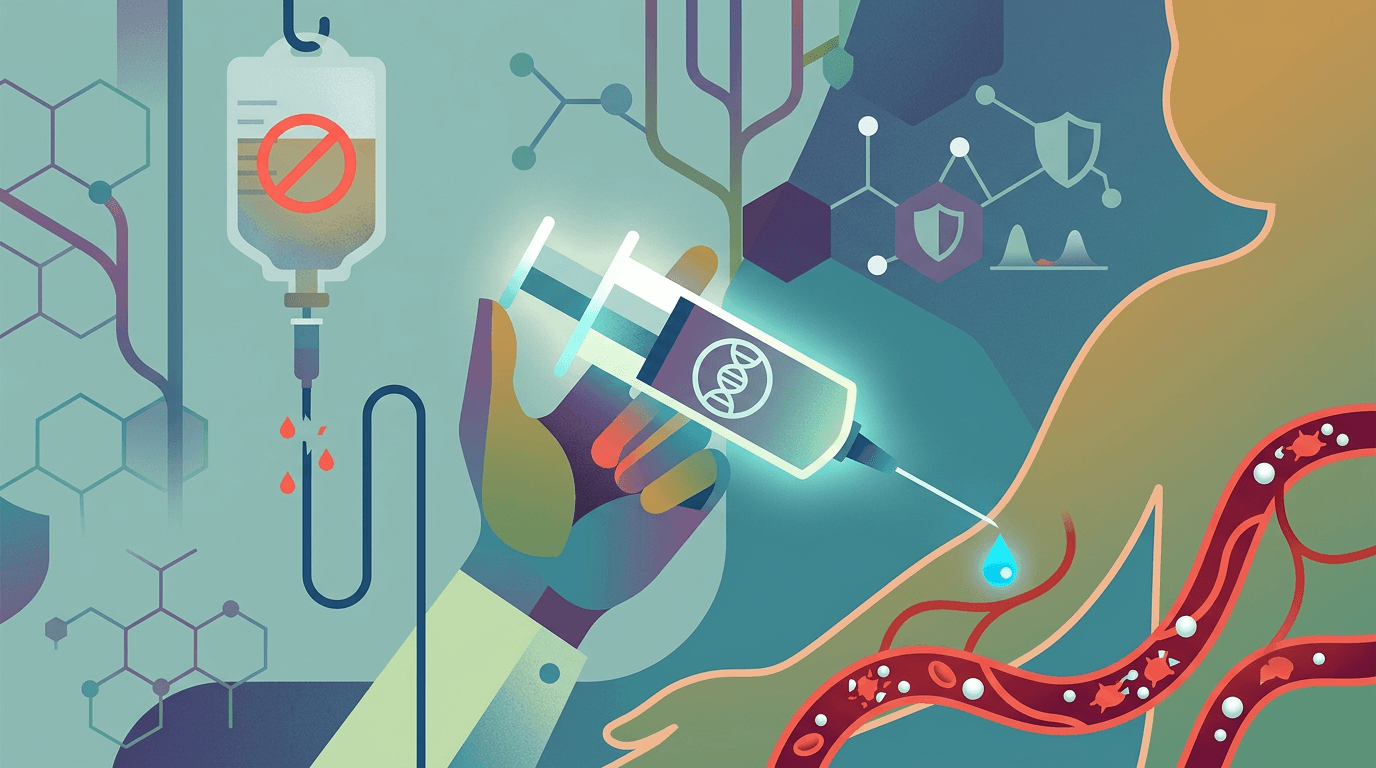
The expanded label now covers both. HYMPAVZI is approved for routine prophylaxis in patients six and older with hemophilia A or B, with or without inhibitors. That's a single weekly injection instead of the grueling IV regimens many of these kids endure.
Pfizer's case rested on data from two clinical programs. The pivotal BASIS trial studied adolescents and adults (12 and up) with inhibitors, comparing weekly HYMPAVZI to on-demand IV bypassing agents, the current fallback when regular clotting factor doesn't work.
The results were striking. Patients on HYMPAVZI had a mean annualized bleeding rate (ABR) of 1.39 treated bleeds per year, compared to for those on standard on-demand therapy. That's a 93% reduction. To put it in context: going from roughly 20 significant bleeds a year to about one is the difference between a chronic crisis and something approaching a normal life.

A drug that was nearly killed by its own toxicity just posted Phase 3 results for the first-ever once-weekly oral HIV pill. Merck and Gilead's comeback story could reshape how millions of people manage the virus.


Join thousands of biotech professionals who start their day with our free, daily briefing.

For the younger kids (ages 6 to 17) with inhibitors, pooled data showed a mean treated ABR of just 1.4. Among the 6-to-11-year-olds specifically, model-based analyses pegged the median ABR at 1.0. These aren't randomized head-to-head numbers; they're descriptive comparisons against historical treatment patterns. But regulators found them compelling enough, especially paired with the robust adult data, to grant the expansion through Priority Review.
Safety looked clean across age groups. The most common side effects were injection site reactions, headache, fever, and joint pain. In the 48-patient inhibitor cohort from BASIS, there were no deaths and no blood clots, which matters a lot for a drug class where thrombosis is the main theoretical concern.
To understand why this approval matters, you need to understand the nightmare of hemophilia with inhibitors.
Normal hemophilia treatment works like a refill: you're missing a clotting factor (VIII or IX), so doctors inject it. But roughly 30% of severe hemophilia A patients and a smaller percentage of hemophilia B patients develop inhibitors that destroy the replacement factor before it can do its job. It's like filling a gas tank that has a hole in the bottom.
The current playbook for these patients involves "bypassing agents," IV drugs that try to trigger clotting through alternate routes. They work, but unpredictably, and they require frequent intravenous infusions. For a six-year-old, that often means a surgically implanted central line and parents trained to manage complex IV protocols at home.
Emicizumab (Hemlibra) changed the game for hemophilia A inhibitor patients when it launched. It's subcutaneous, effective, and widely adopted. But it has one glaring limitation: it only works for hemophilia A. Kids with hemophilia B and inhibitors have been left without a non-factor prophylactic option, relying on those same burdensome IV bypassing agents.
That's where HYMPAVZI carves out its niche. Its mechanism, blocking a protein called tissue factor pathway inhibitor (TFPI), works independently of whether you're missing factor VIII or factor IX. It covers both hemophilia A and B, with or without inhibitors, in a single weekly subcutaneous injection. For the hemophilia B inhibitor population specifically, this is the first approved therapy of its kind for children as young as six.
HYMPAVZI isn't entering an empty market. The global hemophilia treatment landscape is worth roughly $16 billion and features entrenched players.
Emicizumab dominates hemophilia A prophylaxis, both with and without inhibitors. Fitusiran, an siRNA therapy that lowers antithrombin levels, covers both A and B (with or without inhibitors) but is currently approved for patients 12 and older and carries liver safety monitoring requirements. Gene therapies offer a potential one-time fix for some adults but aren't options for young children or inhibitor patients.
HYMPAVZI's competitive advantages are clear: broad coverage across both hemophilia types, a simple weekly injection, no routine lab monitoring, and now a pediatric label down to age six. Its 93% bleed reduction in inhibitor patients gives physicians hard data to work with.
Analysts generally view the label expansion as a meaningful but not transformative revenue driver. The hemophilia market grows in the mid-single digits annually, and Pfizer will need to pry patients away from established therapies. The real commercial opportunity likely lies in two populations where alternatives are weakest: pediatric patients (especially those under 12) and hemophilia B patients with inhibitors.
The dosing tells the story of convenience. Kids aged 6 to 11 get a 150 mg loading dose on day one, then 75 mg weekly. Adolescents and adults get 300 mg upfront, then 150 mg weekly. All subcutaneous. No IV lines. No infusion centers. No central venous catheters in first-graders.
For the roughly 33,000 people in the U.S. living with hemophilia, and especially for the families of young children navigating the inhibitor maze, this approval represents something concrete: fewer needles, fewer hospital trips, and bleeding rates that approach what non-inhibitor patients achieve with standard prophylaxis.
The peer-reviewed, long-term pediatric data are still coming. The 6-to-11 evidence is interim and model-based, not the gold standard of randomized controlled trials. But the FDA clearly saw enough to act, and for parents who've been managing their child's hemophilia through IV drips and central lines, "interim but promising" beats "nothing available" every single time.
Inhaled insulin flopped spectacularly with adults. Now MannKind's Afrezza just became the first needle-free mealtime insulin approved for kids, targeting a population where needle fear isn't just annoying — it's clinically dangerous.