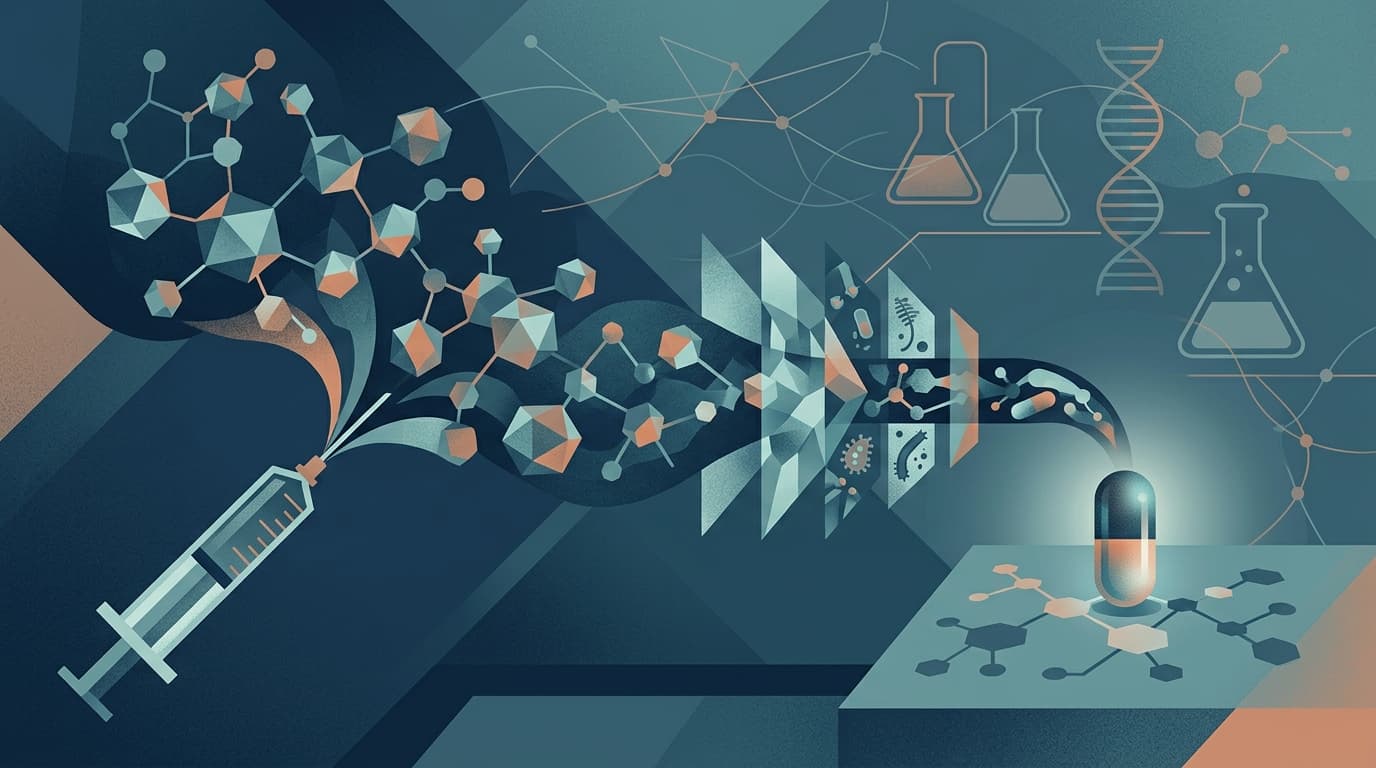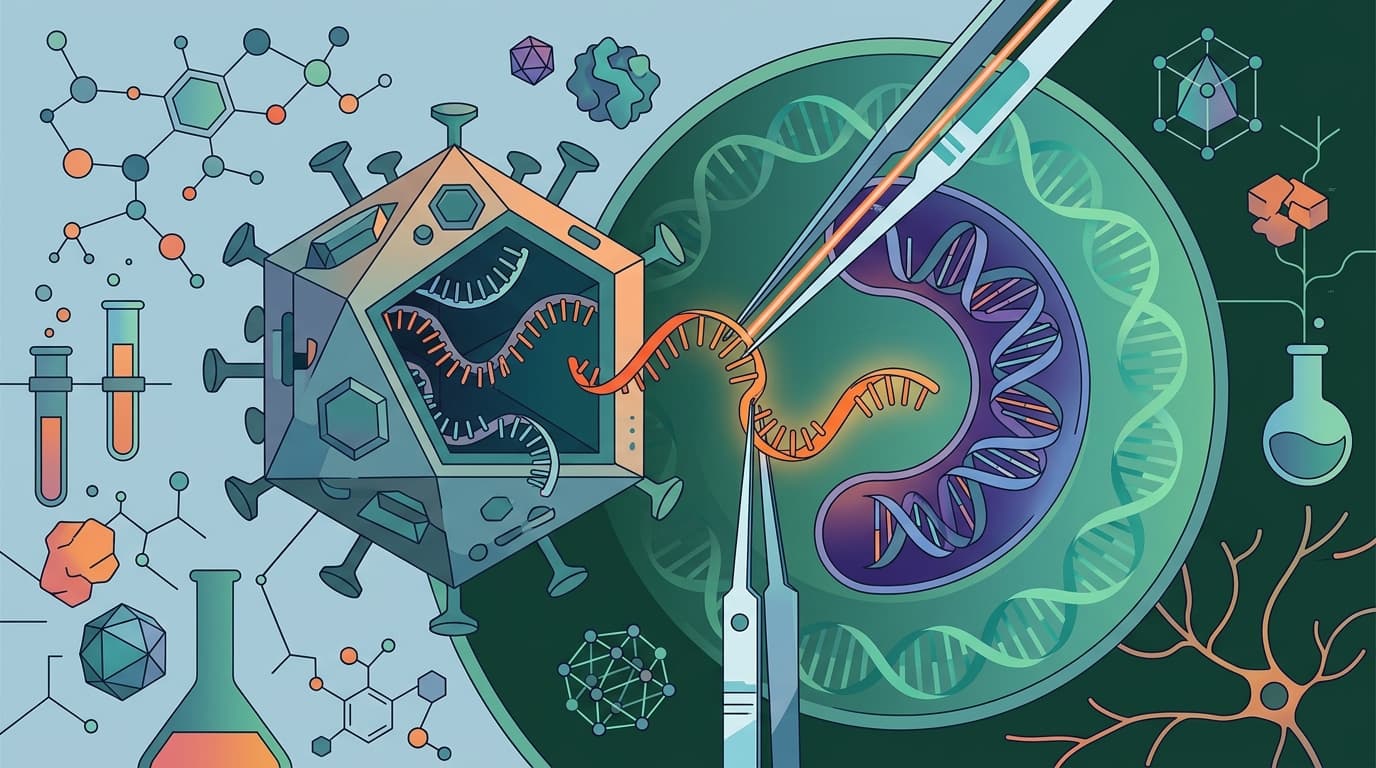

For the first time ever, a gene-editing therapy has been shown to destroy hepatitis B's hidden DNA reservoir in a living patient's liver. The cockroach behind the fridge might finally be catchable.
Imagine a virus that, even after you take medicine for it every single day, still keeps a hidden backup copy of itself tucked inside your liver cells. That backup quietly waits, ready to roar back the moment you stop treatment. For 240 million people living with chronic hepatitis B worldwide, that's not a metaphor. It's Tuesday.
The backup copy is called cccDNA (covalently closed circular DNA), a tiny ring of viral genetic material that parks itself inside the nucleus of liver cells like a cockroach you can't reach behind the fridge. Every antiviral drug on the market can suppress the virus circulating in your blood, but none of them touch this nuclear hideout. Stop the pills, and cccDNA fires the virus back up.
Until now, nobody had proven you could actually destroy it in a living human being. That just changed.
Precision BioSciences reported data from its ELIMINATE-B trial showing that its gene-editing therapy, PBGENE-HBV, achieved a 10-fold reduction in cccDNA-derived transcripts in a patient's liver biopsy after just two doses. Even more striking: less than 1% of cccDNA remained in that biopsy sample. And the tiny fraction that survived? It had been scrambled with genetic edits (called indels) that likely knocked out its ability to make new virus.
This is the first clinical biopsy evidence that any therapy can directly eliminate cccDNA in a person with chronic hepatitis B. Not suppress it. Not silence it. Destroy it.
A second patient, who received three doses, showed an even deeper effect, suggesting that repeat dosing cumulatively increases the anti-cccDNA punch.
To understand the significance, you need to know what "functional cure" means in hepatitis B. It's the holy grail: durable loss of a key viral protein called HBsAg, plus undetectable virus in the blood, after stopping treatment. Current antivirals can get you partway there, but they're basically a leash, not a cure. The moment you let go, the dog runs.

Gilead built lenacapavir's identity around a twice-yearly injection. Now the FDA just approved it inside a daily pill called Bixlenvo, and the logic behind that counterintuitive move reveals Gilead's broader chess match to defend its HIV empire.

Join thousands of biotech professionals who start their day with our free, daily briefing.
cccDNA is the reason the dog runs. It's often called the "Achilles' heel" of hepatitis B because every serious cure strategy eventually has to deal with it. The problem is that cccDNA behaves like a tiny extra chromosome inside infected cells, incredibly stable, incredibly hard to reach with conventional drugs.
For years, scientists have tried to crack this problem with gene-editing tools like CRISPR, zinc finger nucleases, and other molecular scissors. But nearly all of that work has stayed in the lab, in animal models, in theory. Nobody had shown it could work where it counts: in actual patients, confirmed by actual liver biopsies.
PBGENE-HBV uses Precision BioSciences' proprietary ARCUS nuclease, a type of gene-editing enzyme delivered to the liver via lipid nanoparticles (tiny fat bubbles, the same basic delivery tech behind mRNA COVID vaccines). Once inside liver cells, the nuclease hunts for a conserved sequence in the HBV genome and cuts it.
The therapy has two mechanisms. First, it destroys cccDNA outright. Second, for any cccDNA that survives the initial cut, the cell's own repair process introduces errors (those indels) that permanently disable the viral DNA's ability to replicate. Think of it like breaking a lock and jamming glue into the keyhole for good measure.
Beyond the headline cccDNA result, the trial showed encouraging signs across other markers too. At the lower dose of 0.2 mg/kg, all three patients saw HBsAg reductions between 47% and 69%, with one patient maintaining roughly a 50% reduction seven months later.
At the higher 0.4 mg/kg dose (where the biopsy data came from), 100% of patients with detectable baseline pgRNA lost that marker entirely. pgRNA is essentially a molecular footprint of active cccDNA, so its disappearance lines up perfectly with what the biopsies showed.
On the safety front, PBGENE-HBV was well tolerated overall, with no dose-limiting toxicities across any dose cohort and no serious adverse events. One Grade 3 hypotension event was reported in the highest-dose group, which bears watching as the trial expands.
Precision BioSciences isn't the only company chasing a hepatitis B cure, but it may be the only one attacking the root of the problem. The broader pipeline is stacked with siRNA agents (like VIR-2218 and JNJ-3989) that lower viral protein levels, antisense oligonucleotides like bepirovirsen, and capsid modulators that interfere with viral assembly. These approaches can suppress the virus impressively, but they don't directly destroy cccDNA.
Most cccDNA-targeting strategies (CRISPR-based tools, epigenetic silencers, transcriptional repressors) are still stuck in preclinical development. That makes the ELIMINATE-B biopsy data genuinely first-of-its-kind: clinical proof that hitting the root reservoir is possible in humans, not just in petri dishes.
Let's be honest about the caveats, because they're real. This is early data from a tiny number of biopsied patients. One patient with a dramatic result is a milestone, not a cure rate. The trial still needs to show that these effects are durable, that they hold up across larger and more diverse patient groups, and that repeat dosing can safely push cccDNA levels even lower.
There's also the measurement challenge. Liver biopsies are invasive, which makes it hard to track cccDNA in routine clinical practice. The field will need better non-invasive biomarkers (pgRNA loss is a start) before this kind of therapy can scale to the millions who need it.
And about those millions: only 27% of people with chronic hepatitis B worldwide have even been diagnosed. Just 4.3% are on antiviral therapy. Over a million people die from HBV-related liver disease every year. The unmet need isn't just scientific; it's logistical, economic, and deeply unequal, concentrated in the Western Pacific and Africa where healthcare access is most limited.
Precision BioSciences will continue enrolling patients and collecting biopsies in ELIMINATE-B. The key questions going forward are straightforward: Can repeated dosing push cccDNA to zero? Does that translate to durable HBsAg loss off treatment? And can it be done safely across a broad patient population?
If the answer to all three is yes, we're looking at something the hepatitis B field has talked about for decades but never achieved: a true cure that doesn't require lifelong pills. For 240 million people carrying a virus with a secret backup plan, that possibility just got a lot more real.
SK Biopharmaceuticals just paid $795 million for a drug that targets the same brain channel class that flopped a decade ago. The early data on opakalim suggests the second-generation version might actually be worth it.